Our Mission
Every dream has symbolic value. At DreamAtlas, we help you explore what your dreams may mean — not what they predict, diagnose, or demand. We offer possibilities, not answers. What resonates is yours to decide.
Dreams have fascinated humans for as long as we have had language to describe them. They appear in the oldest recorded texts, in oral traditions across every culture, and in the quiet moments after waking when you try to hold on to something you can't quite name. DreamAtlas exists to meet you in that space — with curiosity, not certainty.
Our Approach
DreamAtlas interpretations are grounded in three overlapping frameworks:
- Psychological symbolism — Drawing on Jungian archetypes, shadow work, and continuity hypothesis research, we explore how dreams may reflect the emotional patterns and unresolved tensions of waking life.
- Cross-cultural mythology — The same dream images recur across unconnected cultures and centuries. We look at what those shared symbols have meant in different human contexts.
- Peer-reviewed sleep science — Where reputable research exists, we reference it to provide context — not to claim certainty about meaning, but to ground interpretation in what we actually know about how the sleeping mind works.
Our interpretations are symbolic, not clinical. We do not diagnose, predict, or claim authority over what your dreams mean. That is always up to you.
Editorial Philosophy
Every article published on DreamAtlas is written with a consistent set of principles:
- We use language like "may symbolize," "could reflect," and "often suggests" — never "means" or "predicts."
- We include reflection prompts to help you connect interpretation to your own lived experience.
- We cite research carefully — and only where it genuinely adds context.
- We acknowledge the limits of symbolic interpretation and encourage you to seek professional support if your dreams are causing distress.
We are calm, curious, and warm — never alarming, mystical, or authoritative.
Our Editorial & Research Standards
Every article published on DreamAtlas follows a rigorous editorial process designed to ensure clarity, ethical care, and thoughtful grounding:
- Symbolic Possibility, Never Diagnostic Certainty: We use language like "may symbolize," "could reflect," and "often suggests" — never "means" or "predicts."
- Grounded in Credible External Research: We do not claim clinical authority of our own. Instead, we cite reputable external sleep research, neurobiology, and cognitive psychology (from peer-reviewed journals such as Nature Neuroscience, Frontiers in Psychology, and the American Psychological Association) solely to explain how the sleeping brain processes emotion and memory.
- Cross-Cultural Respect: We explore mythic and historical motifs across diverse world traditions without reducing complex cultural symbols to superstitious fortune-telling.
- Reflection Over Instruction: Every piece concludes with guided prompts so you can connect the symbolism to your own lived circumstances.
Meet the Writers
DreamAtlas is authored by dedicated writers and dream symbolism researchers who bring a shared fascination with the human inner world:
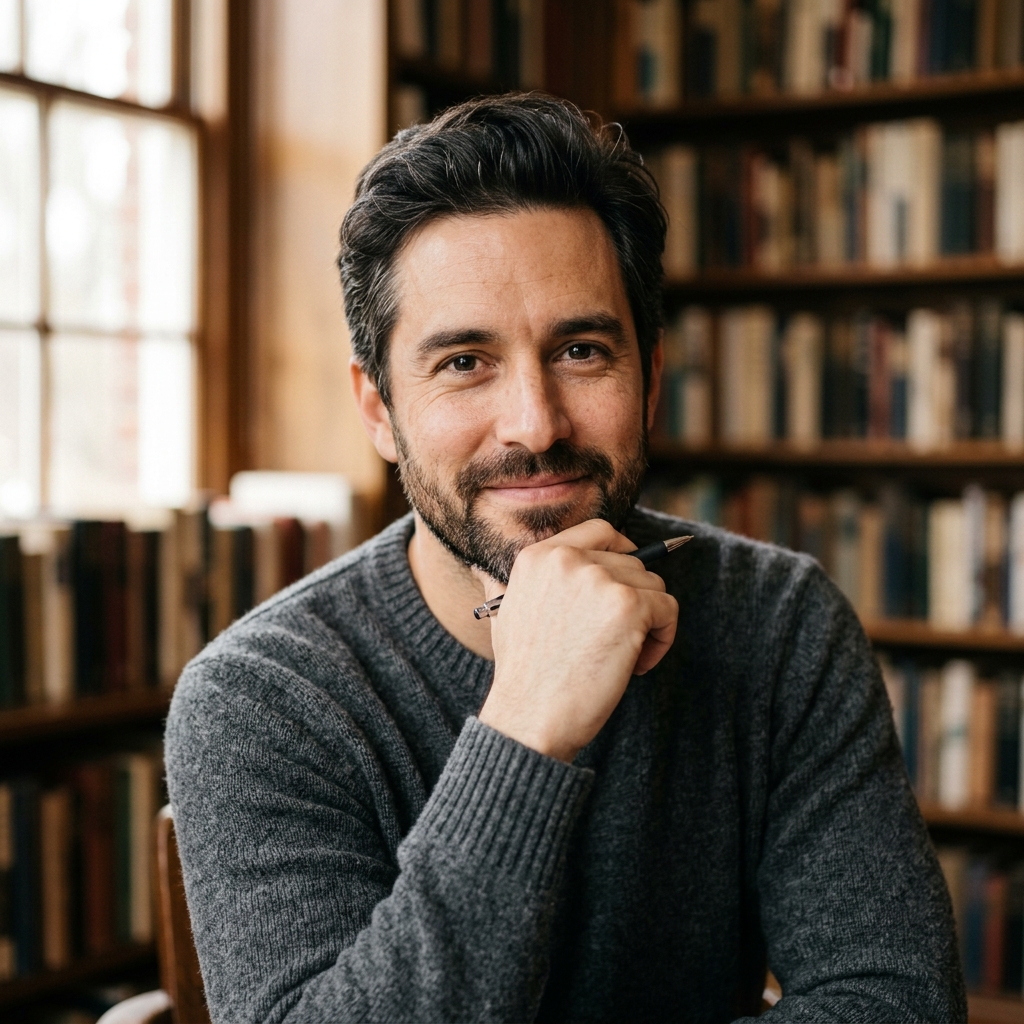
Julian Thorne
Contributing Writer · Mythic & Archetypal Symbolism
Julian focuses on the timeless metaphors that surface in our dreams — recurring architectural motifs, natural elements, journeys, and mythological archetypes. He explores how universal human folklore and literature illuminate the subtle emotional themes of daily life.

Claire Sterling
Contributing Writer · Sleep Science & Cognitive Research
Claire focuses on the intersection of emotional stress and nocturnal cognition — exploring why anxiety dreams, time distortion, and physical paralysis sensations happen during REM sleep by translating peer-reviewed sleep studies into gentle, everyday reflections.
Editorial Transparency Note: To maintain our editorial focus squarely on universal human themes and symbolic reflection rather than personal branding, our contributing team writes under dedicated editorial pen names. We are passionate independent researchers, not medical professionals, and we cite external credentialed studies to ground our work.
Important Medical & Psychological Disclaimer
Dream interpretation is a creative and introspective exercise, not a clinical science. Content on DreamAtlas is published for informational and personal reflection purposes only. It is not a substitute for professional psychological, psychiatric, or medical advice, diagnosis, or treatment. If you are experiencing sleep disturbances, chronic nightmares, anxiety, or emotional distress, we strongly encourage you to consult a licensed healthcare or mental health professional.
Have a dream you'd like us to explore?
We read every submission from our readers.
Submit Your Dream Contact Our Team