What do you do when the kindest person you know—your partner, your mother, your best friend—looks you right in the eye and says something so unbelievably cruel it steals the air from your lungs? You stand there, reeling from the shock, and then… you wake up. The room is quiet, your heart is hammering, and the phantom sting of their words is more real than the pillow under your head.
That feeling is what this is all about. It’s a special kind of unsettling, a sense of betrayal that your logical mind knows is baseless but your heart can’t quite shake. These interpretations are meant to spark reflection, not serve as medical or psychological advice, but to help you sit with that strange echo and understand what it might be trying to tell you.
Quick takeaways:
- The shocking behavior in the dream is often a perfect dramatization of one of your own insecurities, not a secret truth about your loved one.
- Your mind "casts" a trusted person in a harsh role because it knows you'll pay attention to a message coming from them.
- A dream of a partner’s infidelity, for example, is almost always driven by the dreamer’s own feelings of insecurity, not by the partner's actions.
- The specific way they act out of character—sudden anger, cold silence—is a clue to the kind of internal conflict the dream is exploring.
When a Familiar Face Feels Foreign
The jolt of this dream comes from its violation of your internal map of a person. We all have one for the people we love: a predictive, deeply ingrained sense of who they are, how they’ll react, what they’ll say. This dream takes that map and tears it to pieces.
It’s the emotional equivalent of reaching for a stair that isn’t there in the dark. Your brain has a powerful expectation of this person's character, and the dream shatters it, causing a jolt of confusion and hurt. The core of the experience isn't just their strange behavior, but the jarring feeling of seeing a familiar emotional landscape completely terraformed without warning. But here’s where it gets complicated: could the dream be picking up on something real? Tiny shifts in tone, micro-expressions, or a subtle distance that your conscious mind has politely ignored but your dreaming mind is desperately trying to process? It’s not the most common interpretation, but it’s a possibility that keeps us hooked on the dream’s mystery.
The Echo in the Room, The Distorting Mirror
More often than not, the out-of-character behavior is a perfect reflection of one of our own insecurities. The dream acts like a distorting mirror, taking a small, waking-life fear and blowing it up into a full-blown drama. And the way we interpret that drama is filtered through our own biases.
Research from Stony Brook University found that dreams about a partner's infidelity or jealousy aren't usually connected to daily events but are instead driven by the dreamer's own dispositional insecurity. In other words, the dream isn't a hidden camera; it’s a projection of your own inner anxieties. To make matters worse, we’re wired to believe the dreams that confirm what we already suspect. A study highlighted by the American Psychological Association showed that people selectively assign more meaning to dreams that align with their pre-existing beliefs. If you’ve been feeling a little distant from your partner, a dream where they act cold feels less like a random fiction and more like meaningful "proof." This means we can’t fully trust our own interpretation when our feelings are both the subject of the dream and the lens through which we view it.
Research from Social Psychological and Personality Science has found that dreams about romantic partners reflect real attachment patterns and relationship dynamics, reinforcing how emotional insecurities shape our dream narratives.
Masks and Messengers: What is This 'Character' Trying to Say?
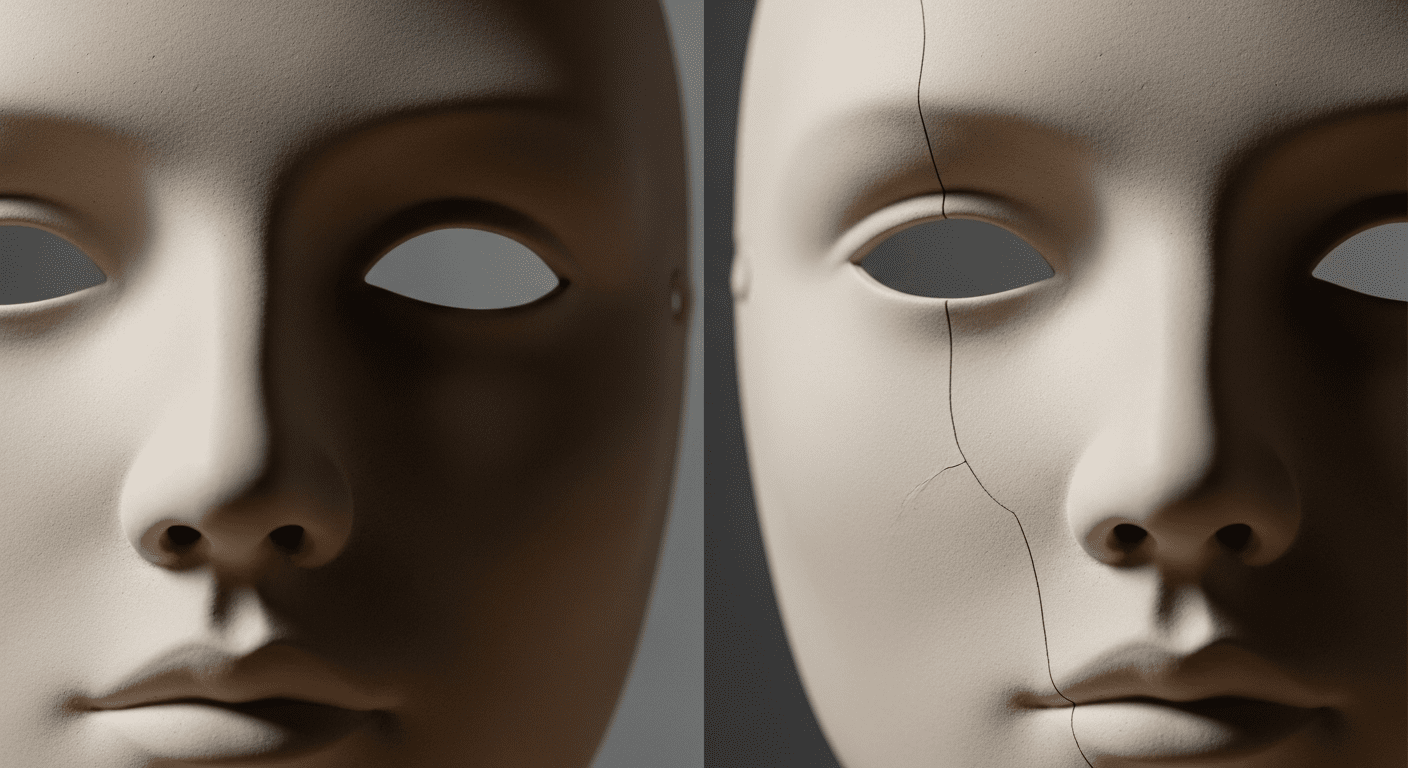
Here’s a way to reframe it that can be incredibly helpful: the person in your dream isn't actually them. Think of it as a messenger from your own mind, wearing the face of your loved one as a costume.
Why the disguise? Because it’s the perfect way to get past your emotional defenses. If a shadowy stranger tells you you’re failing at your job, you might dismiss it. But if your supportive partner—the person you trust most in the world—says it? You listen. Your mind "casts" them in this harsh role because research on dream narrative construction shows the brain generates characters and scenarios to express unresolved emotional themes — it knows that’s a voice you can’t ignore. It’s not your partner being critical; it’s your own inner critic borrowing your partner's face to deliver a message about your fear of failure, your anxiety about a project, or a feeling of inadequacy you haven’t wanted to face. The dream delivers its message in this confusing, upsetting way because it’s the only way to make you stop and pay attention.
From Cold Silence to a Fiery Argument
The specific type of out-of-character behavior is a huge clue. Your mind chooses the script for a reason, and the details point to what kind of internal conflict is being explored. We often only remember the shocking climax, but the surrounding details hold the key.
Consider these variations:
- A normally warm person being cold and distant: This often points to your own fear of emotional abandonment or being shut out. It might be a reflection of feeling misunderstood or unheard in your waking life. This is a common theme in dreams where you feel like someone is ignoring you.
- A quiet person making a loud, angry speech: This can symbolize a passionate internal debate you're having with yourself. The dream gives a voice to a strong opinion or emotion inside you that you’ve been suppressing.
- A loyal person betraying you: As we've seen, this is frequently a manifestation of your own insecurity or a fear of being vulnerable. It can also appear when you feel you have betrayed a part of yourself—perhaps by compromising your values or ignoring your own needs.
- A serious person acting foolish or silly: This could be your mind’s way of inviting you to lighten up, to connect with a more playful or spontaneous part of yourself that you’ve been neglecting.
What Unsettled Part of You is Speaking?
Ultimately, the dream isn't asking a question about your loved one. It’s asking a question about you. It’s giving a voice to one of your own unmet needs or unexpressed feelings.
That "angry" partner in your dream might be the voice of your own unacknowledged frustration about a situation at work that you've been politely tolerating for weeks. The "deceitful" friend might be the part of you that feels like an imposter, worried you’ll be "found out." The dream hijacks a familiar face to get you to listen to a part of yourself you’ve been tuning out. It’s tempting to want the dream to be about the other person because that feels easier to solve. Confronting our own deep-seated fears is much harder work.
Questions to Carry Into Your Day
Instead of getting stuck on "What does this mean about them?" try shifting the focus. A vivid dream can leave an emotional residue that lingers all day, and the goal is to honor that feeling without letting it poison your perception of the real person you love.
Sit with the feeling the dream left you with and ask yourself:
- When did I feel this specific emotion (betrayal, confusion, loneliness) in my waking life recently?
- Am I avoiding a conversation or a feeling that this dream is forcing me to confront?
- Is the thing my loved one said in the dream something I secretly fear is true about myself?
- What part of my own life feels as "out of character" or unfamiliar as this person did in the dream?
Trusting the Person, Understanding the Dream
A dream like this should be seen as the start of an internal conversation, not a final verdict on your relationship. It’s like a note your sleeping mind scribbles on your hand to remind you to think about something important when you wake up—perhaps your own feelings of security, a conversation you’ve been avoiding, or an insecurity that needs your attention. It’s a prompt, not a judgment.
This leads to the big question: should you tell them about it? There’s no easy answer here, and interpretations genuinely split on this. Sharing a vulnerable dream can create incredible intimacy and lead to a supportive conversation. But it can also cause real hurt. Accusing someone of something they only did in your head is a fast way to start a fight. The safest path is to first process it yourself. Understand what the dream is showing you about you. If you still feel the need to share, you can frame it that way: "I had the strangest dream that was clearly about my own anxiety, and you were in it. Can I tell you about it?"
The dream is a map of your inner world, not theirs. Trust the person you know when you're awake.

Key Takeaways
- An out-of-character loved one in a dream often acts as a mirror, reflecting your own insecurities or unexpressed feelings back at you.
- Our waking biases have a huge impact: we're more likely to believe a negative dream about someone if we already have unresolved frustrations with them.
- Think of the dream figure not as your loved one, but as a messenger wearing their face to deliver a message about your own inner life.
- The specific way they act out of character—coldness, anger, betrayal—is a clue to the nature of the internal issue the dream is exploring.
In the end, the dream isn’t a prophecy to be decoded; it’s a feeling to be understood.
If this dream is still with you, share it with us. Or keep exploring the dreams we've written about.

Written by Julian Thorne
Contributing Writer · Mythic & Archetypal Symbolism
Julian Thorne explores the universal metaphors in human storytelling, drawing upon comparative mythology, literature, and archetypes.
At DreamAtlas, interpretations are symbolic reflections grounded in universal human themes and peer-reviewed research, not clinical or medical advice.
Want to understand our approach? Read about our editorial standards →
Categories
Popular Symbols
Themes
Recent Posts
Dreaming of Failing a Simple Task Repeatedly
October 20, 2026What It Means When You Dream About Being Judged by a Group
October 15, 2026Dreaming of Snails – Patience, Delay, and Quiet Persistence
October 13, 2026What It Means When You Dream About Wolves Howling in the Distance
October 08, 2026Dreaming of Butterflies Landing on You
October 06, 2026About DreamAtlas
Your guide to exploring the symbolic meaning of your dreams. We offer thoughtful, reflective interpretations grounded in universal human themes.
Learn More
Comments