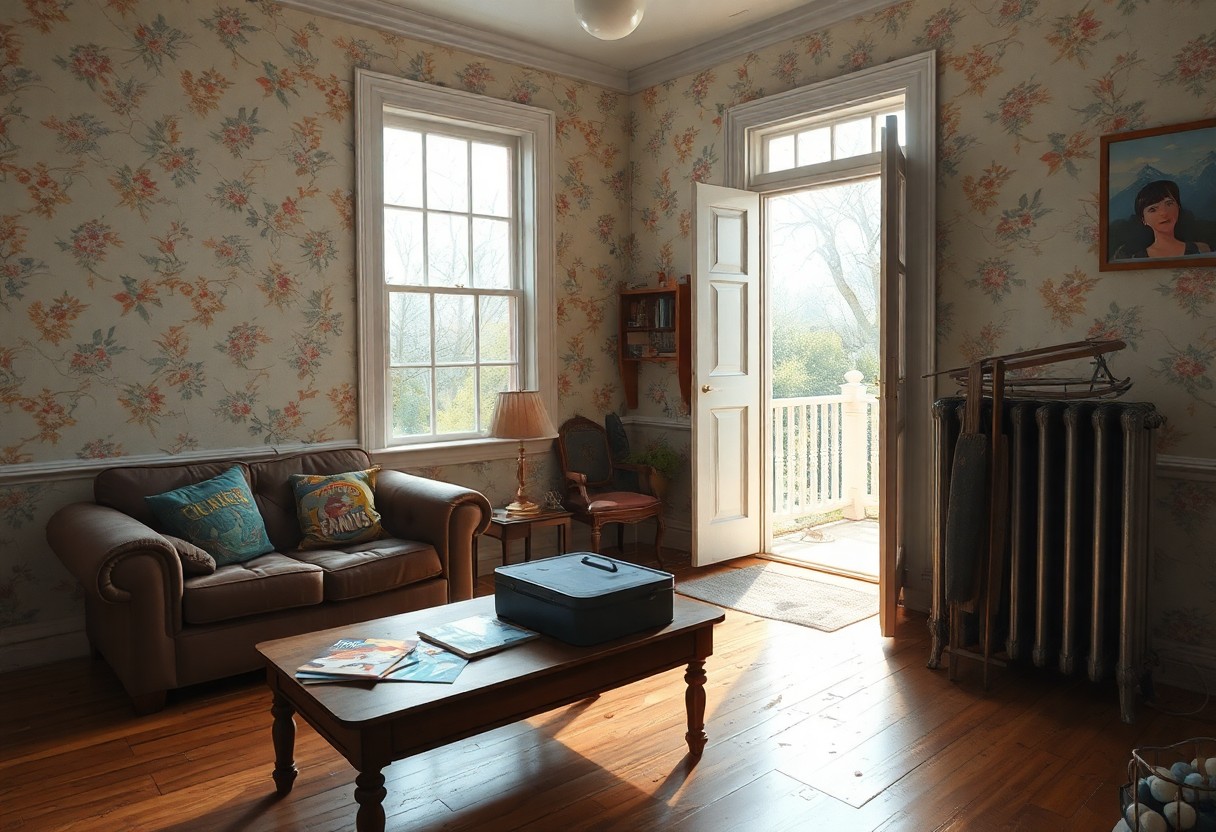
You're walking through a house you haven't visited in years — maybe decades. The hallway is exactly as you remember it, or almost. The light falls through the window at that particular angle. The kitchen smells the way it used to. You know this place in your bones, even though you left it long ago. And when you wake, you carry a strange, tender ache that's hard to name.
Dreams of returning to your childhood home are among the most emotionally resonant dreams people report. They arrive uninvited, often during times of change, and they leave behind a feeling that's part comfort, part longing, part something deeper. This article explores what those familiar rooms might be reflecting about your inner life. These interpretations explore symbolic possibilities and are not medical or psychological advice.
Architecture of the Soul: Foundational Identity and the Pull of the Past
The childhood home is rarely just a building in a dream. It tends to function as a symbol of something much larger. Here are some of the threads that may be woven into this experience.
A return to foundational identity. Your childhood home is where your earliest sense of self took shape. Dreaming of it may symbolize a reconnection with who you were before the layers of adulthood accumulated — your original instincts, your early beliefs, the person you were before the world asked you to be someone else.
Seeking safety and comfort. When life feels unstable, the mind often reaches for what once felt secure. Your childhood home may appear in dreams as a kind of emotional anchor — a place your psyche associates with belonging, routine, and the feeling of being cared for, even if the reality was more complicated.
Processing unresolved memories. Not all childhood homes were safe. If yours carried tension, loss, or pain, the dream may be bringing you back to material that hasn't been fully processed. The rooms you enter might hold emotions you set aside long ago — emotions that are now ready for your attention.
Nostalgia as a compass. The warm ache of nostalgia in these dreams may not be about wanting to go back. It could symbolize a desire to reconnect with something you've lost touch with — a quality, a relationship, a way of being in the world that mattered to you and still does.
Attachment, Nostalgia, and Memory Consolidation: The Science of Returning
The psychological resonance of childhood home dreams runs deep, touching on memory, attachment, and identity.
Dream expert Leslie Ellis and dream interpreter Lauri Loewenberg both note that dreaming of your childhood home often surfaces when old memories are being activated — whether by a current life event that echoes the past, or by a developmental shift that sends the mind back to its foundation. Ellis emphasizes that the deep, long-standing associations we form with our earliest homes make them powerful containers for emotional meaning.
Research on nostalgia from social psychologist Constantine Sedikides indicates that nostalgic experiences serve genuine psychological functions. They bolster self-esteem, increase a sense of meaning in life, foster feelings of social connectedness, and buffer against loneliness — particularly during periods of stress or transition. Dreams that activate nostalgic memory may reflect your mind engaging in this restorative process.
Studies on attachment theory and early environments show that the physical spaces associated with secure attachment — particularly childhood homes — remain neurologically significant throughout the lifespan. The brain continues to associate these spaces with safety and belonging, even decades later. Your dream may be your mind reaching for that foundational sense of security.
Research on psychological need frustration and dream content suggests that when our core needs for autonomy, competence, and relatedness go unmet, the emotional residue often surfaces in dreams. A dream that returns you to a place of early belonging may reflect a waking sense that one of these needs — particularly relatedness or safety — is quietly going unmet.
Research on emotional memory consolidation and dreaming suggests that dreams play an active role in helping the brain process and regulate emotional material. Your childhood home dream may not be pulling you backward — it may be helping you integrate the past into the person you're becoming.
From the Odyssey to Jung’s House: The Archetype of the Origin Space
The image of returning home is one of the oldest and most universal narrative structures in human storytelling.
From Homer's Odyssey to Dorothy's Kansas, the homecoming carries a dual meaning: it's about the physical place, but it's also about the self that left and the self that returns. The home you dream about may not be asking you to go back. It may be asking you to recognize how far you've come — and what you've carried with you.
In many traditions, the house symbolizes the self. Carl Jung's famous dream of a multi-leveled house — from modern upper floors to ancient depths below — illustrates how domestic architecture can serve as a map of the psyche. Your childhood home, in this framework, represents the foundation layer: the beliefs, attachments, and emotional patterns that were laid down before you had words for them.
In some Indigenous and Eastern traditions, ancestral homes carry spiritual significance — they're places where the boundary between past and present thins, and where the wisdom of earlier generations can still be accessed. A dream of your childhood home might echo this sense of connection to lineage and inherited experience.
Dilapidated Halls, Secret Wings, and Unfamiliar Guests: Reading the Setting
The specific details of your childhood home dream can shift its meaning in notable ways.
The house looks exactly as you remember it. This variation often carries the strongest sense of nostalgia. It may symbolize a longing for a time when things felt simpler, or a desire to reconnect with a version of yourself that existed in that space.
The house is in disrepair or falling apart. If the home you remember is crumbling in the dream, it may reflect a sense that something foundational — a belief, a relationship, a sense of security — has eroded over time. The decay could be asking you to examine what needs repair in your inner life.
The house has new rooms or unfamiliar spaces. When the childhood home contains rooms that didn't exist in reality, the dream may be pointing to parts of yourself that have grown since you lived there — new capacities, unexplored potential, or aspects of your identity that didn't have space to develop in that original environment.
You're a child again in the dream. If you appear as your younger self, the dream may be inviting you to reconnect with that child's perspective — their needs, their fears, their way of seeing the world. It could also reflect a feeling of vulnerability in your current life that echoes something from that earlier time.
Someone from your past is there. The presence of a parent, sibling, or childhood figure can intensify the emotional charge. Consider what that person represents to you — and whether the dream is reflecting a relationship that still carries unfinished weight.
You can't find your way out. If you feel trapped or lost in the childhood home, the dream may reflect a sense of being stuck in old patterns — behaviors, beliefs, or emotional responses that belong to an earlier chapter but still shape how you move through the present.
Reconnecting with Your Foundations: What the Old Rooms Ask of You Now
If your childhood home keeps appearing in your dreams, it may be worth asking what's drawing you back.
You might consider whether you're going through a transition that has quietly unsettled your sense of identity. New jobs, new relationships, becoming a parent, losing a parent — these shifts can send the mind back to its earliest reference points, looking for something solid to stand on.
This dream could also be nudging you to revisit something you left unfinished. An old hurt you never fully grieved. A relationship that ended without resolution. A part of yourself you abandoned to fit in or to survive. The house may be holding those things for you, waiting for you to come back and look.
It's also possible that the dream is simply your mind's way of honoring where you came from. Not everything that surfaces from the past needs fixing. Sometimes the dream is a quiet acknowledgment — of the people who shaped you, the rooms that held you, and the foundation that still, in ways you may not notice, supports the person you are today.
Walking Through the Memory: Inquiries for Reflection
These questions are invitations, not assignments. Let them arrive at their own pace.
- What feeling do you carry when you wake from this dream — comfort, sadness, longing, or something harder to name?
- Is there something from your childhood — a quality, a relationship, a sense of safety — that you've been missing in your current life?
- Which rooms in the house do you visit most often in the dream, and what happened in those rooms when you were young?
- If your younger self could see your life now, what would they feel? What would they ask?
- Is there an unfinished conversation from that time in your life that still echoes?
The Rooms That Stayed With You
Dreams of your childhood home often carry a message about the relationship between who you were and who you are.
You can't go back to that house, not really. But the dream may be reminding you that you don't have to. The rooms that mattered most aren't in the building. They're in you.
If you'd like to explore more about what your dreams might be reflecting, take a look at our other dream interpretations — you might find a room that connects to yours.

Written by Julian Thorne
Contributing Writer · Mythic & Archetypal Symbolism
Julian Thorne explores the universal metaphors in human storytelling, drawing upon comparative mythology, literature, and archetypes.
At DreamAtlas, interpretations are symbolic reflections grounded in universal human themes and peer-reviewed research, not clinical or medical advice.
Want to understand our approach? Read about our editorial standards →
Categories
Popular Symbols
Themes
Recent Posts
What It Means When You Dream About Being Judged by a Group
October 15, 2026Dreaming of Snails – Patience, Delay, and Quiet Persistence
October 13, 2026What It Means When You Dream About Wolves Howling in the Distance
October 08, 2026Dreaming of Butterflies Landing on You
October 06, 2026Why You Dream About Bears in Your Home
October 01, 2026About DreamAtlas
Your guide to exploring the symbolic meaning of your dreams. We offer thoughtful, reflective interpretations grounded in universal human themes.
Learn More
Comments