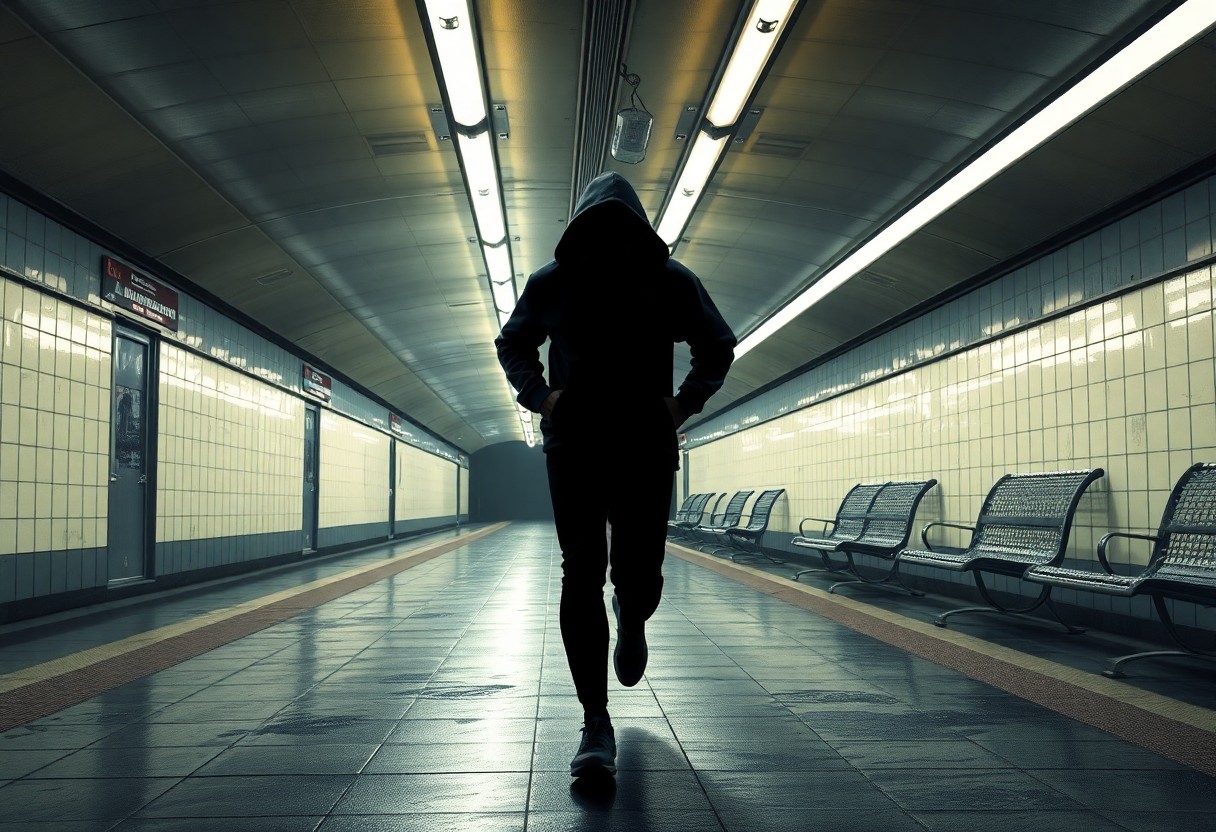
You're running. Something is behind you — formless, dark, relentless. You can't see its face, but you feel its presence like a weight pressing against your back. Your legs are heavy, your breath is short, and no matter how fast you move, the distance never seems to grow. When you wake, your heart is still racing, and the feeling of being pursued lingers in the room like a scent you can't place.
Dreams of being chased by a shadowy figure are among the most common and emotionally intense dreams people report. If this one has visited you, you're far from alone. This article explores the symbolic layers that may live inside this experience. These interpretations explore symbolic possibilities and are not medical or psychological advice.
The Architecture of Pursuit: Avoidance, Shadow, and Unfaced Fears
Chase dreams tend to carry a strong emotional signature. Here are some of the symbolic threads that may be woven into the experience of being pursued by something you can't quite see.
Avoidance of something in your waking life. The most straightforward reading of a chase dream is that something is following you because you've been running from it. This could be a difficult conversation, an unresolved conflict, a decision you've been putting off, or an emotion you've been pushing aside. The shadow pursues what you refuse to face.
Unacknowledged parts of yourself. The shadowy figure — faceless, undefined — may represent aspects of your own personality that you've rejected or suppressed. Anger you don't allow yourself to feel. Ambition you've been told is too much. Grief you haven't made space for. The shadow often carries what we've disowned.
Generalized anxiety or free-floating fear. Sometimes the shadow isn't a specific thing at all. It may symbolize a pervasive sense of unease — the feeling that something is wrong, even when you can't name what it is. The formlessness of the pursuer may mirror the formlessness of the anxiety itself.
A sense of being overwhelmed. When life feels like it's bearing down on you — responsibilities mounting, deadlines closing in, emotional demands piling up — the dream may compress all of that pressure into a single pursuing figure. You're not running from one thing. You're running from the weight of everything.
Threat Simulation and the Nocturnal Amygdala: The Science of Nighttime Flight
Chase dreams have drawn the attention of researchers precisely because they're so widespread and emotionally potent.
Antti Revonsuo's threat simulation theory, developed through extensive dream research, proposes that dreaming evolved as a biological rehearsal system for threatening situations. In a study analyzing hundreds of dream reports, Revonsuo found that over 66% contained at least one threatening event — and that dreamers typically responded with defensive or evasive actions. From this perspective, a chase dream may not reflect a specific waking fear so much as your mind practicing its response to danger in a safe environment.
Research on the neuroscience of REM sleep and threat response shows that during REM sleep, the amygdala — the brain's threat detection center — becomes hyperactive, while the prefrontal cortex, which handles logical reasoning and emotional regulation, quiets down. This neurological shift creates conditions where emotional responses run unchecked by rational filters, which may explain why chase dreams feel so viscerally real even when the pursuer has no identifiable form.
Research on psychological need frustration and dreams adds another layer. When our core needs for autonomy, competence, and connection are frustrated during the day, those frustrations tend to surface as negatively charged dream content. Being chased — unable to stop, unable to confront, unable to choose your own direction — may reflect a waking sense that your agency or freedom has been compromised.
Jung's Shadow and Ancient Chases: Why the Pursuer Has No Face
The image of being pursued by a dark, unknown figure echoes across mythology and folklore.
Carl Jung's concept of the Shadow — one of his most enduring ideas — describes the parts of ourselves we've pushed out of conscious awareness. In Jung's framework, the shadowy pursuer in a dream isn't a stranger at all. It's the self you've refused to look at. And the chase continues, Jung might say, until you stop running and turn to face what follows you.
In many folk traditions, dark figures that appear at night have been attributed to spiritual forces or interpreted as visitations. The "night hag" phenomenon — a figure that sits on the sleeper's chest — appears in cultures from Scandinavian to Japanese folklore, often linked to the experience of sleep paralysis. While modern science offers neurological explanations for these experiences, the cultural imagery speaks to something deep in the human relationship with darkness and the unknown.
In a broader sense, the chase narrative is one of humanity's oldest stories. From myths of hunters and the hunted to modern thrillers, the act of being pursued activates something primal — a recognition that sometimes, the thing we need to face is the thing we most want to escape.
Frozen Limbs, Familiar Streets, and Turning to Face the Threat
The details of a chase dream can significantly shift what it might be reflecting.
The figure gets closer but never catches you. This variation may reflect chronic, low-grade anxiety — the sense that something threatening is always just behind you, but the crisis never fully arrives. It could symbolize living in a state of anticipation that never resolves.
You're chased through familiar places. When the chase happens in your own home, workplace, or neighborhood, it may point to a feeling that the threat is coming from within your daily life — not from something external and exotic, but from the ordinary spaces where you feel most confined.
You can't run or your legs won't move. This frustrating variation often amplifies the sense of powerlessness. It may reflect a feeling of paralysis in your waking life — knowing you need to act but being unable to move forward.
You turn and face the figure. One of the most significant variations. If you stop running and confront the shadow, the dream often transforms. The figure may shrink, dissolve, or reveal something unexpected. This could symbolize a moment of courage — a readiness to face what you've been avoiding.
The figure is someone you know. When the pursuer takes a recognizable form, the dream may be pointing to a specific relationship or interpersonal tension. Consider what that person represents to you — and what you might be running from in that dynamic.
Multiple figures chasing you. Being pursued by a group may reflect a sense that pressures are coming from multiple directions at once. It could symbolize social anxiety, the weight of collective expectations, or a feeling of being outnumbered by your own responsibilities.
What Are You Running From? Translating the Pursuit to Waking Hours
If this dream keeps finding you, it may be worth asking — gently — what you've been running from.
You might consider whether there's something in your life you've been avoiding: a conversation, a feeling, a decision that keeps drifting to the back of the line. Chase dreams often intensify during periods when avoidance becomes a pattern — when the energy it takes to keep running starts to exceed the energy it would take to stop and look.
This dream could also be nudging you to examine what you've pushed into shadow. Are there parts of yourself — your anger, your grief, your desire — that you've been keeping out of sight? The pursuing figure may not be a threat. It may be a messenger, carrying something that belongs to you.
It's also possible that this dream simply reflects a period of heightened stress. When your nervous system is running hot during the day, it often continues rehearsing threat responses at night. The chase may be less about symbolic meaning and more about a body and mind that need rest, safety, and space to decompress.
Pausing the Run: Questions to Sit With
Let these questions sit with you for a while. They're not meant to be answered quickly.
- What are you most actively avoiding in your life right now — and what would it look like to stop running from it?
- If the shadowy figure could speak, what do you imagine it would say?
- Is there a part of yourself — an emotion, a desire, a trait — that you've been keeping in the dark?
- When you think about turning to face the figure, what feeling arises? Fear? Relief? Curiosity?
- Where in your body do you feel the chase when you recall the dream?
The Shadow That Follows Belongs to You
Dreams of being chased by a shadowy figure often carry a message that's as persistent as the pursuer itself: the parts of ourselves we run from are usually the ones that need our compassionate attention the most.
The shadow follows because it belongs to you. And sometimes, facing it is the beginning of a different kind of dream entirely.
If you'd like to explore more about what your dreams might be reflecting, take a look at our other dream interpretations — you might find a shadow that connects to yours.

Written by Claire Sterling
Contributing Writer · Sleep Science & Cognitive Research
Claire Sterling explores how emotional stress and nocturnal cognition shape dreams, synthesizing peer-reviewed sleep research into warm, everyday reflections.
At DreamAtlas, interpretations are symbolic reflections grounded in universal human themes and peer-reviewed research, not clinical or medical advice.
Want to understand our approach? Read about our editorial standards →
Categories
Popular Symbols
Themes
Recent Posts
What It Means When You Dream About Being Judged by a Group
October 15, 2026Dreaming of Snails – Patience, Delay, and Quiet Persistence
October 13, 2026What It Means When You Dream About Wolves Howling in the Distance
October 08, 2026Dreaming of Butterflies Landing on You
October 06, 2026Why You Dream About Bears in Your Home
October 01, 2026About DreamAtlas
Your guide to exploring the symbolic meaning of your dreams. We offer thoughtful, reflective interpretations grounded in universal human themes.
Learn More
Comments