There's a specific quality to the silence in a dream elevator stalled between floors. You press the cool, smooth surface of a button that doesn't click. It doesn't light up. The gentle hum of the machinery is gone, and you are left suspended in a metal box, holding only your intention with no way to make it real. The panel, that simple interface of choice and control, has gone dark, and with it, your ability to direct your own ascent or descent.
This dream isn't just about being stuck; it's about a breakdown in the conversation between what you want and what the world delivers. The ideas that follow are invitations to explore that feeling, not to serve as a diagnosis or psychological advice, but as a friendly map for your own self-reflection.
Quick takeaways:
- A broken elevator panel often symbolizes a breakdown in agency, the feeling that your usual controls or choices aren't registering in a waking situation.
- Unresponsive or missing floor buttons can point to a transition in your life where the path forward feels ill-defined or out of your hands.
- Sparks or chaotic lights on the control board may highlight hidden performance anxiety or a fear that an internal system is about to overload.
- Rather than signaling failure, this dream can act as a cognitive rehearsal, urging you to stop relying on automatic habits and examine your real choices.
When the Interface of Choice Refuses to Respond
Symbolically, the elevator panel is the literal bridge between your intent and your movement. You push a button, and you expect to go up or down. When it malfunctions in a dream, your mind is staging a powerful metaphor for a waking situation where your usual strategies no longer produce their expected results. You’re doing everything right, pressing all the correct buttons, but nothing is happening. You want the top floor, but the light for your choice flickers and dies, leaving you in the same quiet, dimly lit cab.
This kind of imagery is common in unsettling dreams. Research by Geneviève Robert and Antonio Zadra analyzing thousands of dream reports found that bad dreams and nightmares are frequently about things like structural mishaps and environmental failures, not just physical threats. The profound helplessness you feel when the elevator panel breaks is a perfect example. It’s a modern, technological version of a bridge crumbling or a staircase disappearing beneath your feet. But here’s the tension: while the broken panel feels like an external mechanical failure, it can sometimes reflect an internal hesitation. Is there a small part of you that feels a secret relief that you cannot reach the floor you feel pressured to visit?
The Silent Panic of Unsent Signals
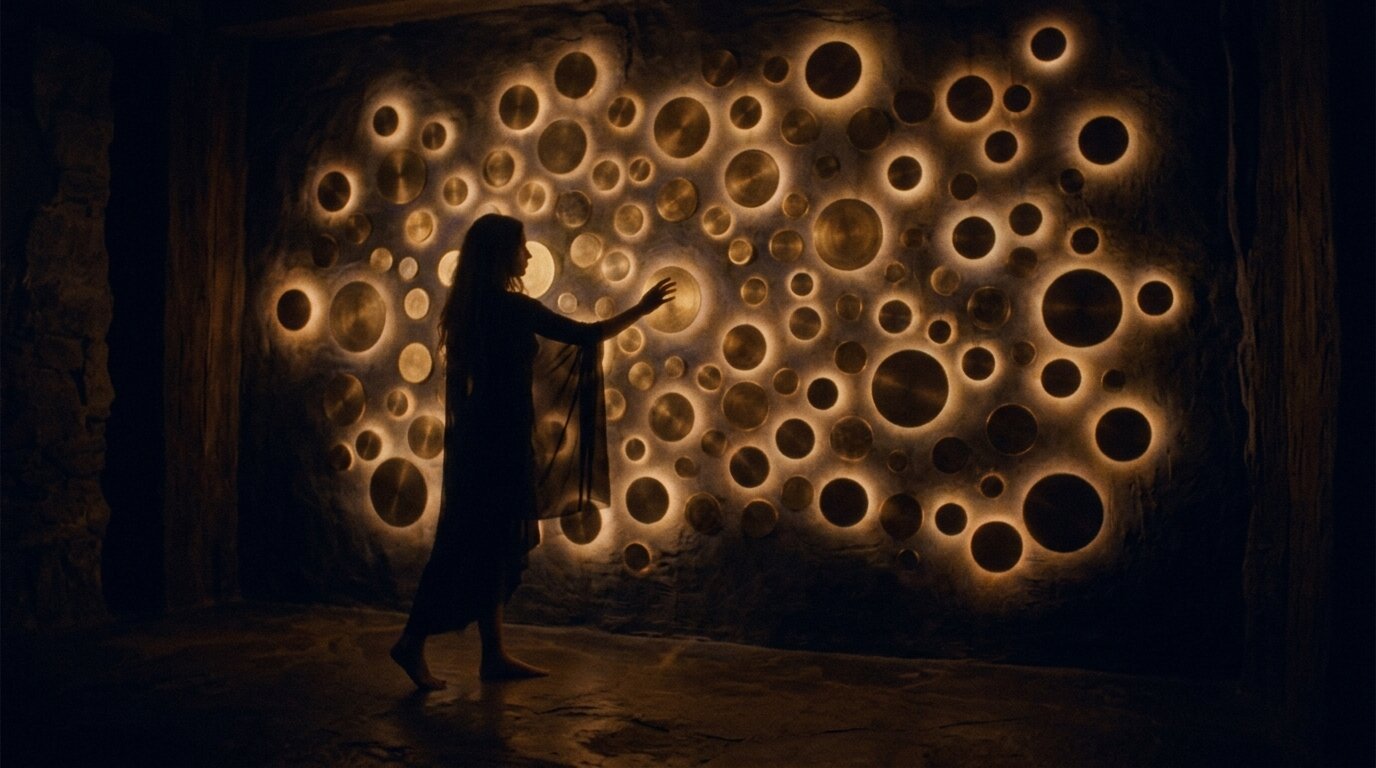
The emotional heart of this dream is usually not claustrophobia. It’s the specific, visceral frustration of an unacknowledged command. Think of the spike of dread you feel when you mash the emergency alarm button and realize the metal box is ignoring your touch completely. You are sending a signal out into a void, and the lack of response is its own kind of terror. The feeling is one of being unheard, unseen, and suddenly powerless in a system you are supposed to be able to control.
This disconnect between your inner state and your outer reality is a signature of how dreams process emotion. A 2011 paper by Martin Desseilles and his colleagues explains that during REM sleep, the brain’s emotional centers (like the amygdala) are highly active, while the regions responsible for logic and control are dampened. This creates a perfect storm for dreams where you feel intense urgency and alarm but are completely unable to act. The dream sets up an unsettling contrast between your internal, hyper-alert state and the complete stillness of your surroundings, leaving you to feel the full weight of your powerlessness.
Thresholds, Towers, and the Illusion of Vertical Control
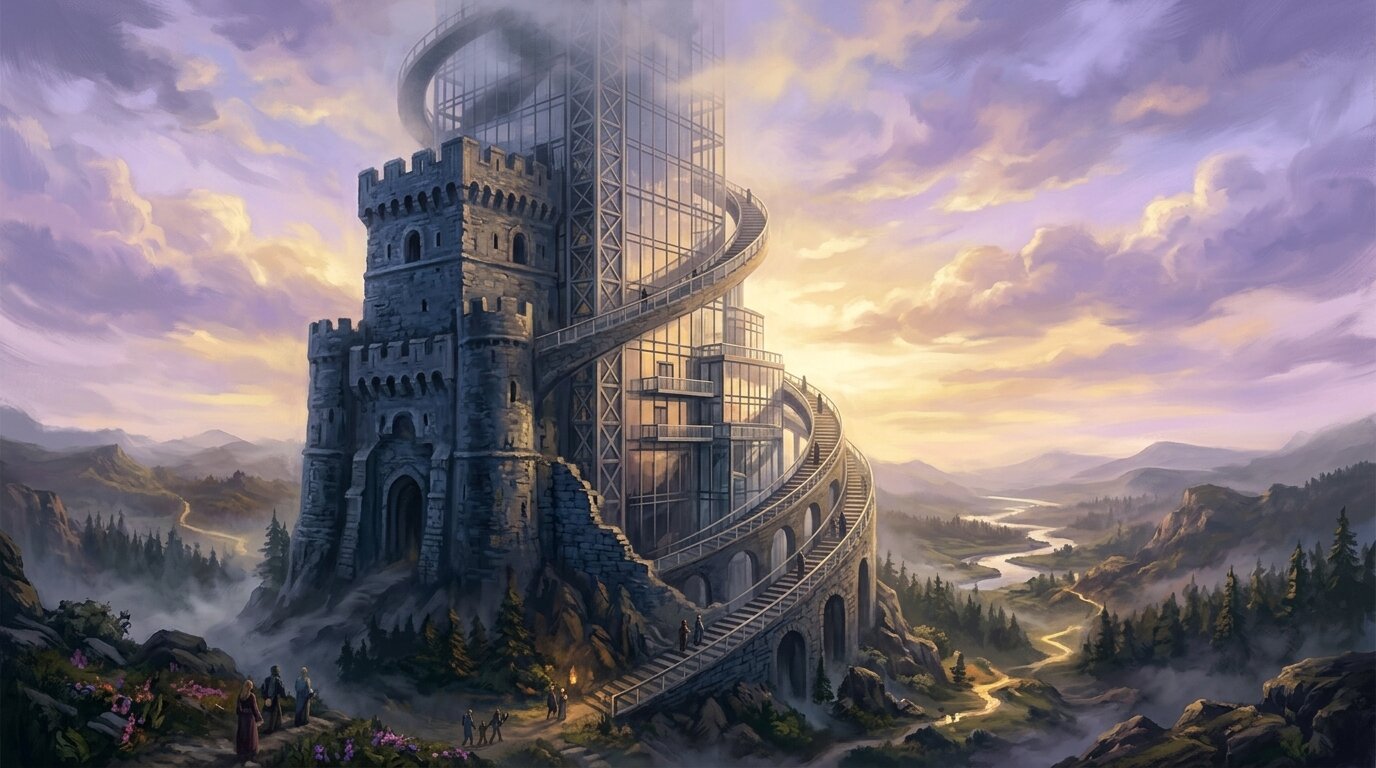
For centuries, stories and myths have used vertical movement to represent ambition, social mobility, and spiritual growth. We climb ladders of success, ascend to higher planes of thought, and look up to our heroes. In ancient stories, this might have been a labyrinthine tower with collapsing staircases; in our modern world, it’s often an elevator where access is granted by keycards and button panels. The control panel, in this light, becomes the modern gatekeeper to these higher domains.
Our culture promises push-button convenience for every goal. We expect instant lift, a smooth and effortless ascent. This dream, however, taps into an older, more archetypal truth: that real transformation often requires taking the slow stairs. The broken panel confronts us with the illusion of easy control. It reminds us that just wanting a different floor isn’t always enough. When the machinery of convenience fails, we are forced to consider what other ways we have of getting where we need to go. Maybe the dream isn't about being trapped, but about being asked to find a different path.
Missing Buttons, Glowing Sparks, and Uncontrollable Speed
The precise way the elevator panel fails in your dream can offer another layer of meaning. A panel with no buttons at all is very different from one that is sparking and chaotic. Each variation points to a distinct flavor of waking anxiety.
A completely blank panel, for instance, often surfaces when you feel you lack a clear path forward. There are no options to choose from, no destination to select. It’s a dream of being stalled not by a malfunction, but by a total absence of choice. On the other hand, a panel where the buttons are rapidly cycling through random floors or sparking with short-circuiting energy can suggest the exact opposite. This variation tends to reflect a feeling of being overwhelmed by too many competing demands, a chaotic loss of momentum where you're being pulled in every direction at once. As dream researcher Deirdre Barrett has explored, our dreaming minds often use vivid, visual-spatial scenarios to work through complex waking-life problems. The state of the panel is a picture of your current decision-making landscape.
Auditing Your Daily Control Panels
This dream often shows up when you are over-relying on a system, habit, or routine that is no longer serving your current life transition. Think about the "buttons" you press every day out of habit, expecting a certain result. This could be in a major project at work, a long-standing personal relationship, or even your own internal patterns of thought. The dream acts as a kind of subconscious audit, flagging a control panel that you’ve been using automatically without checking to see if it’s still plugged in.
The work of G. William Domhoff suggests that dreaming can be seen as a form of simulation, where we rehearse and explore social scenarios and personal challenges. This dream is an active rehearsal of hitting a boundary. There's a subtle tension here, too. It’s easy to blame an external system, a boss, or a relationship for holding you back. But the dream might be revealing that you are staying in the cab because taking the emergency exit or prying the doors open would demand a level of vulnerability or effort you're not quite ready for.
Questions to Help You Decode Your Control Panel
Thinking about a dream is less about finding a single answer and more about living with better questions. If this dream has stuck with you, here are a few things worth sitting with:
- In what area of your life are you currently pushing buttons and expecting a result that no longer happens?
- When the panel broke in your dream, was your dominant feeling fear, quiet relief, or intense frustration?
- Which "floor" or destination were you trying to reach, and who or what expects you to arrive there?
- If you stopped relying on automatic mechanisms, what is one direct, grounded step you could take today?
Stepping Out of the Cab and onto Ground Level
Ultimately, the broken elevator panel doesn't have to be a symbol of failure or a trap. It can be seen as a crucial wakeup call from your own mind, an invitation to stop relying on broken controls and automatic habits. The dream puts you in a situation where the easy way is blocked so that you might finally consider another. It asks you to stop pushing the same unlit buttons and, instead, to look for the door.
You are not defined by the machinery that fails you.
Every dream holds a unique story. If you'd like to share yours, you can submit it to us. You might also find personal resonance in articles about what it means when you dream about your car driving itself or your GPS sending you the wrong way.

Written by Claire Sterling
Contributing Writer · Sleep Science & Cognitive Research
Claire Sterling explores how emotional stress and nocturnal cognition shape dreams, synthesizing peer-reviewed sleep research into warm, everyday reflections.
At DreamAtlas, interpretations are symbolic reflections grounded in universal human themes and peer-reviewed research, not clinical or medical advice.
Want to understand our approach? Read about our editorial standards →
Categories
Popular Symbols
Themes
Recent Posts
What It Means When You Dream About Being Judged by a Group
October 15, 2026Dreaming of Snails – Patience, Delay, and Quiet Persistence
October 13, 2026What It Means When You Dream About Wolves Howling in the Distance
October 08, 2026Dreaming of Butterflies Landing on You
October 06, 2026Why You Dream About Bears in Your Home
October 01, 2026About DreamAtlas
Your guide to exploring the symbolic meaning of your dreams. We offer thoughtful, reflective interpretations grounded in universal human themes.
Learn More
Comments