There’s a feeling so delicate it’s almost a question. A tiny pressure, a flicker of movement on your skin that is barely there, yet it’s enough to make you hold your breath. This is the unique territory of the butterfly dream. Unlike dreams that shake you awake with a racing heart, this one often leaves behind a profound sense of quiet wonder, a feeling that something important has just happened, gently.
This kind of dream feels less like a message to be decoded and more like an experience to be felt. As we explore what it might reflect, remember these are ideas to spark your own reflection, not medical or psychological advice.
Quick takeaways:
- A butterfly landing on you often signals an invitation to embrace personal transformation without force or friction.
- The gentle nature of the interaction can highlight a subconscious readiness for peace, healing, or an emotional soft-landing.
- Specific details like the butterfly's color or where it lands may reflect nuanced feelings about vulnerability and your identity.
- This dream suggests your waking mind is learning to trust quiet moments of change rather than resisting them.
A Soft Landing for Big Transformation
Change doesn't always arrive like a thunderstorm. Sometimes, the biggest transformations in our lives don't announce themselves with drama, but with a quiet, nearly weightless touch. When a butterfly lands on you in a dream, it often points to a major personal shift that is happening with your cooperation, not your resistance. You might be standing in a field or a familiar garden when a monarch quietly settles on your open palm, and your only job is to be still and allow it.
The tension in this dream is subtle but real. There's a powerful desire to hold onto the beauty of the moment, to make the butterfly stay. Yet you know on some level that you can't, and that you shouldn't. It’s a beautiful reflection of accepting a transitional moment without needing to control its outcome. It’s no surprise that the ancient Greek root for the word "psychology," psychē, meant both soul and butterfly. In a 2026 piece for Psychology Today, Boria Sax points out this connection, suggesting the butterfly has long been a symbol for our own soul-level evolution.
The Emotional Weight of Weightlessness
The most common feeling people report from this dream is a sense of quiet awe or unexpected calm. Even if your waking life is a whirlwind of deadlines and obligations, the dream world can offer a moment of pure, gentle contact. This contrast can reveal a deep subconscious need for more gentleness and peace in your daily routine. It’s like feeling a sudden wave of relief and tenderness as the insect rests on your shoulder, a stark difference from a stressful week where you felt constantly on guard.
This feeling of profound peace can also come with a slight edge of anxiety upon waking. Can that serenity survive the morning alarm? Will it hold up against the demands of the day? This tension isn't a failure of the dream, but part of its message. It highlights just how precious those moments of inner quiet are. Research on dream content validates this. A 2021 analysis from the Sleep and Dream Database by Kelly Bulkeley found that friendly, prosocial interactions with characters (including animals) are surprisingly common, suggesting our dreams often reflect an innate desire for harmony.
From Ancient Philosophy to Soul Symbols
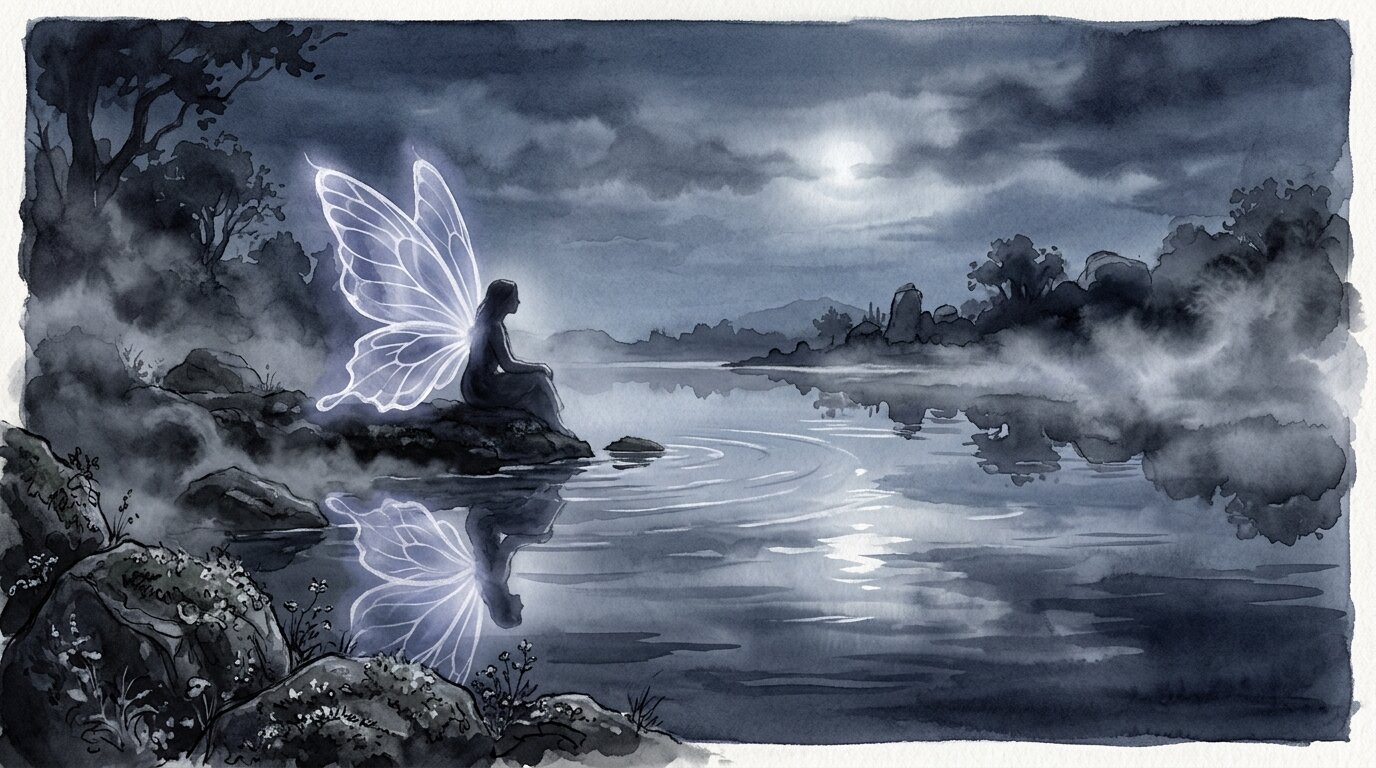
The image of a butterfly landing on a person resonates across history, bridging the physical world with a deeper awareness. Perhaps the most famous example is the paradox from the Daoist philosopher Zhuangzi, who dreamt he was a butterfly. Upon waking, he was unsure if he was a man who had dreamt of being a butterfly, or a butterfly now dreaming he was a man. His story beautifully captures the dream's ability to blur the lines of identity and reality.
Here, we run into a genuine uncertainty in interpretation. Ancient traditions often saw the butterfly as a literal omen or a symbol of the immortal soul paying a visit. A more modern psychological view, however, might see the butterfly as a projection of the self, a reflection of one's own internal state. A study in Frontiers in Psychology from 2020 examined Zhuangzi's dream as a framework for metacognition, suggesting that such dreams are tied to our capacity for self-reflection. There’s no settled answer on whether the butterfly is a messenger from without or a symbol from within; perhaps the truth is that it’s powerful precisely because it can feel like both at once.
Colors, Placements, and Subtle Shifts in the Dream
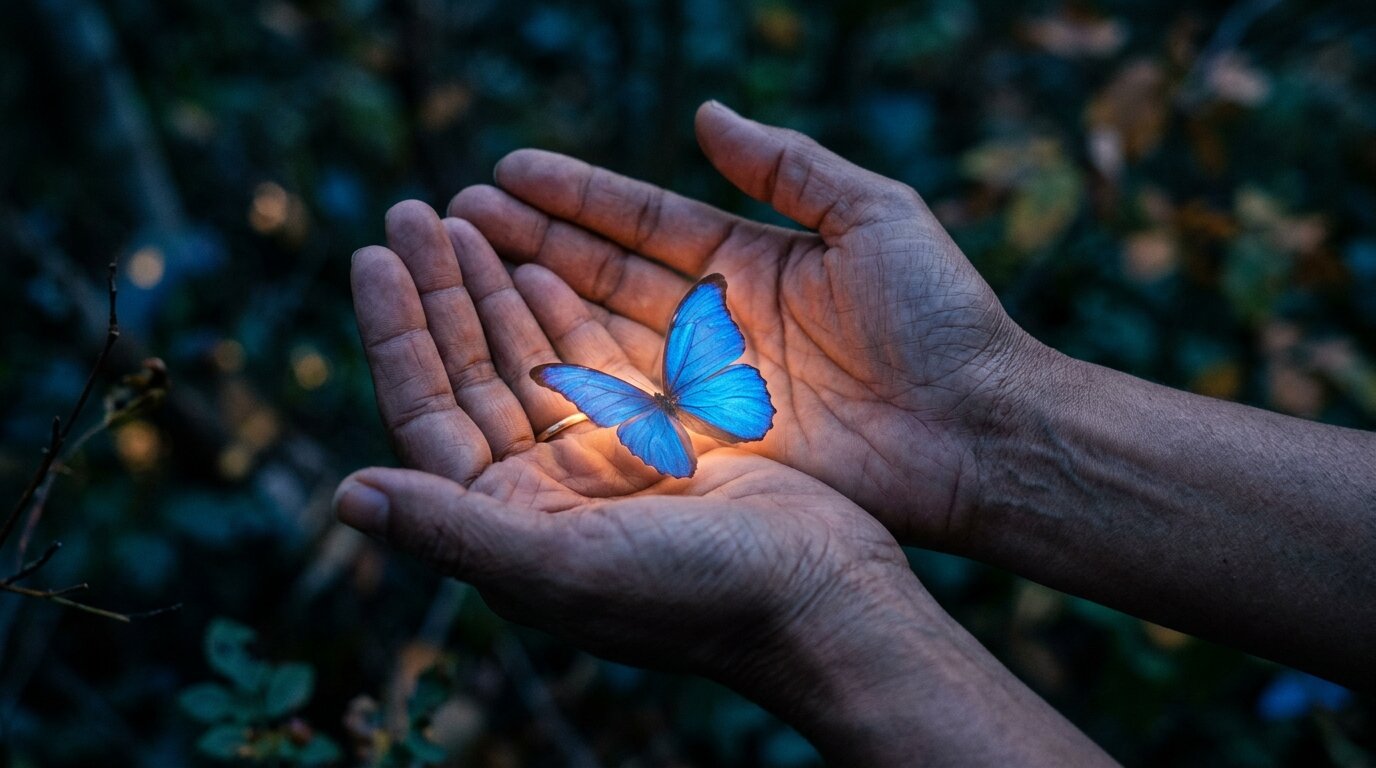
The details in this dream are everything. Where the butterfly lands and the color of its wings can subtly reshape its meaning. A bright blue butterfly landing directly on your chest, for instance, might feel connected to matters of the heart and emotional expression. A swarm of white butterflies fluttering around your hands could point to a more spiritual or innocent transformation that you are ready to create or welcome.
Pay attention to how the landing feels. While a delicate touch is often comforting, a butterfly that feels unexpectedly heavy or refuses to fly away can shift the dream’s tone. That feeling might nudge you to consider if a new opportunity or identity also comes with a sense of unexpressed responsibility. As Harvard dream researcher Deirdre Barrett explains in a Psychology Today article, small creatures in dreams can sometimes act as metaphors for subtle physical sensations we are experiencing in our sleep.
What Your Mind Is Processing Right Now
This dream often shows up when you are in the middle of a significant life transition. Your mind may be quietly working through the complex emotions of letting go of an old self and embracing a new one. Think of moments like deciding to leave a long-held career, healing a fractured friendship, or simply realizing you’ve outgrown an old belief. The butterfly landing on your outstretched hand can be a symbol that your brain is consolidating these emotional experiences into a new, more integrated sense of who you are.
It’s a vulnerable feeling, recognizing that you’re ready for a fresh start while also acknowledging the fear that comes with letting the old cocoon fall away. This aligns with what we know about how dreams work. Research from MIT's Center for Learning and Memory has shown that the brain replays and processes waking experiences during REM sleep, especially those with an emotional charge. Your dream of a gentle landing could be your mind’s way of rehearsing a new, more peaceful state of being.
Questions to Help You Understand the Dream
- Where on your body did the butterfly land, and what emotions do you associate with that spot?
- Are you currently going through a change in waking life that requires patience rather than force?
- How did you feel in the exact moment the wings touched you: fearful, calm, amazed, or protective?
- Is there a part of yourself you've been keeping hidden in a 'cocoon' that is now ready to emerge?
Carrying the Flutter into Your Day
The invitation of this dream is to honor your own growth with the same patience and gentleness the butterfly offered you. It’s a reminder that not all strength has to be forceful, and not all change has to be painful. Sometimes, the most important work is simply being still enough to let something beautiful find you.
The most profound transformations often arrive on the quietest wings.
Every dream is a unique story. If this one sparked something in you, consider sharing your experience on our dream submission page. You might also find meaning in related articles, like Dreaming of Sunrises – Hope, Renewal, and New Beginnings or exploring the gentle patience in Why You Dream About Turtles Moving Slowly Beside You.

Written by Julian Thorne
Contributing Writer · Mythic & Archetypal Symbolism
Julian Thorne explores the universal metaphors in human storytelling, drawing upon comparative mythology, literature, and archetypes.
At DreamAtlas, interpretations are symbolic reflections grounded in universal human themes and peer-reviewed research, not clinical or medical advice.
Want to understand our approach? Read about our editorial standards →
Categories
Popular Symbols
Themes
Recent Posts
Dreaming of Butterflies Landing on You
October 06, 2026Why You Dream About Bears in Your Home
October 01, 2026Dreaming of Dolphins – Intelligence, Connection, and Emotional Depth
September 29, 2026What It Means When You Dream About Swarms of Bees
September 24, 2026Dreaming of Owls Watching You Silently
September 22, 2026About DreamAtlas
Your guide to exploring the symbolic meaning of your dreams. We offer thoughtful, reflective interpretations grounded in universal human themes.
Learn More
Comments