That feeling doesn’t always fade when your eyes open. Sometimes the dream lingers, a phantom pressure in the room, the sense that the walls of your own bedroom are just a little closer than they were before you fell asleep. It's a deeply unsettling dream, the kind that can leave a mark on your morning, but it rarely points to a literal dead end in your life.
This feeling of being cornered is a common language of our dreaming minds, a powerful symbol for something happening below the surface. Think of these interpretations as a conversation starter with yourself, a way to reflect on the dream’s message, not as any kind of medical or psychological advice.
Quick takeaways:
- Feeling trapped in a dream usually reflects a waking situation where you feel overcommitted or unable to express your boundary preferences.
- The presence of surrounding figures often symbolizes internalized social expectations or perceived judgment rather than literal hostility from others.
- Physical sensations of frozen immobility during exit searches are frequently amplified by your brain's natural REM sleep paralysis mechanism.
- Recognizing the dream as a signal of emotional overload gives you permission to pause, delegate responsibilities, and create waking breathing room.
The Architecture of Overwhelm: What the Ring of Obstacles Reveals
When you dream of being surrounded with no way out, it’s tempting to interpret it as a warning about external threats. But more often than not, the architecture of the trap is a blueprint of your own inner world. The dream is your mind’s way of creating a visual metaphor for a feeling of psychological overload, where every potential choice feels blocked by an unacceptable compromise. You might be standing in the center of a crowded room, every doorway blocked by acquaintances silently expecting you to make a decision, and feel the walls closing in.
Herein lies the dream’s paradox: while it feels like you're being trapped by outside forces, it often shines a light on how your own deep-seated reluctance to disappoint others is what’s sealing the exits. This isn't a new idea; it's a pattern that became incredibly common during periods of collective stress. Research highlighted in a 2022 article in The Guardian by Donna Ferguson showed how the loss of agency during lockdowns manifested in dreams of being physically trapped, with locked doors and impassable barriers. Your dream isn't so different. It may be mapping out the places where you feel your own agency has been compromised.
When Your Nervous System Pulls the Emergency Brake
There’s a unique flavor of panic that comes with this dream. It’s the frantic search for an exit, the rising dread as you realize there isn’t one, and the gut-wrenching feeling of being frozen in place, unable to run or push through. Your legs might feel like they’re stuck in wet cement just as the surrounding crowd takes a step closer. That physical sensation of paralysis is one of the most memorable parts of the dream, and it has a fascinating biological root.
During REM sleep, the stage where most vivid dreaming occurs, your brain paralyzes your skeletal muscles. This protective mechanism, called REM atonia, is what keeps you from physically acting out your dreams. As UCLA Health explains, the terror of being trapped in a dream is often the result of a collision between your dreaming mind’s urgent command to flee and your body’s physical inability to respond. The feeling is intensely real, but the paralysis itself indicates how your nervous system works to keep you safe. There’s the tension: the very system designed to protect you is what amplifies the dream’s claustrophobic horror.

From Ancient Labyrinths to Modern Enclosures: The Universal Encircled Hero
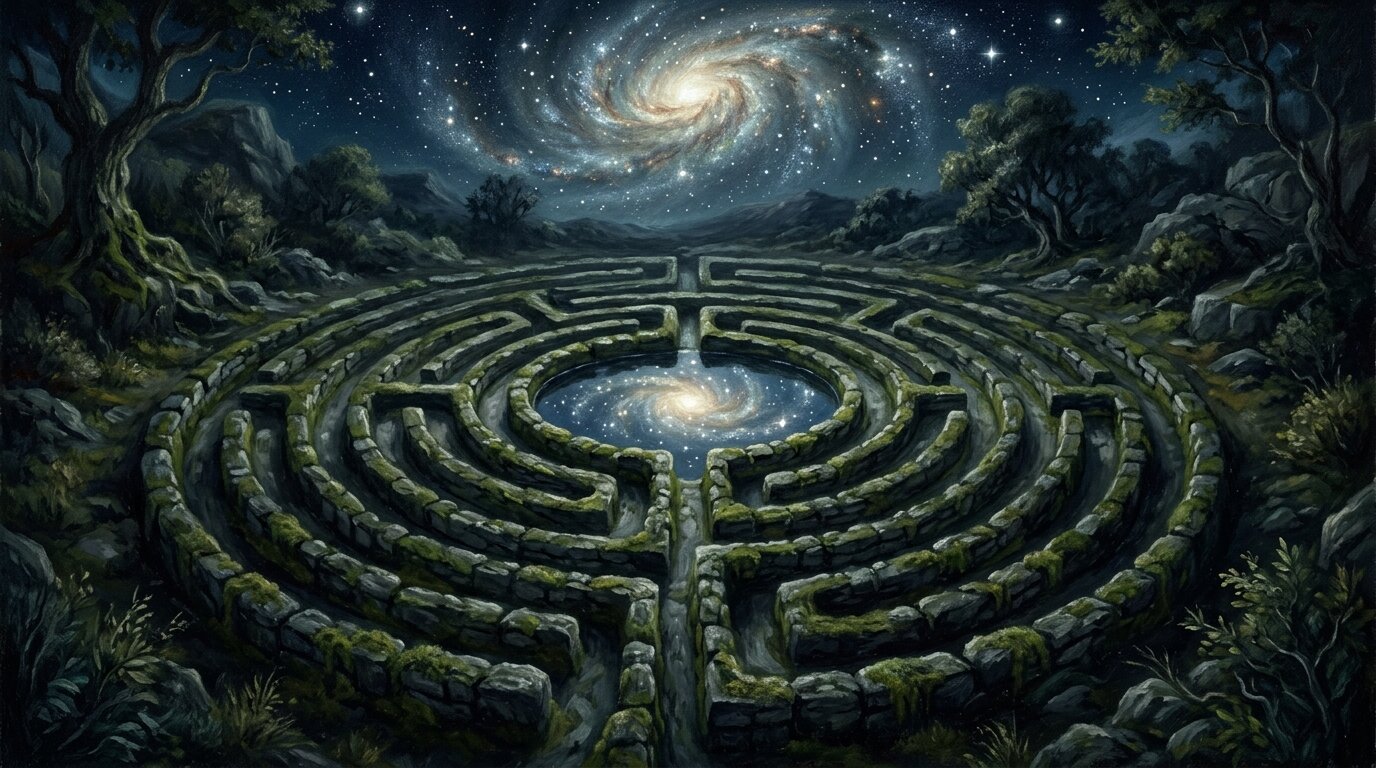
The image of being trapped in a space with no clear exit is a powerful, ancient symbol. It shows up across cultures in myths, legends, and folklore, from the labyrinth of the Minotaur to folk tales of travelers trapped in a ring of impassable thorns or shadowy guardians. Cross-culturally, being encircled isn’t just a trap; it’s a threshold. It is the classic archetypal moment that forces the hero to stop running from an external threat and turn inward to face a necessary transformation.
This is where our modern sensibilities can clash with the dream’s ancient wisdom. We tend to view a dead end as a problem of productivity, a barrier to be smashed through so we can keep moving forward. But many older traditions see spatial containment differently. They see it as a sacred forcing function for introspection, a space where the noise of the outside world is silenced so that an inner truth can finally be heard. The dream might not be telling you to find a way out, but to find out what happens when you finally stand still.
Shifting Walls and Closing Ranks: Common Variations of the Trapped Dream
The details of your dream are never random. The specific nature of the barrier surrounding you can offer a clue about the kind of waking boundary you feel helpless to set. A dream where the solid walls of a room are slowly shrinking suggests a structural or situational pressure, like a demanding job or a financial constraint. A dream of being surrounded by a ring of whispering colleagues, however, points more toward social anxieties and the fear of judgment.
Paying attention to these variations can help you pinpoint the source of the feeling. Is the barrier made of dense fog, suggesting confusion or a lack of clarity? Or is it a circle of silent strangers, reflecting a feeling of alienation or not belonging? The complexity of the brain's circuitry during sleep means that these subtle emotional shades get translated into rich, specific imagery. The neural networks that control motor inhibition during REM sleep, as detailed in a review in Frontiers in Neurology by Jimmy J. Fraigne and his colleagues, are incredibly complex, allowing for a huge range of perceived physical experience while dreaming. It’s a bit of a mystery how these systems create such specific narratives, but the emotional logic often holds true.
Unlocking the Perimeter: Reading This Dream in Your Current Life
If this dream has shown up for you, it might be an invitation to conduct a gentle audit of your waking life. It’s a chance to look at the commitments, relationships, and responsibilities that form the "walls" of your daily existence. Often, the dream arises when we’ve said "yes" out of habit or obligation one too many times, leaving no room for our own needs. Realizing that your current work project schedule has left you with zero free evenings can feel just as suffocating as the dream's dense, insurmountable wall.
The impulse after a dream like this can be to search for a dramatic escape, a single big decision that will solve everything. But the dream's tension often suggests a different path. It may be that small, everyday micro-boundaries are the keys to unlocking the dream’s exit. As a piece in The Independent by Tom Batchelor reported, researchers at University College London found direct links between feelings of claustrophobia in waking life and dreams of physical entrapment. Your dream could be your mind’s way of rehearsing the act of claiming a little more space for yourself, one small "no" at a time.
Quiet Inquiries to Locate Your Waking Exits
If you want to sit with this dream a little longer, you don't have to find an "answer." Sometimes just asking the right questions is enough to let the dream deliver its message. Consider these a starting point:
- Where in your current life do you feel like every available option requires a compromise you aren't ready to make?
- Who or what does the surrounding crowd in your dream remind you of in your waking social or professional circles?
- What is one boundary you have avoided setting because you fear the reaction of the people around you?
- If an exit suddenly opened in that dream room, what would you have to leave behind to step through it?
Stepping Beyond the Dreamed Perimeter
A dream of being trapped can feel like a verdict, a declaration that your circumstances are permanent. But it’s almost always the opposite. It’s a map, drawn in the strange ink of sleep, showing you the exact shape of the pressure you’re under. It’s a message from the part of you that knows you need more air, more room, more freedom to move. The walls may feel real in the dream, but they are built by your mind, and what the mind builds, it can also dismantle.
The dream doesn’t ask you to find the exit. It asks you to realize you can create one.
Had a dream that felt particularly meaningful? You can share it with us. You might also find some helpful reflections in our articles on dreaming about being judged by a group or what it means when you dream of mountains you can't climb.
By DreamAtlas Editorial
Researched, drafted with AI assistance, and edited by the DreamAtlas team
Every article is checked against our editorial standards: sources are verified, interpretations stay symbolic rather than clinical, and pieces are reviewed and updated over time.
At DreamAtlas, interpretations are symbolic reflections grounded in universal human themes and peer-reviewed research, not clinical or medical advice.
Want to know how this article was made? Read how we create content →
Had a dream like this?
Write it down in your private dream journal. It stays in your browser, links each symbol to the dictionary, and shows which symbols keep coming back.
Categories
Popular Symbols
Themes
Recent Posts
What It Means When You Dream About Being Surrounded With No Exit
November 12, 2026Dreaming of Being Watched Through Windows
November 10, 2026Why You Dream About Being Cornered
November 05, 2026Dreaming of Losing Something Irreplaceable
November 03, 2026What It Means When You Dream About Being Exposed or Vulnerable
October 29, 2026About DreamAtlas
Your guide to exploring the symbolic meaning of your dreams. We offer thoughtful, reflective interpretations grounded in universal human themes.
Learn More
Comments