There’s a specific kind of exhaustion that comes from fighting a battle in your sleep. You feel the grit of loose gravel under your boots, the strain in your calves as you look up at a sheer, impossible wall of rock that disappears into the clouds. You try to find a foothold, but everything crumbles. Then you wake up, the cold morning light a stark contrast to the dream's immense effort, feeling like you’ve run a marathon without moving an inch.
This dream isn't a forecast of failure, but a quiet conversation about boundaries, ambition, and the difference between persistence and stubbornness. It's your mind's way of asking whether the summit you’re aiming for is still worth the effort. Exploring what it might mean is a way to listen to yourself, and these interpretations are here to spark that reflection, not to serve as any kind of psychological advice.
Quick takeaways:
- Your dream of an unclimbable mountain could be pointing to a real-life goal where your current approach is no longer working.
- That feeling of being stuck or slipping backward often mirrors a deep psychological need for progress and control that's being blocked in your life.
- The dream isn't necessarily telling you to try harder, but to ask if you're even supposed to be climbing this particular mountain right now.
The Wall at the Horizon: When Goals Exceed Your Current Grip
An insurmountable mountain in a dream rarely points to a goal that is truly impossible. Instead, it often exposes the friction between your current strategy and a reality that’s asking for something different. Think of it: you're standing at the base of a jagged granite cliff with bare hands, watching the trail markers disappear onto a sheet of sheer ice. You feel an internal clock ticking down. The dream isn't mocking your ambition; it's highlighting your tools. It’s a vivid depiction of what it feels like to apply the wrong method to the right problem, like trying to pick a complex lock with a hammer when what you really need is the key. Research by Netta Weinstein, Rachel Campbell, and Maarten Vansteenkiste found that when our basic psychological needs for autonomy and competence are frustrated in waking life, we report more dreams about exactly these kinds of insurmountable obstacles. The dream simply gives a picture to a feeling you already have: that the way you're trying to move forward isn't getting you anywhere.
The Weight in Your Boots: Processing Frustration and Stagnation
The core emotion of this dream is usually not terror, but a heavy, suffocating paralysis. It’s the feeling of intense physical effort producing zero elevation. You reach for a handhold and it crumbles into dust; you try to take a step and your feet slide back down the slope. This sensation of helpless stagnation can feel alarming, but it often serves a vital emotional purpose. It acts as a release valve, letting you experience and discharge the suppressed frustration from your waking life so it doesn't curdle into resentment. A large-scale analysis of nearly 10,000 dream reports by Geneviève Robert and Antonio Zadra revealed that themes of frustrated action and the failure to overcome physical obstacles are overwhelmingly common in bad dreams. Your mind might be using the safe container of a dream to process the feelings of being stuck, which can sometimes be too overwhelming to face head-on during the day. This is a different kind of anxiety than the panic of a chase dream, as it's less about escape and more about the sheer effort of a fruitless climb. Unlike that frantic, heart-pounding energy, the mountain dream is characterized by a thick, heavy exhaustion; the weight of expectation meeting the hard reality of your current limits.
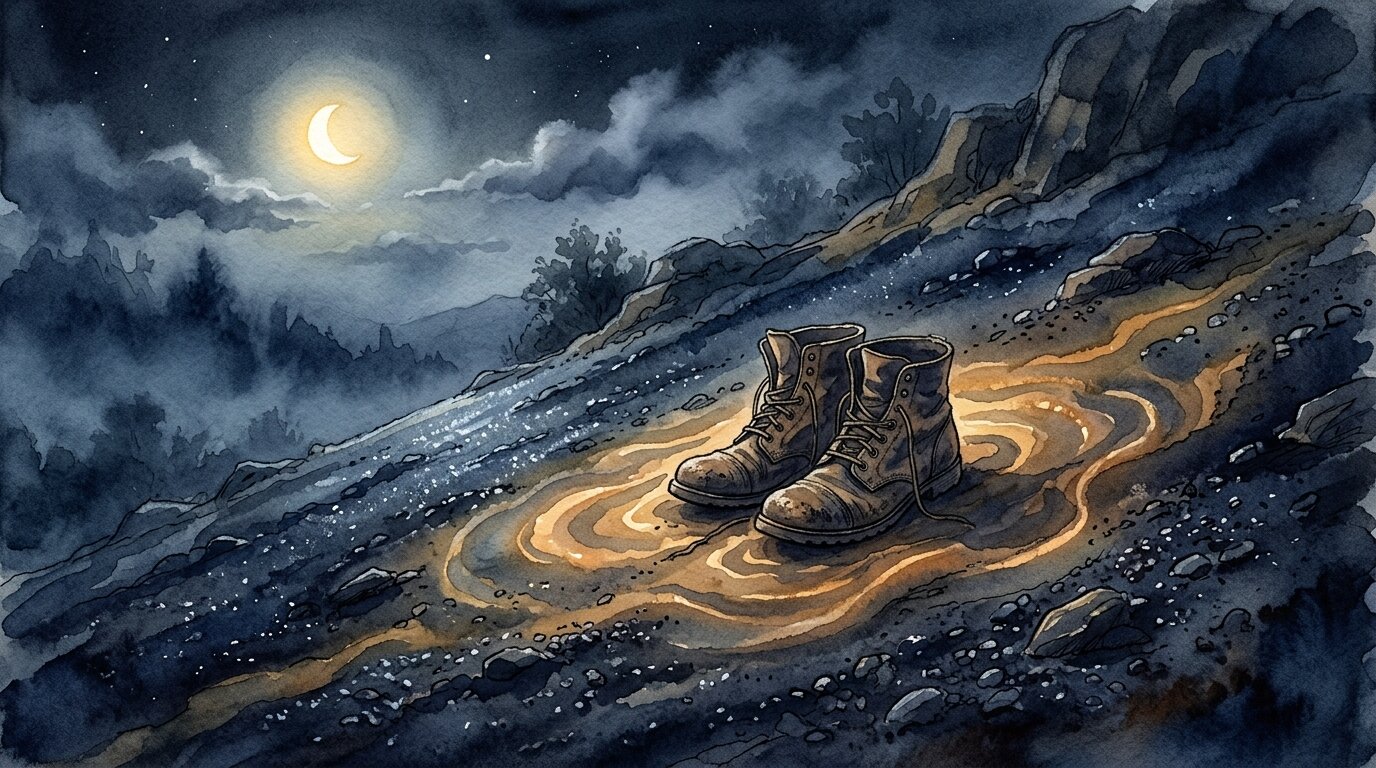
Thresholds of the Sacred: The Mountain as a Mythic Boundary
While our modern culture tends to frame every unscaled summit as a personal failure, many older traditions see it differently. Across folklore and myth, mountains are often sacred thresholds, places that demand internal transformation before they grant passage. Being turned back at the slope isn't a rejection, but an act of initiation, or even protection. Think of ancient stories where pilgrims are turned back by a sudden blizzard, only to find a more meaningful path through the lower valleys after surrendering their pride. Here, the impassable ridge saves the climber from entering terrain they are not yet equipped to traverse. A 2023 piece in Psychology Today by Kelly Bulkeley explores how frustrating dream figures can act like a mythic trickster, disrupting our rigid plans to force psychological growth. Is the mountain in your dream a simple obstacle, or is it a guardian? There’s no settled answer, but holding both possibilities can shift the feeling from failure to something more like reverence.
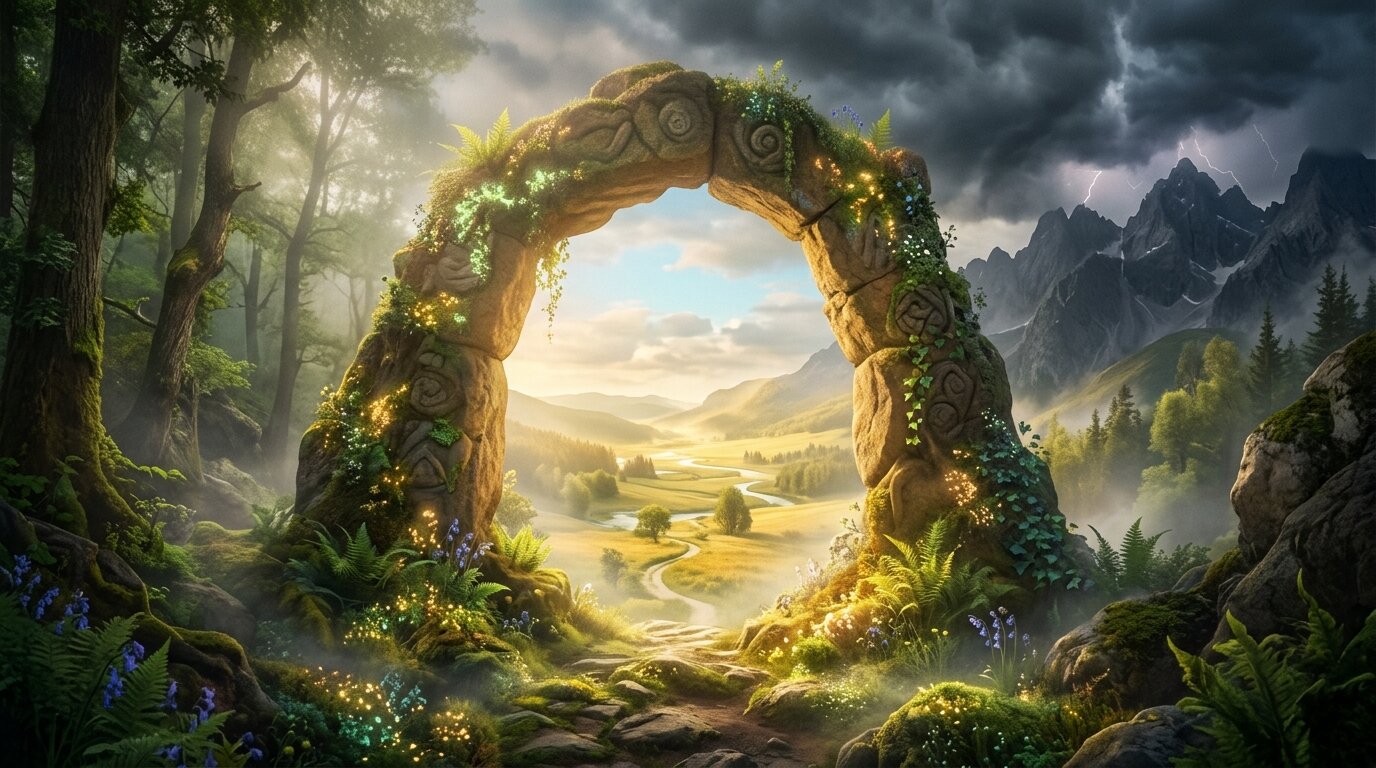
Crumbling Trails and Vertical Walls: Decoding the Terrain
The specific way the mountain stops you is often a clue to the nature of your waking roadblock. The dream’s terrain can be surprisingly literal in its symbolism. For instance, if you’re climbing a staircase carved into the rock that suddenly ends in mid-air, it might point to a flaw in your long-term plan, a missing step you haven't accounted for. A trail that crumbles into loose soil under your feet could suggest that your foundation, your core reasons for pursuing this goal, needs shoring up. A sheer, vertical cliff face implies the goal itself needs to be broken down into smaller, more manageable parts. Confusing these signals can lead to misplaced effort. As dream interpreter Layne Dalfen explains, dreams construct these very specific obstacles to help us process the particular flavor of feeling overwhelmed in our lives. The dream isn't just saying you're stuck; it's showing you a picture of how you're stuck.
Recalibrating Your Ascent: What to Do When You Awake
Ultimately, this dream is an invitation to shift from passive frustration to active adaptation. It’s a nudge from your sleeping mind to stop pushing against the wall and start looking for a gate. This might mean pausing a demanding project to re-evaluate if you’re pushing from genuine alignment or just stubborn habit. It could mean admitting a certain relationship dynamic isn't working or that a personal goal needs a complete overhaul. Choosing to pause your climb can feel like giving up, but it’s often the most strategic move you can make. It creates the necessary space to see the entire landscape clearly, rather than just the few feet of unforgiving rock directly in front of your face. It is an act of "search behavior," a concept explored by Vadim S. Rotenberg in his work on how REM sleep helps us recover from helplessness. By presenting us with an unsolvable problem, the dream encourages our waking minds to start searching for creative, alternative solutions, restoring the very momentum we feel we've lost.
Questions to Help You Survey the Landscape
When you sit with this dream, you aren't trying to solve a riddle. You're just getting to know the terrain of your own inner world. You could start by asking yourself:
- What project, relationship, or expectation in your waking life currently feels like climbing a vertical wall of ice?
- Are you pushing toward this summit because you truly want to reach it, or because you fear what stepping back might say about you?
- Where in your life are you applying brute force when what is actually needed is a change of route or a period of rest?
- If the mountain in your dream is trying to protect you from an unprepared ascent, what boundary do you need to honor right now?
The Path Around the Mountain
A dream of an unclimbable mountain feels like a story about limits, but it’s really about perspective. Turning back from an impassable cliff is not failure; it's data. It’s the practical wisdom that tells you where the path is not.
The wisest way up is sometimes to go around.
Every dream is a personal map. If you'd like to explore the terrain of your own dreams further, you can share them with us. You might also find insight in our article on dreaming of moving in slow motion.

Written by Claire Sterling
Contributing Writer · Sleep Science & Cognitive Research
Claire Sterling explores how emotional stress and nocturnal cognition shape dreams, synthesizing peer-reviewed sleep research into warm, everyday reflections.
At DreamAtlas, interpretations are symbolic reflections grounded in universal human themes and peer-reviewed research, not clinical or medical advice.
Want to understand our approach? Read about our editorial standards →
Categories
Popular Symbols
Themes
Recent Posts
What It Means When You Dream About Being Judged by a Group
October 15, 2026Dreaming of Snails – Patience, Delay, and Quiet Persistence
October 13, 2026What It Means When You Dream About Wolves Howling in the Distance
October 08, 2026Dreaming of Butterflies Landing on You
October 06, 2026Why You Dream About Bears in Your Home
October 01, 2026About DreamAtlas
Your guide to exploring the symbolic meaning of your dreams. We offer thoughtful, reflective interpretations grounded in universal human themes.
Learn More
Comments