You can almost feel it after you wake up, can’t you? The ghost of a cold wall against your shoulder blades, the phantom pressure of your own body pushing back into the mattress. The dream is over, but the feeling of being trapped, of having run out of room, lingers in your muscles long after your eyes are open. It’s a uniquely suffocating dream, and if you’ve had it, you’re in very good company.
This kind of dream is your mind’s way of talking about pressure, boundaries, and the places where our choices feel like they’ve narrowed to a single, claustrophobic point. We’re going to explore what that feeling might be pointing to in your waking life. These interpretations are meant to spark reflection, not to serve as any kind of psychological advice.
Quick takeaways:
- Being cornered in a dream usually reflects waking situations where you feel your choices have dwindled down to zero, rather than a literal physical danger.
- The pursuer or barrier in your dream often symbolizes an unresolved conversation, a looming deadline, or an emotional boundary you have been trying to avoid.
- High waking stress can temporarily overwhelm your brain's fear-processing system, turning normal nighttime memory sorting into an intense feeling of being trapped.
- Recognizing the wall behind you in sleep gives you a gentle invitation to identify where in your waking life you need to create more room to breathe.
When the Mind Paints a Wall Behind You
The most direct interpretation of being cornered is often the most accurate: it’s a spatial metaphor for feeling emotionally or situationally trapped. Your dreaming mind is a brilliant translator, turning abstract anxieties into physical scenarios. The feeling of having “no other choice” or being “stuck between a rock and a hard place” becomes a literal wall, a dead-end alley, or a room with no doors. Think of it less as a premonition of danger and more as a detailed report on your current internal state.
The dream isn’t just about the wall, but about the futile search for an exit. You might dream of standing in a narrowing hallway in a house you once knew, trying every doorknob only to find them all locked from the outside as something approaches. This feeling of powerlessness is a key part of the dream's message. There’s an interesting tension here. While some theories propose that threat dreams are your brain’s way of rehearsing survival skills, the cornered dream often highlights a breakdown in that system. In a study on recurrent dreams, Antonio Zadra, Sophie Desjardins, and Eric Marcotte found that while people almost always took defensive actions against dream threats, they only successfully escaped in less than 15% of cases. The dream isn't about practicing how to win; it's about showing you how it feels to be trapped.
The Weight of Helplessness and Emotional Overdrive
The true sting of this dream often comes not from the threat itself, but from the sudden, terrifying realization that you’re out of moves. All your usual strategies, your clever arguments, your plans for escape, have evaporated. You’re left with nothing but the wall at your back and the feeling of utter helplessness. It’s the specific dread of sitting in a tense meeting, unable to find the words to defend yourself, or staring at a problem you simply don’t know how to solve. This feeling of paralysis is the core emotional signature of the cornered dream.
Your mind isn’t being cruel by manufacturing this panic. It’s trying to get your attention. That intense feeling of powerlessness is an alarm bell, designed to make you notice a level of waking stress that you might otherwise be pushing through. The challenge is that the very panic the dream creates can temporarily obscure the practical solutions that are actually available to you in daylight. Research by Ross Levin and Tore Nielsen in 2007 introduced a powerful idea for understanding this: they separate the "Affect Load" (the pile-up of daily stress) from "Affect Distress" (your personal tendency to feel overwhelmed). A cornered dream may surface when your stress load gets so high it triggers your underlying distress, creating a perfect storm of nighttime helplessness.

From Ancient Omens to Modern Internal Simulators
For centuries, being trapped in a dream was often read as an external omen. In folklore and myth, a traveler caught in an enchanted forest or a hero facing a dead end in a labyrinth was facing a spiritual test of courage or a warning from the gods. The obstacle was seen as a force outside the dreamer, something to be overcome with grit and virtue. These stories saw the dream as a message from the world to you.
Modern neuroscience offers a different, though not entirely contradictory, perspective. It sees the dream as a message from your own internal world. From this view, the dream is less of an omen and more of a highly advanced simulation. Research into what’s known as Threat Simulation Theory suggests our brains evolved to use dreams as a kind of virtual reality training ground to practice responding to danger. As a 2005 study by Katja Valli, Antti Revonsuo, and others showed, children who had experienced trauma in their waking lives had significantly more threat-filled dreams, suggesting the brain’s internal simulator ramps up when real-world dangers are high. There isn’t a settled answer on which view is “correct.” Is the wall in your dream an external challenge to be met with defiance, or an internal signal to be met with self-compassion? It might just be both.
Shadows, Dead Ends, and Frozen Feet: Reading the Scene
The specific details of how you’re trapped can offer clues about the nature of the pressure you’re feeling. The element that corners you is a symbol worth examining, as it can reveal whether the source of your stress feels like it’s coming from outside demands or your own internal doubts. A solid, unmoving brick wall, for instance, often points to an external circumstance that feels absolute and unchangeable, like a financial reality or a rigid corporate policy.
Other variations tell a different story. If you’re trapped not by a wall but by a thick, disorienting fog, it might reflect a situation where the problem isn’t a clear obstacle but a profound lack of clarity and a feeling of being lost. A dream of your own feet being stuck in wet cement as a threat approaches could point to a sense of internal paralysis or procrastination. You know what you need to do, but you feel incapable of taking the first step. While these dream scenarios feel like absolute dead ends, it’s useful to remember they might be more about chemistry than prophecy. A study by Susan Malcolm-Smith and a team of researchers in 2008 argued that the feeling of being trapped in a dream may reflect a dysregulation in the brain's fear and reward circuits, particularly the amygdala and dopamine pathways, rather than a successful rehearsal for escaping real danger.
Where in Waking Life Are You Out of Options?
Ultimately, a cornered dream is a gentle but insistent invitation to look at your waking life and ask a simple question: where am I saying "yes" out of obligation while my body is screaming "no"? This dream is a diagnostic tool, pointing you toward the exact spot where your sense of agency has been compromised. It might be a work project you felt you couldn't refuse, a family dynamic you feel powerless to change, or a personal commitment that has started to feel more like a cage. The dream gives you the feeling so you can find the source.
The situation it’s flagging might be one you’re actively trying not to think about, which is precisely why your subconscious has to stage such a dramatic intervention. This is where the work of Tore Nielsen and Ross Levin on what they call Affective Network Dysfunction becomes so helpful. Their model proposes that nightmares happen when our stress levels get so high they disrupt the brain’s normal job of processing and extinguishing fear memories during sleep. In other words, when you’re too overloaded during the day, your brain can’t do its nighttime housekeeping properly, and the result is a vivid, panicked dream. Your dream makes the problem feel urgent and inescapable tonight, but your waking self has the power to take a step sideways and find a new angle tomorrow.
Questions to Help You Find Room to Breathe
When you’re ready, sitting with the feeling this dream left behind can be incredibly insightful. You don’t need to solve it, just listen to it. Consider asking yourself a few of these questions:
- In what area of your life right now do you feel like you have run out of acceptable choices?
- Who or what does the approaching force in your dream remind you of in your waking routine?
- What is one boundary you have been hesitating to set because you fear the immediate conflict?
- If you allowed yourself to step sideways instead of backing up, what new option might appear?
- What daily stressor has been accumulating quietly until your mind had to shout about it in your sleep?
Stepping Out of the Corner into Daylight
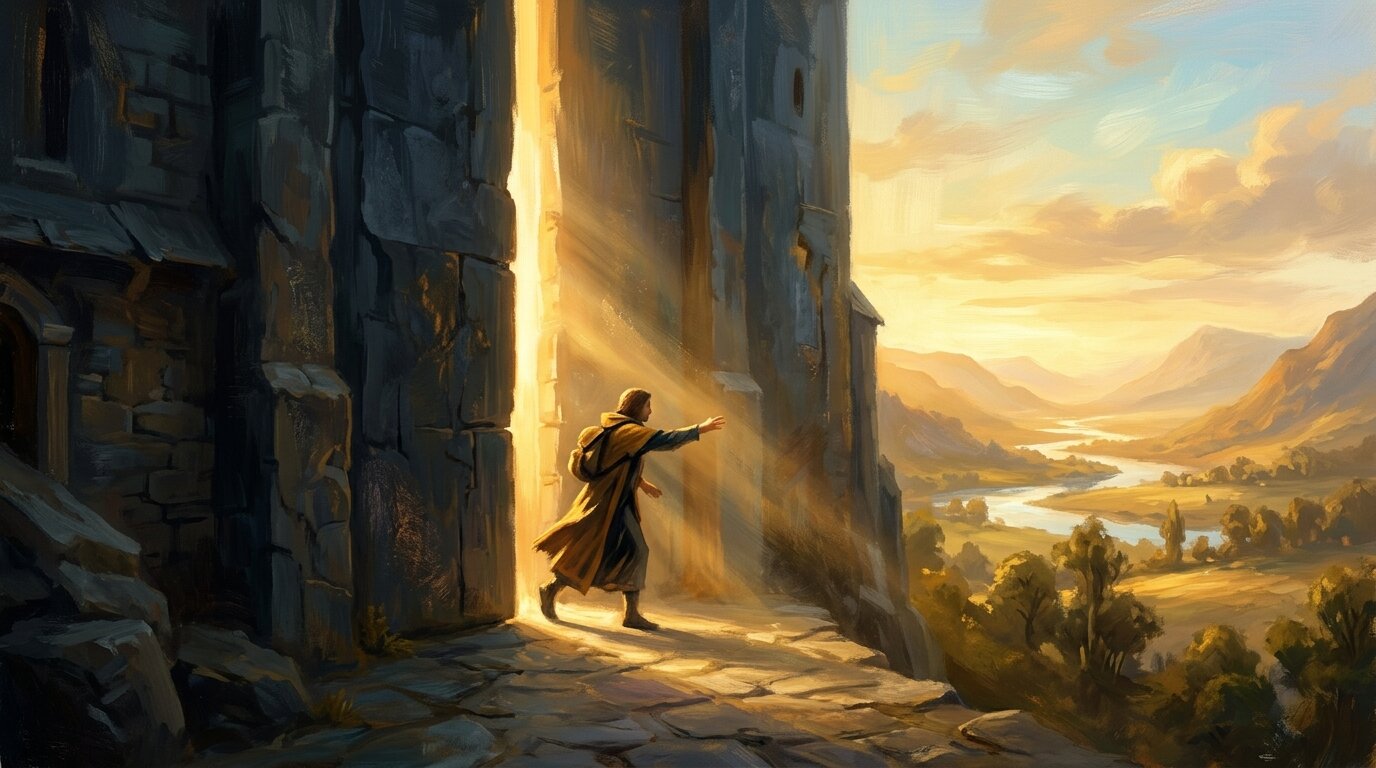
Dreaming of being cornered is not a sign of weakness or a prediction of failure. It is a powerful and intelligent signal from the deepest parts of your mind, asking you to pause and pay attention. Understanding that this dream is often a biological response to stress, a kind of neural circuit breaker tripping, can help demystify the panic and transform it into curiosity. The wall in your dream feels solid, but the options in your waking life are almost always more flexible than you think.
The dream shows you the trap so that you can find the exit.
Have a dream you can't stop thinking about? You can share it with us. You might also find some resonance in our guides to dreams about being chased by something you can’t see or mountains you can’t climb.

Written by Claire Sterling
Contributing Writer · Sleep Science & Cognitive Research
Claire Sterling explores how emotional stress and nocturnal cognition shape dreams, synthesizing peer-reviewed sleep research into warm, everyday reflections.
At DreamAtlas, interpretations are symbolic reflections grounded in universal human themes and peer-reviewed research, not clinical or medical advice.
Want to understand our approach? Read about our editorial standards →
Categories
Popular Symbols
Themes
Recent Posts
Why You Dream About Being Cornered
November 05, 2026Dreaming of Losing Something Irreplaceable
November 03, 2026What It Means When You Dream About Being Exposed or Vulnerable
October 29, 2026Dreaming of Alarms Going Off Everywhere
October 27, 2026Why You Dream About Being Chased by Something You Can’t See
October 22, 2026About DreamAtlas
Your guide to exploring the symbolic meaning of your dreams. We offer thoughtful, reflective interpretations grounded in universal human themes.
Learn More
Comments