There's a phantom chill that sometimes follows you out of sleep. You wake with a gasp, your first conscious thought a frantic check: are you clothed? You are, of course. You’re safe in your bed, wrapped in the familiar weight of your own blankets. But the feeling lingers, a cold echo of having been seen, truly seen, without any shield at all.
These dreams of exposure are startlingly common, and they almost never have anything to do with a secret desire to show up to work in your pajamas. They’re a language of vulnerability, a way your mind processes the feeling of being unshielded in your waking world. The interpretations that follow are meant to spark reflection, not to serve as a diagnosis or a rigid set of answers.
Quick takeaways:
- Exposure dreams rarely predict public failure; instead, they highlight a waking situation where you feel your authentic self is unshielded or undergoing evaluation.
- The emotional sting of dream nakedness often reflects unprocessed self-conscious feelings, such as imposter syndrome or fear of being discovered as unprepared.
- Vulnerability in dreams can serve as a psychological dry-run, helping your subconscious practice navigating social risk and emotional transparency.
- The context of exposure matters: feeling unbothered while unclothed signals emerging self-acceptance, whereas frantic hiding points to a boundary being breached.
Unmasking the Social Shield: Why Your Mind Rehearses Raw Exposure
At their heart, dreams of being exposed are rarely about physical modesty. They are more like a psychological laboratory where your mind tests your readiness to be fully known by others. The setting is often a place where you are expected to perform, like standing at a brightly lit conference podium to deliver a keynote. You glance down and realize, to your horror, that you’re wearing nothing but mismatched socks while your colleagues silently take notes. The terror isn’t about being naked; it’s about being unprepared, fraudulent, or fundamentally unserious in a moment that demands your competence.
This kind of dream can feel like an agonizing breach of safety. Yet, there’s a fascinating tension here. The dream might be nudging you to shed an exhausting persona that no longer serves your growth. It asks what would happen if you let the mask slip. Research from Noor H. Abbas and David R. Samson suggests that our dreams function as a kind of world simulator, overrepresenting negative emotions and unfamiliar social figures to help us rehearse for challenging or vulnerable encounters in our waking lives. Your dream might not be a punishment, but a practice run.
The Weight of Being Seen: Shame, Vulnerability, and Waking Echoes
The feelings that accompany an exposure dream are often what stick with you the longest. It’s that sharp, cold panic of trying to pull a tiny napkin over your body in a crowded room, acutely aware of everyone’s quiet disapproval. Even after you’re awake and safe, a flush of embarrassment can return, a waking echo of the dream’s emotional core. This lingering feeling reveals how your sleeping brain is working to process unintegrated moments of social awkwardness or fear of judgment from recent days. If you’re worried about being seen as an imposter, your dream might hand you a script where you are literally judged by a group.
The distress you feel is not just noise; it’s part of the mechanism. There’s a strange paradox in these dreams. While you may feel intense shame during the dream, that very distress is a key part of how your brain metabolizes emotional vulnerability into waking resilience. Work by a team including Rick Wassing and Frans Schalkwijk demonstrated that healthy REM sleep is crucial for dissolving the emotional charge of self-conscious feelings like shame. When that process is working well, the dream acts as a container, helping you work through the feeling so it has less power over you the next day.
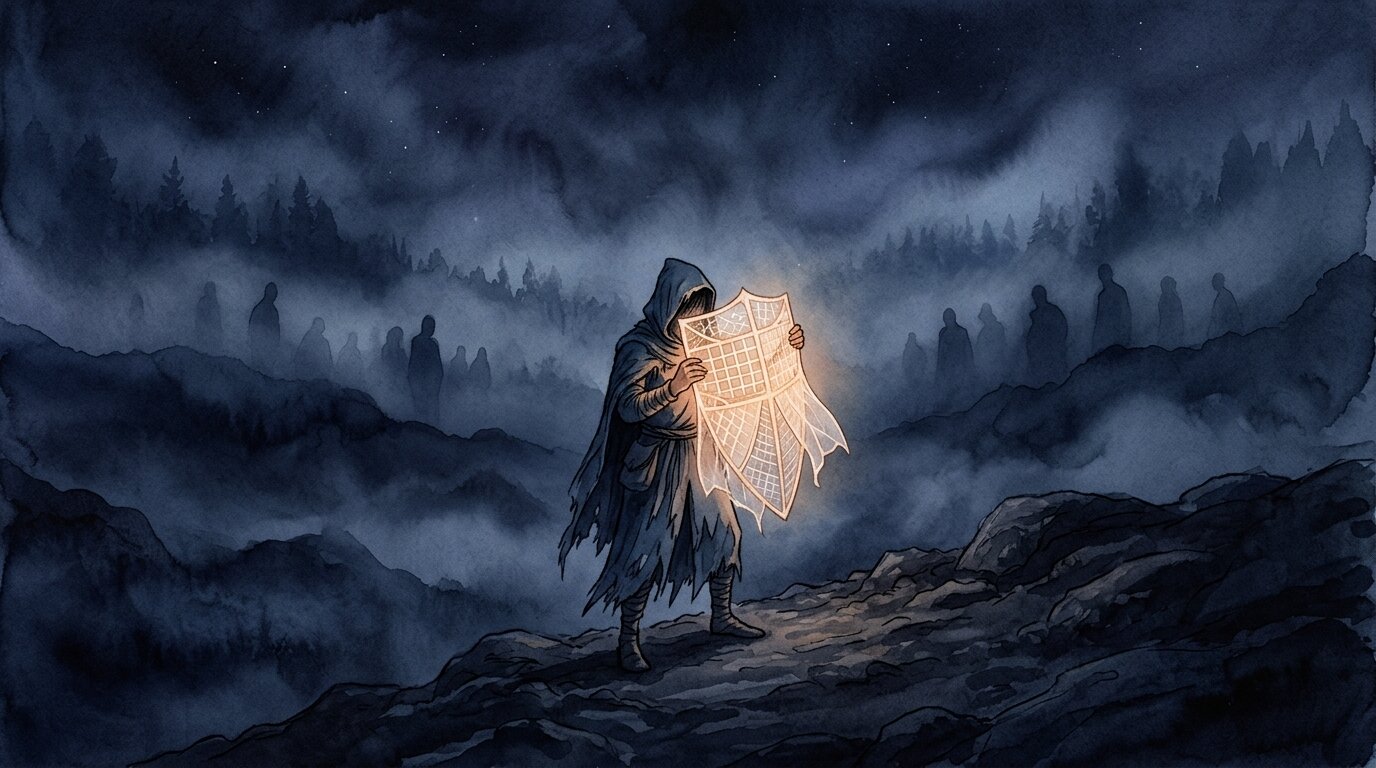
From Emperor's Clothes to Sacred Truth: Archetypes of Exposure
The theme of being unclothed in public runs deep in our shared stories. We all know the folktale of the emperor who paraded through his city wearing nothing, convinced he was adorned in magnificent robes. In that story, exposure is about foolishness and the revelation of a hidden truth. That same archetype plays out in modern dreams, whether it’s showing up for a corporate presentation without a shirt or finding yourself in a formal setting in your underwear.
Across folklore and mythology, shedding garments is double-edged. It represents both the dishonor of being disarmed and the sacred purity of standing unclothed before a higher truth. There’s a tension between how different traditions view this act. Many Western cultures frame exposure as a loss of control or social standing. In contrast, some mystical traditions see vulnerability as the ultimate prerequisite for authentic connection. The fact that this theme is so widespread is telling. A study by Michael Schredl and his colleagues found that themes of public nakedness or being inappropriately dressed show up in the lifetime of 30% to 40% of adults, reflecting a nearly universal concern with social evaluation.
Flaws, Forgotten Clothes, and Unexpected Calm: Decoding the Scenarios
The specific details of your exposure dream can shift its meaning entirely. Being totally bare feels different from realizing you’re wearing sheer lace at a funeral. The first is about total transparency, while the second is about a social misstep, a feeling of being glaringly out of place. Similarly, dreaming of being barefoot on dirty city streets while trying to catch a bus points to a feeling of being ill-equipped for your journey, of lacking the basic protection you need to move forward. These details reveal precisely which waking boundary feels the most fragile.
This is where you can find one of the most interesting and sometimes confusing variations: the dream where you are exposed, but nobody seems to notice or care. This can feel comforting at first, a sign that your perceived flaws aren’t as big a deal as you think. But here lies a moment of genuine uncertainty. The dream could also be touching on a deeper fear: that your inner turmoil, your struggles, and your vulnerability are completely invisible to the people around you. A 2018 study on nightmare themes by Michael Schredl and Anja S. Göritz showed how often distressing dreams center on these kinds of psychological and social threats, like helplessness or humiliation, rather than outright physical danger.
Stepping Out from Behind the Armor: What Your Life Is Asking of You
Exposure dreams tend to surge during life transitions, moments when you are asked to step into visibility before you feel fully prepared or protected. This could be starting a new job where you feel like an imposter, surrounded by people who seem to know everything. It might surface when you’re opening up to a new partner about a deeply personal secret you have kept hidden for years. These are moments when you are, symbolically, taking off a layer of armor and hoping to be accepted for who you are underneath.
Your protective instincts in these situations naturally urge you to retreat and hide, to keep the armor on until you’re sure it’s safe. But the dream often signals that growth requires accepting the risk of being seen as imperfect or unfinished. According to work by Tore Nielsen on dream themes, the diversity of our dreams tends to peak in young adulthood, a time when identity formation and concerns about peer exposure are at their highest. This suggests our dreams are right there with us, processing the unique pressures of whatever developmental stage we’re in.

Inquiries for the Unshielded Self
As you sit with the feelings from your dream, you might find it helpful to gently ask yourself a few questions. This isn't about finding a single right answer, but about opening up a conversation with yourself.
- In what area of your waking life do you feel like you are performing without an adequate safety net?
- Is there a secret or feeling you are expending significant energy to keep hidden from people you care about?
- How did the onlookers in your dream react, and does that mirror your own inner harsh critic?
- What would happen if you allowed yourself to be seen as flawed or unfinished in a current project or relationship?
- Did the dream bring a secret sense of relief at no longer having to hide, even amid the anxiety?
Owning Your Naked Truth Without Fear
Ultimately, these unsettling dreams can be viewed as invitations. They are opportunities to practice self-compassion rather than self-defense, to get curious about the parts of yourself you work so hard to cover up. Vulnerability isn’t a weakness to be overcome; it’s the doorway to genuine intimacy, creativity, and confidence. The dream feels like a threat, but it may just be your mind showing you where your freedom lies.
Perhaps the point isn’t to build better armor, but to realize you are safe without it.
Every dream is a unique story. If you’d like to explore yours further, feel free to share it with us. You may also find resonance in our explorations of dreaming of failing a simple task repeatedly or why you dream about being chased by something you can’t see.

Written by Claire Sterling
Contributing Writer · Sleep Science & Cognitive Research
Claire Sterling explores how emotional stress and nocturnal cognition shape dreams, synthesizing peer-reviewed sleep research into warm, everyday reflections.
At DreamAtlas, interpretations are symbolic reflections grounded in universal human themes and peer-reviewed research, not clinical or medical advice.
Want to understand our approach? Read about our editorial standards →
Categories
Popular Symbols
Themes
Recent Posts
What It Means When You Dream About Being Exposed or Vulnerable
October 29, 2026Dreaming of Alarms Going Off Everywhere
October 27, 2026Why You Dream About Being Chased by Something You Can’t See
October 22, 2026Dreaming of Failing a Simple Task Repeatedly
October 20, 2026What It Means When You Dream About Being Judged by a Group
October 15, 2026About DreamAtlas
Your guide to exploring the symbolic meaning of your dreams. We offer thoughtful, reflective interpretations grounded in universal human themes.
Learn More
Comments