It’s a specific kind of unsettling. You are looking at someone you know, someone whose face is as familiar as your own, and then something shifts. The curve of their jaw softens, their eyes change color, and suddenly you are looking at a stranger. The person is gone, replaced by another, and the dream moves on as if nothing happened, leaving you with a lingering sense of profound wrongness.
This experience, dreaming of changing faces, is common and often leaves a residue of confusion or even mistrust. But it’s rarely about the other person hiding something from you. Instead, these dreams are often a fascinating look at how your own mind organizes identity, memory, and perception. These interpretations are meant to spark reflection, not to serve as psychological advice.
Quick takeaways:
- A morphing face can signify your evolving perception of someone, reflecting how your internal picture of their character is shifting.
- During sleep, the brain's facial recognition and reality-checking centers can disconnect, making a new or changing face feel intensely familiar.
- Dreams often create composite faces, blending features from several people to process complex emotional relationships.
- Seeing a face transform can point to questions about your own identity, hidden parts of your personality, or unvoiced mistrust in a relationship.
The Fluid Persona: When Identity Shifts Before Your Eyes
The immediate, gut-level reaction to a changing face in a dream is often suspicion. Is this person two-faced? Are they hiding their true self from me? While that's a valid emotional response, the dream is almost always painting a picture of your internal world, not theirs. It suggests that your understanding of this person, or even of yourself, is in flux. Think of it as your mind's real-time effort to reconcile competing ideas about someone.
For example, you might dream you’re sitting with a longtime partner, only to watch their features melt and reform into those of a strict childhood teacher. This doesn't mean your partner is secretly authoritarian. It might mean you’re grappling with a dynamic where their support also feels critical, and your brain is pulling from its visual library to express that complex feeling. It’s a messy, creative, and deeply personal process. The common myth is that we only dream of faces we’ve seen, but as a 2025 article in Discover Magazine explains, the sleeping brain is more like an artist than a photographer, freely synthesizing new, composite, or impossible faces to tell its story.
The Uncanny Chill: Emotional Dysregulation and Hyperfamiliarity
The truly strange part of this dream isn't just the visual shift; it’s the emotional whiplash. The face is wrong, but the feeling of knowing the person remains. You might look into the eyes of a complete stranger whose features are continuously morphing, yet feel an overwhelming, unearned certainty that this person is your lifelong protector. This dissonance is what makes the dream stick with you.
This experience has a name: hyperfamiliarity. It’s a known phenomenon in dream states where the brain’s emotional recognition circuits are highly active, but the parts responsible for rational analysis and reality-checking are turned down. According to a paper by Philip Gerrans, this dissociation can lead to that jarring feeling of intense familiarity attached to a strange or shifting face. Your dream isn't lying to you; it’s just that the part of your brain that labels people is working separately from the part that sees them, creating a paradox where you trust the feeling more than the visual evidence.
Shapeshifters and Masks: Mythic Echoes of the Transforming Face
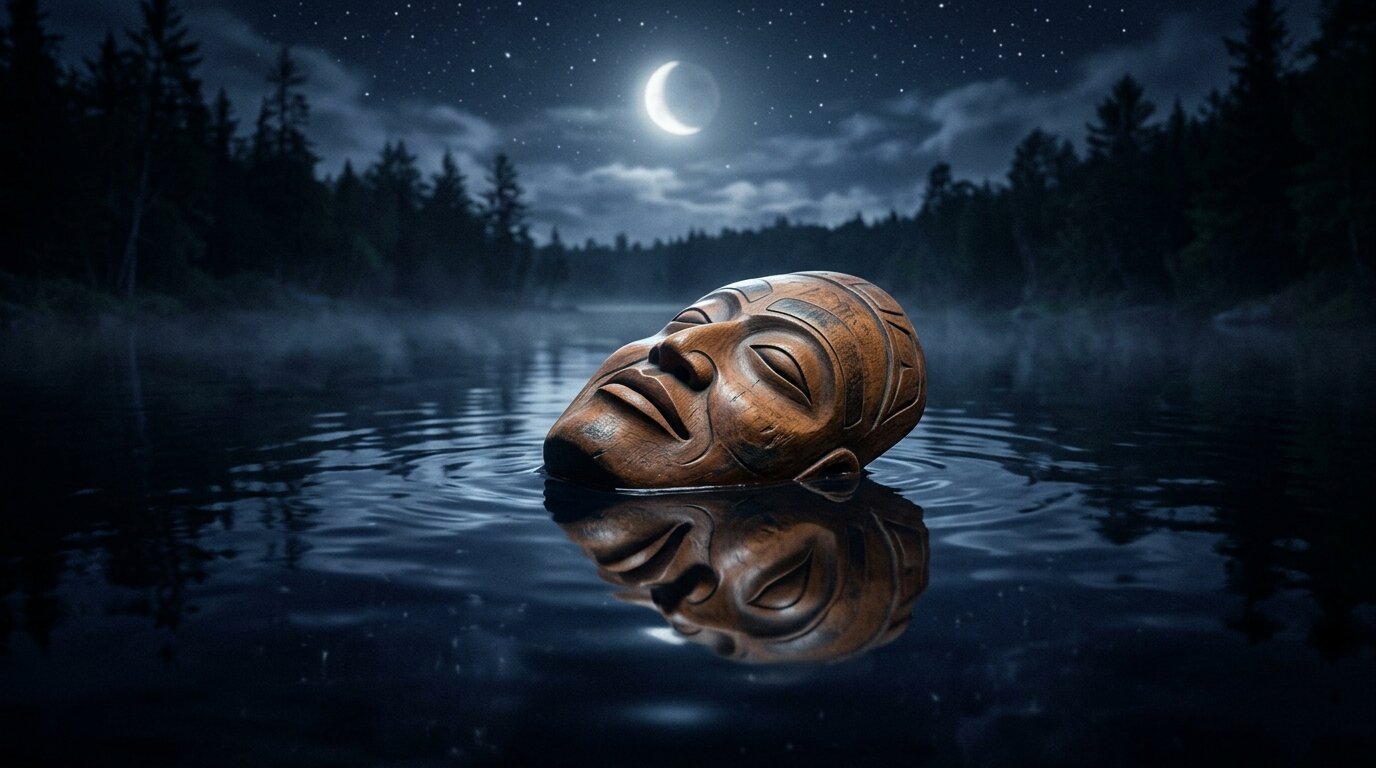
Folklore and mythology are filled with stories of shapeshifters, gods, and tricksters whose faces are not fixed. From the Norse god Loki to the Japanese kitsune, these figures often test a hero's ability to see past physical appearance to true intent. These tales tap into a primal human anxiety: what if the people we trust are not who they appear to be? Culturally, a changing face has often been framed as a dangerous deception or a curse.
Modern dream psychology, however, tends to view this same imagery in a different light, seeing it as a natural and even healthy exploration of identity. Here, the two interpretations sit in uncomfortable tension. Is the dream a warning inherited from ancient stories about betrayal, or is it a modern invitation to integrate the different "masks" we all wear? There's no settled answer here. The dream could be tapping into a deep-seated cultural fear, or it could be using that ancient imagery to do the very modern work of personal growth.
From Blurring to Blank Slates: Key Variations of Morphing Dreams
The specific way a face changes in your dream offers another layer of meaning. Each variation points to a slightly different emotional or psychological dynamic at play. A subtle shift can mean something very different from a complete erasure of features.
Consider these common scenarios:
- Your own face changing in a mirror: This often points directly to questions of self-identity. If you watch your face morph into one of your parents, for instance, you might be wrestling with inherited traits or the fear of repeating family patterns.
- A loved one's face becomes a stranger's: This can reflect a growing emotional distance or a realization that the person has changed in ways you are struggling to accept. You know them, but you also don't know this new version of them.
- A face becomes blurry or featureless: This variation can symbolize a loss of identity, either for you or the person in your dream. It may also show up when you feel a connection is fading or that someone is becoming unknowable to you, like in a case of dreaming of being followed by someone you know who seems both familiar and threatening.
- Two faces merge into one: Your mind is creating a composite character to represent a complex idea. It might be combining a friend and a rival to explore feelings of friendly competition, or blending a boss and a mentor to explore a complicated power dynamic.
The fact that we can see faces so clearly in dreams is fascinating in itself. Research by F. Siclari and several colleagues published in 2017 used high-density EEG to find that when people reported dreaming of faces, the specific part of the brain responsible for facial recognition (the Fusiform Face Area) lit up, suggesting our dreams use the same hardware we do when we are awake.
Unmasking Today: Bringing the Shifting Face into Waking Focus
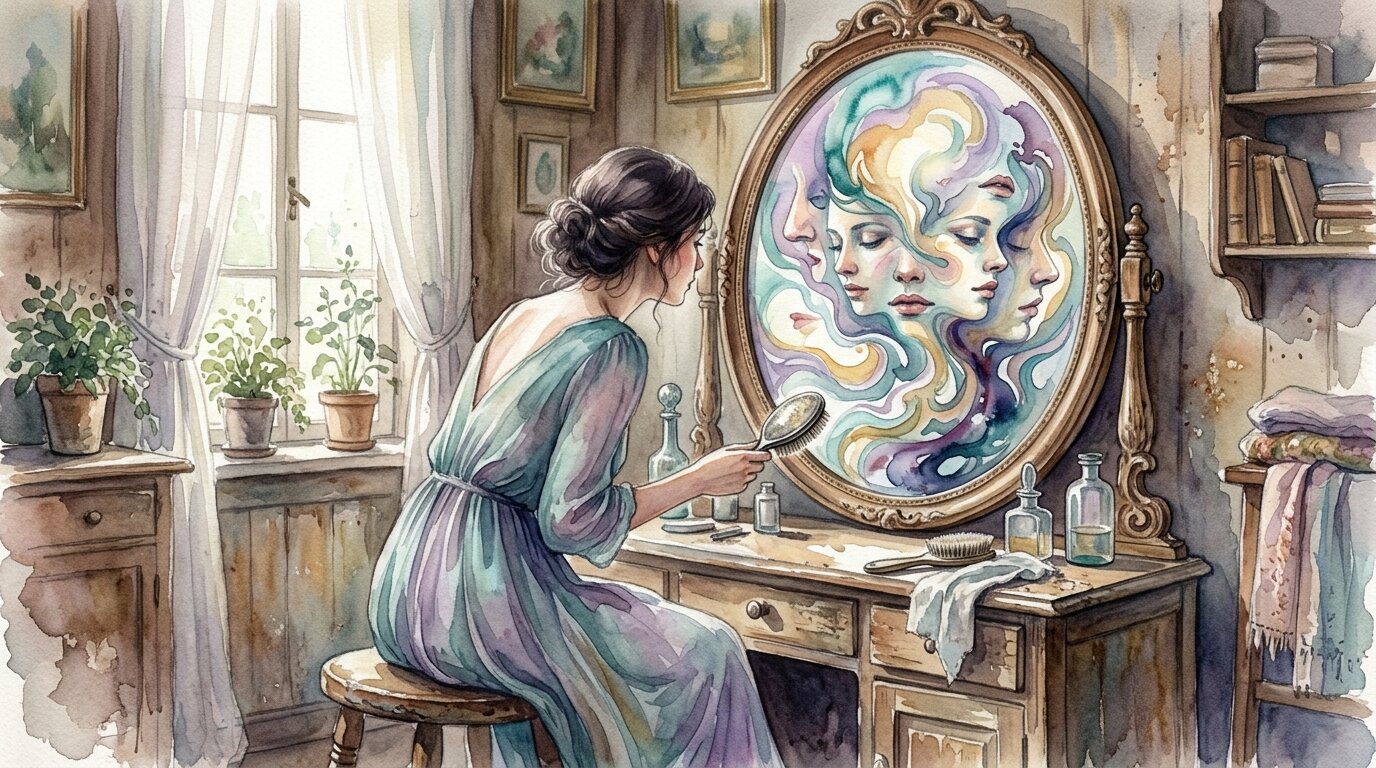
So, what does this all mean for you, right now? A dream about changing faces often arrives during a period of transition. These are times when your expectations of someone, or your role in relation to them, are being rewritten. Perhaps a friend has revealed a surprising new side of their personality, and you're recalibrating your image of them. Or maybe you've started a new job where you have to act with an authority that feels unnatural, like you're wearing a mask that doesn't quite fit.
The dream invites you to look at these shifts without judgment. You may feel a tension between two choices: is the dream warning you that someone is untrustworthy, or is it asking you to be more flexible and accept that people, including you, are allowed to evolve? Often, the dream isn't about the other person's hidden character, but about your own capacity to hold multiple truths about someone at once.
Mirror Work: Sitting with the Shifting Features
If this dream has left you with a sense of unease, sitting with a few gentle questions can help. Don't search for a single right answer. Just see what comes up.
- Whose face transformed in your dream, and what emotion did you feel at the exact moment their features began to shift?
- Are you currently experiencing a situation where someone in your life is behaving in a way that contradicts how you previously saw them?
- When you saw your own face change (if applicable), which specific feature felt most unfamiliar or symbolic of a trait you suppress?
- Is there a mask or persona you feel obligated to wear in your professional or personal life that feels increasingly disconnected from who you truly are?
- How might this dream be inviting you to grant yourself or someone else permission to change without fear of losing identity?
Embracing the Fluid Mirror
A face is how we recognize and are recognized. To see it become unstable in a dream can feel like a violation of a fundamental law of reality. But your dreaming mind isn't bound by those laws. It uses the symbol of the face not to deceive, but to reveal the complex, layered, and ever-changing nature of identity itself. The dream is a mirror showing you that people are not static portraits.
A face is a story, and sometimes stories need a new draft.
Every dream holds a piece of your personal puzzle. If this one sparked more questions than answers, consider sharing it with us at our submission page. You might also find similar themes in our discussions of what it means to feel exposed or vulnerable or why you might be dreaming of being judged by a group.
By DreamAtlas Editorial
Researched, drafted with AI assistance, and edited by the DreamAtlas team
Every article is checked against our editorial standards: sources are verified, interpretations stay symbolic rather than clinical, and pieces are reviewed and updated over time.
At DreamAtlas, interpretations are symbolic reflections grounded in universal human themes and peer-reviewed research, not clinical or medical advice.
Want to know how this article was made? Read how we create content →
Had a dream like this?
Write it down in your private dream journal. It stays in your browser, links each symbol to the dictionary, and shows which symbols keep coming back.
Categories
Popular Symbols
Themes
Recent Posts
What It Means When You Dream About Changing Faces
November 19, 2026Dreaming of Being Blamed for Something You Didn’t Do
November 17, 2026What It Means When You Dream About Being Surrounded With No Exit
November 12, 2026Dreaming of Being Watched Through Windows
November 10, 2026Why You Dream About Being Cornered
November 05, 2026About DreamAtlas
Your guide to exploring the symbolic meaning of your dreams. We offer thoughtful, reflective interpretations grounded in universal human themes.
Learn More
Comments