When was the last time you truly lost track of time? Not because you were busy, but because you were so present—in a conversation, a project, a walk in the woods—that the clock simply ceased to exist? For a moment, you weren't running late or early; you were just there. To dream of a clock with no hands is to have that feeling visit you in your sleep, a quiet inquiry into your own relationship with time.
This dream often leaves you feeling a little adrift, and that’s okay. These interpretations are meant to spark reflection, not serve as medical or psychological advice. Think of them as possibilities to hold up to the light.
Quick takeaways:
- This dream can be a rebellion against a hyper-scheduled life, your mind craving a "snow day" from obligations.
- The feeling of "drifting" it creates can be a sign of emotional recovery, your brain entering a "safe mode" after burnout.
- It may be urging you to listen to your body's internal clock (eating when hungry, sleeping when tired) instead of an external one.
- The type of clock matters: a grand, old clock might be about family legacy, while a blank digital clock points to modern pressures.
When Time Stands Still in Your Dreams
For many of us, a clock with no hands is the adult equivalent of a snow day. It’s that sudden, unexpected gift of a day where all obligations are wiped clean. The clock on the wall of your dream isn't broken; it’s liberated. It symbolizes the delicious freedom of a schedule that has suddenly gone blank, a quiet rebellion against a life that has become too scheduled, too optimized, and too rigid.
The question it raises, though, can be a little uncomfortable. Is this dream just a sign that you really need a vacation, a temporary escape from the relentless pace of modern life? Or is it pointing to something deeper? It might be a nudge from your subconscious to fundamentally rethink your entire relationship with productivity, rest, and what it means to have a day that isn't measured in billable hours or crossed-off to-do lists. This isn't just about being late; it's about questioning the clock itself, which feels very different from the panic of dreaming about missing a flight.

The Quiet Hum of Uncertainty
Waking from this dream can leave a strange emotional residue. You might not feel anxious or relieved, just… blank. This feeling of "emotional drift" can be unsettling, but it’s often a necessary state of recovery. What researchers like Bessel van der Kolk describe in trauma research as the brain entering a protective 'freeze' state — a well-documented response in studies of trauma and recovery — can show up in dreams as emotional numbness or time distortion. Think of it as your brain entering safe mode after a period of intense stress, burnout, or grief.
It’s the feeling you have in the weeks after a massive project finally ships or a difficult relationship ends. You’re not exactly sad, you’re not happy, you’re just coasting. You watch TV, you eat simple food, and your mind is blessedly quiet. This isn't emptiness; it’s your nervous system rebooting. The handless clock can be a symbol of this protective numbness, a sign that you are in a quiet, essential period of healing. The challenge, of course, is knowing when this healthy recovery state crosses the line into prolonged disengagement or avoidance.
Echoes of Eternity in Myths and Stories
This feeling isn’t new. Ancient Greek culture distinguished between two types of time, and it’s a distinction that gets right to the heart of this dream. They had chronos and kairos.
Chronos is what we know best: clock time, sequential time, the tick-tock of minutes and hours that marches relentlessly forward. It’s the time of deadlines, appointments, and schedules.
Kairos, on the other hand, is opportune time. As philosopher James Carse explores in his work on finite and infinite games, kairos represents "the right moment" — the meaningful moment, the qualitative experience of time. An artist so absorbed in their work that they look up to find five hours have passed in what felt like thirty minutes? They were living in kairos. A deep conversation that seems to bend time around it? That’s Kairos, too.
A dream of a handless clock is a profound invitation to step out of chronos and into kairos. But here’s the tension: our entire modern world is built on chronos. Is embracing kairos a radical act of self-care, or is it a form of self-sabotage in a world that demands punctuality?
Is the Clock Grand or Humble? Broken or Just... Blank?
The specific details of the clock in your dream matter. A lot. The kind of clock you see can shift the dream’s focus from a personal feeling to a much larger story about your place in the world.
- A handless grandfather clock: This might point to a feeling of being disconnected from your family's history, legacy, or expectations. The great, ticking heart of the family has gone silent, and you may feel unmoored from the timeline you thought you were on.
- A blank digital alarm clock: This is a distinctly modern symbol. It could represent anxiety about our obsession with data, productivity metrics, and quantifiable progress. When the numbers disappear, how do you measure your worth or your day?
- A simple wall clock: This is often more personal, reflecting your own daily routines and the structure of your life. A handless clock here can feel like a direct comment on your current sense of purpose or direction.
- A beautiful, antique pocket watch: This can symbolize a more intimate, personal sense of time that you carry with you. Seeing it without hands may suggest you’ve lost touch with your own inner rhythm or a cherished personal history.
And what about its condition? Does the clock seem broken and neglected, or is it just peacefully, intentionally blank? The answer can reveal whether you see your current situation as a problem to be fixed or a state to be accepted. Are you broken, or are you just temporarily offline?
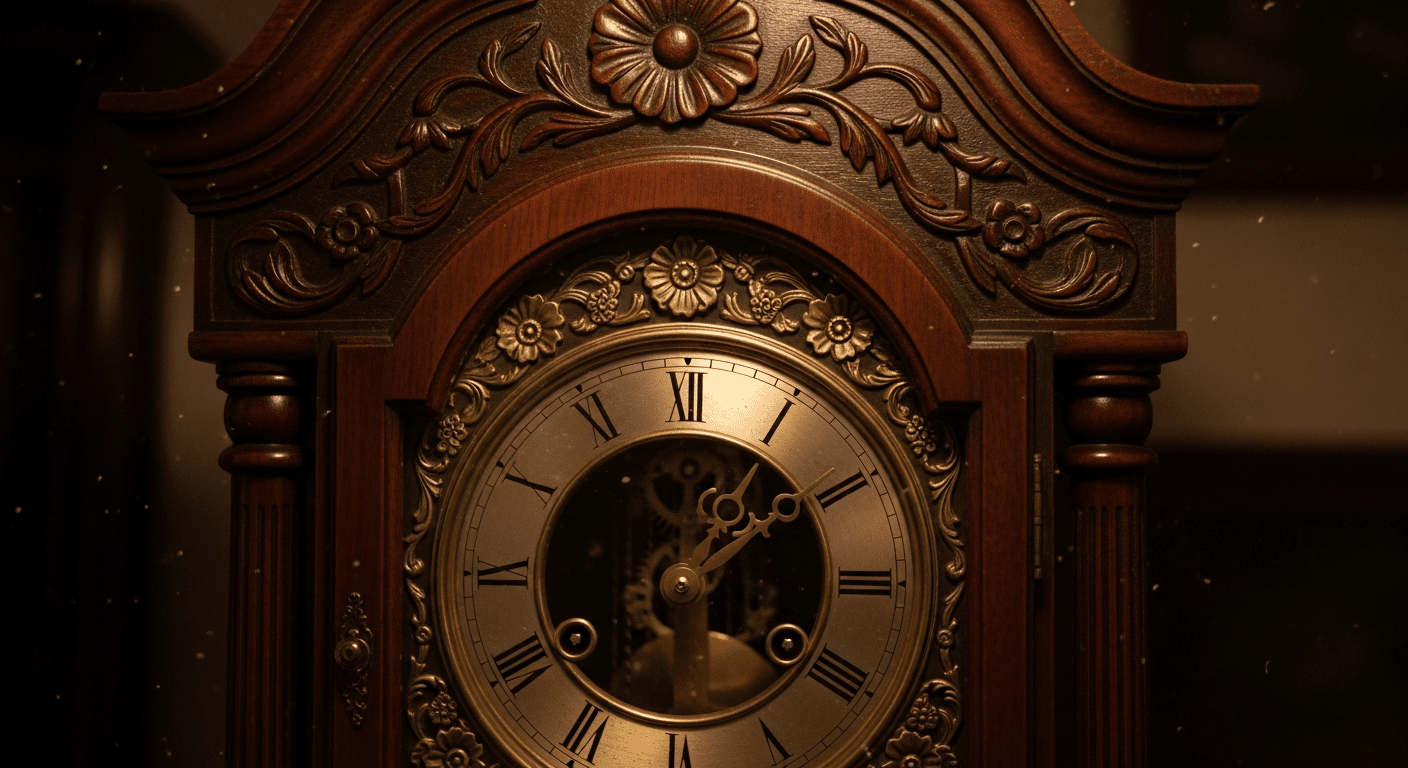
Research from the Journal of Organizational Behavior demonstrates that deliberate detachment from external time pressures significantly enhances recovery from occupational stress, supporting the dream's invitation to reclaim autonomy over your temporal rhythms.
Finding Your Bearings When the Clock Has None
If the external clock has stopped, where do you look for direction? This dream is a powerful invitation to practice interoception—what neuroscience research describes as the ability to sense your body's internal signals, the quiet, subtle skill of listening to your body's internal clock.
It’s the difference between eating at noon because "it's lunchtime" and eating when your body signals genuine hunger. It’s sleeping when you're tired, not when the clock says it's 11 PM. It’s taking a break when your mind feels foggy, not when your calendar gives you permission. The handless clock asks: what if you trusted your body’s signals more than the world’s schedule?
The practical challenge is obvious. How do you honor your body's personal rhythm when you have a job, a family, and responsibilities that depend on a shared, external schedule? The dream isn't suggesting you abandon everything, but it might be asking where you can reclaim small pockets of autonomy and listen more closely to what you truly need.
A Few Gentle Questions for Your Waking Mind
Instead of trying to "solve" this dream, it can help to sit with it as a gift. Your mind is offering you a strange and beautiful image, and you can explore it with curiosity.
- What would you do with one completely "timeless" day, if it were given to you tomorrow? No clocks, no schedules. What does your soul actually want to do?
- Does the idea of that unscheduled day feel like a profound relief or, if you're being honest, a little bit terrifying? What comes up for you when the structure is gone?
- Where in your life do you feel rushed by chronos? And where have you recently experienced a moment of kairos?
- Is there one small thing you could do this week to honor your internal clock over an external one?
Embracing the Pause
This dream isn't about having no time; it's about having your time. It's a quiet affirmation that the meaning of your life isn't measured by a clock, but by moments of presence, connection, and being.
Think of your life as a piece of music. The rests—the silent pauses between the notes—are just as important as the notes themselves. They give the melody shape, rhythm, and beauty. The clock with no hands is a symbol of that rest. It’s an invitation to honor the pauses, not just as empty space between events, but as a vital part of the music itself.
Sometimes, the most important thing you can do is nothing at all.
If this dream is still with you, share it with us. Or keep exploring the dreams we've written about.
By the DreamAtlas Editorial Team · May 05, 2026
At DreamAtlas, our interpretations are based on established psychological frameworks, cultural mythology, and peer-reviewed sleep research. They are symbolic, not clinical.
Want to learn more about our approach? Read about DreamAtlas →
Categories
Tags
Recent Posts
Why You Dream About Turtles Moving Slowly Beside You
September 17, 2026Dreaming of Horses Running Wild
September 15, 2026What It Means When You Dream About Giant Insects
September 10, 2026Dreaming of Smart Devices Turning Against You
September 08, 2026What It Means When You Dream About a Broken Elevator Panel
September 03, 2026About DreamAtlas
Your guide to exploring the symbolic meaning of your dreams. We offer thoughtful, reflective interpretations grounded in universal human themes.
Learn More
Comments