It’s a feeling we all know. That split second when you misjudge a curb, or a patch of ice sends a jolt of panic through your nervous system. Your arms fly out, your weight shifts, and your body scrambles to find solid ground again. Most of the time, we catch ourselves. But the feeling, that momentary lurch of lost control, stays with you. This dream is your mind’s way of exploring that exact sensation, not with your body, but with your life.
Think of this exploration as a way to get curious about what your mind is turning over while you sleep. These interpretations are meant to spark reflection, not to serve as medical or psychological advice.
Quick takeaways:
- If you're juggling multiple big projects or family needs, this dream is likely your mind's way of saying the load is becoming unsustainable.
- The physical feeling of stumbling often points to a waking-life situation where you feel you have no solid ground to stand on.
- This dream is an invitation to identify the one or two key things in your life that currently feel shaky.
- Losing your balance might symbolize a disconnect from your core values, suggesting your daily actions are not aligned with what you truly believe.
When Your Inner World Tilts
A dream about losing your balance is rarely about the fall itself. More often, it’s about the terrifying, drawn-out moment just before it. It’s the desperate windmilling of your arms, the frantic search for something to hold onto, the slow-motion tilt of the world. The dream isn’t showing you failure. It’s showing you the struggle. It’s a perfect simulation of what it feels like to be overwhelmed in waking life, like carrying a teetering stack of important boxes and feeling the weight shift, knowing you can’t hold on for much longer.
The question it leaves you with is a practical one. Does the dream signal a need to put one of the boxes down to save the rest? Or is it a call to find a new way to carry the load, to build strength and find better support, even if that feels impossible right now? Research from a 2013 paper in Frontiers in Human Neuroscience by Kieran C. R. Fox and his colleagues suggests that dreaming is a lot like mind-wandering. It’s your brain’s way of sifting through your current emotional concerns without the usual filters of waking logic. This dream is your mind wandering directly into the heart of your instability.
The Vertigo of the Heart
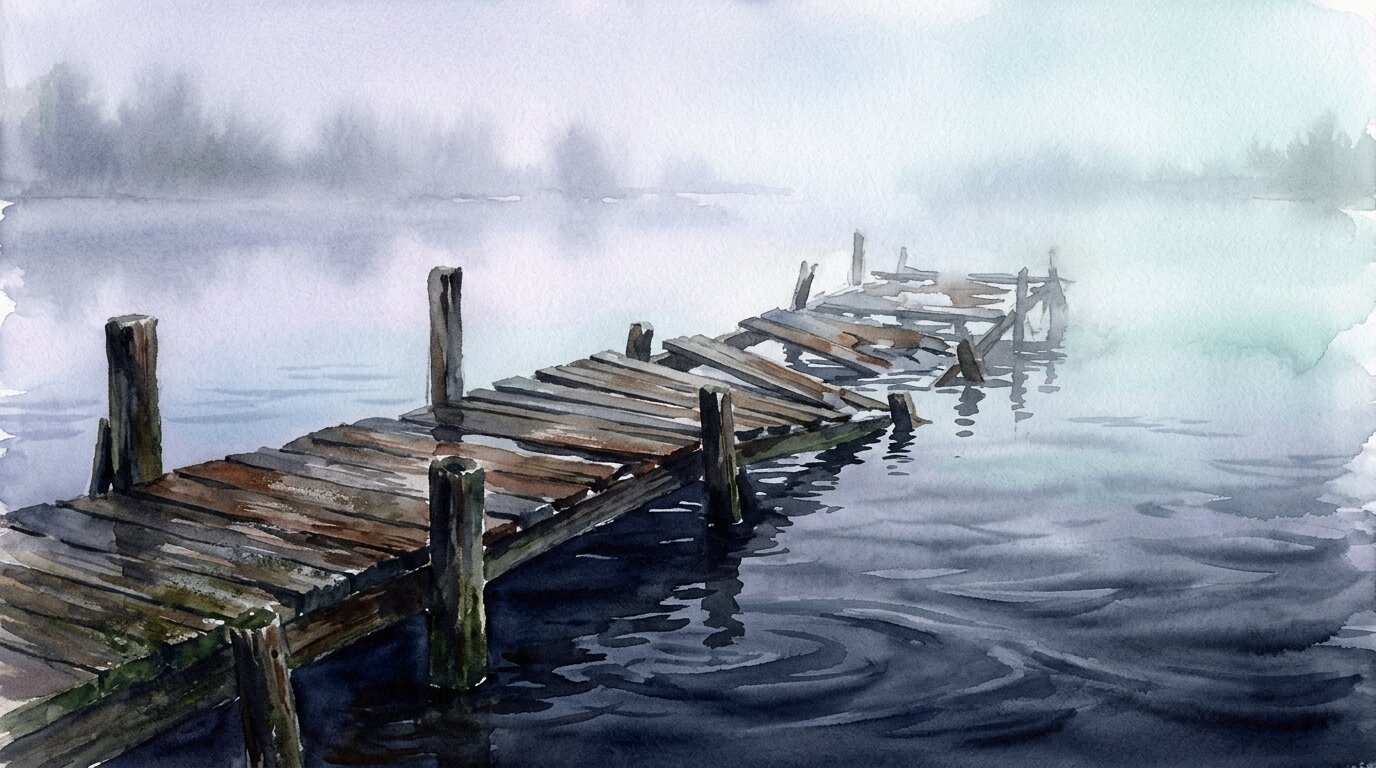
The core feeling of this dream isn't just a generic fear. It’s a much deeper, more specific sense of vulnerability and exposure. It points to a crack in the foundation of something you depend on for your emotional safety. Think of the heart-stopping lurch you’d feel stepping onto what you thought was a solid dock, only to have it sway and dip beneath your feet. That’s the feeling. It’s the moment you realize a situation at work, a friendship, or a family dynamic is far less stable than you’ve been telling yourself.
This is where the dream’s tension lies. Is it simply amplifying a temporary feeling of being overwhelmed by your current circumstances? Or is it bringing an older, unresolved feeling of instability from your past to the surface? Maybe it's both. The dream doesn't offer an easy answer, but it directs your attention to the feeling itself. In a 2019 review, Serena Scarpelli and a team of researchers writing in Frontiers in Psychology explain how dreaming helps regulate and process intense waking emotions. Your dream about imbalance could be your mind’s attempt to work through this very vulnerability in a safe, simulated space.
Walking the Tightrope of Life’s Expectations
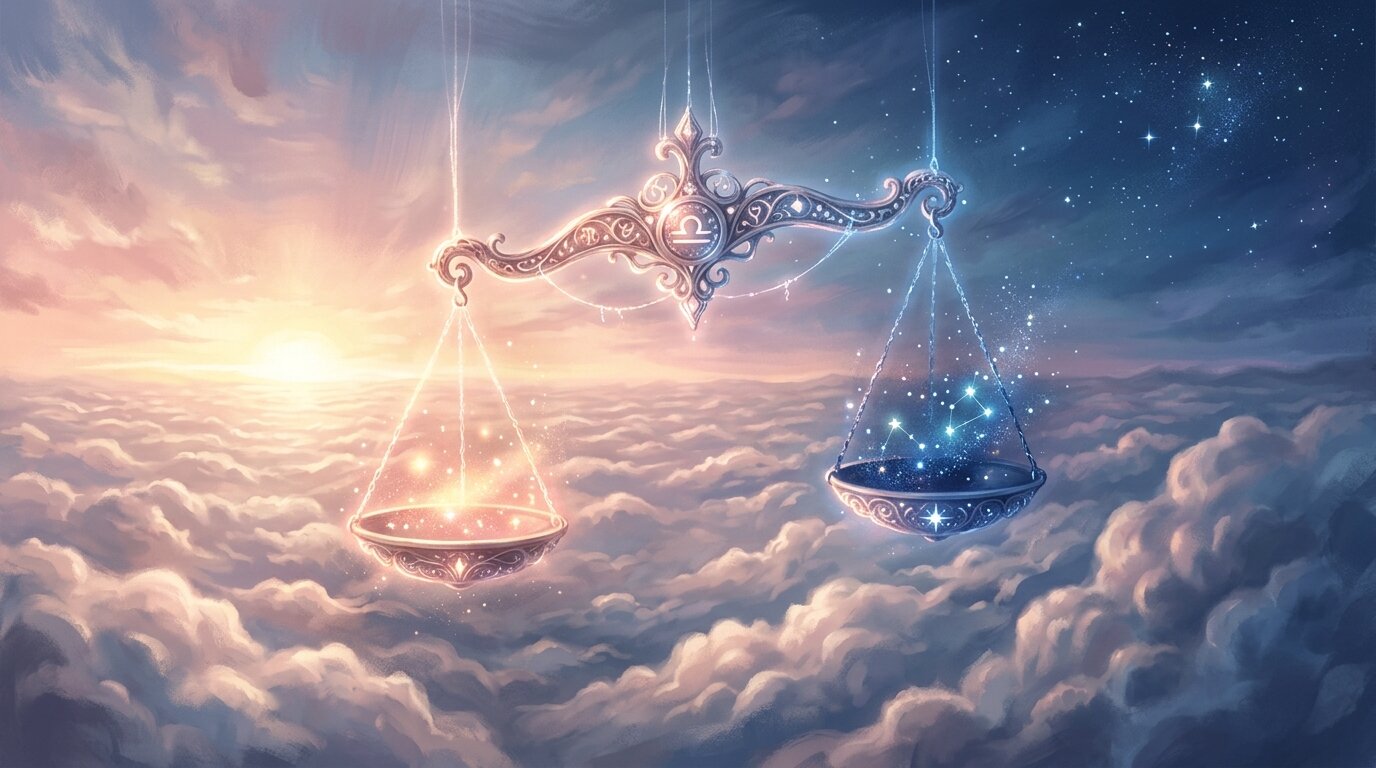
Losing your balance taps into a deep, ancient well of human symbolism. For thousands of years, we’ve used the language of physical stability to describe moral, spiritual, and social harmony. Think of the perfectly balanced scales of justice, or the Taoist concept of yin and yang, where harmony arises from balancing opposing forces. When you dream of teetering on a ledge, you’re not just feeling personal anxiety. You are the central figure in your own version of that ancient, symbolic equation.
This perspective raises a fascinating question. Is your feeling of imbalance a purely internal, psychological state, as most modern views would suggest? Or does it touch on an older, more mystical idea that we can be "out of balance" with our values, our community, or our true path in a way that is felt before it is consciously known? There’s no settled answer here. The dream could simply be a metaphor from your own mind, or it could be tapping into a pattern of thought that is much, much older than you are.
The Many Ways We Stumble
The specific way you lose your balance in the dream is often a crucial clue. It’s not just about general instability. Each scenario points toward a different kind of waking-life anxiety, much like how dreams of a bridge collapsing point to a breakdown in connection. Tripping over an unseen obstacle, for instance, might suggest you’re being derailed by something you haven’t acknowledged yet, while slipping on a treacherous surface could point to a situation where you feel a lack of trust or safety.
If you dream that the very ground beneath you is turning to sand or water, it can reflect a loss of foundational support in your career or home life. By contrast, being knocked off balance by an invisible force might suggest you’re feeling pressured by unseen expectations or social norms. But this is also where dream interpretation shows its limits. Are these details truly meaningful symbols that can be precisely interpreted? Or are they just random stage-dressing from a dreaming mind, with the central feeling of imbalance being the only part that really matters? A 2023 article by Michael Koslowski and his co-authors in Frontiers in Human Neuroscience frames dreaming as a simulation of our emotional conflicts. From this view, the different scenarios are just different models of the same core problem you're trying to solve.
Finding Your Footing in This Moment
More often than not, this dream is an urgent postcard from your subconscious about a specific, present-day situation. It’s less about a vague, lifelong theme and more about the "right now." It’s your mind’s way of flagging the particular thing that is currently threatening to throw you off course. Maybe you just agreed to lead a huge project at work, while also promising to help your best friend move next weekend, and you know you haven't had a real day off in a month. The dream of teetering on a curb is your mind’s literal depiction of living on the edge of your capacity.
The dream presents you with a choice. Is it a compassionate warning sign to pull back, delegate, and protect your energy? Or is it a challenge, showing you that you are on the verge of a major life change that requires you to find a new, more capable sense of balance? The U.S. National Institute of Mental Health outlined in a 2020 paper how real-world stressors directly impact the neural circuits governing our sense of psychological equilibrium. This dream is what it feels like when those circuits are overloaded.
Questions to Help You Stand Steady
As you reflect on your dream, let these questions guide you. There’s no need to find the "right" answer. Just notice what comes up.
- If you had to name one specific thing, a project, a relationship, a secret, that feels like it’s teetering right now, what would it be?
- Where in your life are you "performing" balance for others, pretending you have it all under control when you feel anything but?
- What does "solid ground" feel like to you? Who or what in your life provides that feeling of stability, and how can you lean on them more right now?
- Is the imbalance you’re feeling caused by taking on too much, or by a lack of something essential, like rest, creativity, or connection?
- If you could let one ball drop right now with no judgment, which one would it be?
The Ground is Closer Than You Think
A dream of losing your balance is not a prophecy of failure. It is a loving, urgent invitation from your mind to pay attention. The feeling of instability isn't a weakness. It’s a sign of being sensitive and responsive to life’s demands, a signal that you’re engaged in something that truly matters to you. After all, you can’t lose your balance if you’re standing perfectly still.
Noticing you’re off-balance is the first, most important step toward finding your footing again.
Every dream is a conversation with yourself. If this one is still speaking to you, we invite you to share it with us. You might also find resonance in explorations of falling dreams or what it means to dream of a collapsing building.

Written by Claire Sterling
Contributing Writer · Sleep Science & Cognitive Research
Claire Sterling explores how emotional stress and nocturnal cognition shape dreams, synthesizing peer-reviewed sleep research into warm, everyday reflections.
At DreamAtlas, interpretations are symbolic reflections grounded in universal human themes and peer-reviewed research, not clinical or medical advice.
Want to understand our approach? Read about our editorial standards →
Categories
Popular Symbols
Themes
Recent Posts
What It Means When You Dream About Wolves Howling in the Distance
October 08, 2026Dreaming of Butterflies Landing on You
October 06, 2026Why You Dream About Bears in Your Home
October 01, 2026Dreaming of Dolphins – Intelligence, Connection, and Emotional Depth
September 29, 2026What It Means When You Dream About Swarms of Bees
September 24, 2026About DreamAtlas
Your guide to exploring the symbolic meaning of your dreams. We offer thoughtful, reflective interpretations grounded in universal human themes.
Learn More
Comments