Breathing is the quietest rhythm of our lives, the one thing we do without ever thinking about it. Air moves in, air moves out. Until, in a dream, it doesn’t. Suddenly, this simple, unconscious act becomes the entire plot, and the jolt is immediate and terrifying. It’s a dream that grabs you by the collar and reminds you of your own vulnerability.
While these dreams are deeply unsettling, they rarely point to a physical problem, though they are brilliant at reflecting emotional states or flagging real signals from your sleeping body. These interpretations are here to help you reflect, not to serve as medical advice, so if you ever wake up physically gasping, it’s always a good idea to talk to a doctor.
Quick takeaways:
- Sensations of breathing restriction in dreams often reflect waking situations where you feel silenced, overwhelmed, or unable to speak your mind freely.
- Physical sleep transitions like REM sleep paralysis or minor airway resistance can directly bleed into your dreamscape as vivid chest weight or suffocation.
- Dreaming of gasping under water versus being trapped under heavy blankets points to distinct emotional sources, from acute situational panic to long-term cumulative stress.
- Re-establishing control over your breath in waking life serves as a practical bridge to process and relieve the subconscious tension behind these night visions.
The Weight on Your Chest: What Restrained Breath Is Telling You
At its heart, dreaming of being unable to breathe is often about a lack of space. It can be a vivid metaphor for feeling psychologically smothered, silenced, or constricted in your waking life. Think of a high-stakes family dinner where you have to bite your tongue, or a work meeting where your opinion is ignored. You are holding your breath metaphorically, swallowing your words to keep the peace or protect yourself, and that feeling of internal pressure can follow you into sleep.
The dream builds a stage to play out that feeling of being squeezed. The tension, however, lies in the dream's source. Is it purely a metaphor for stress, or is something physical happening? Sometimes, the answer is both. The Mayo Clinic explains that in conditions like obstructive sleep apnea, a person's airway can physically become blocked during sleep, causing them to choke or gasp. Your brain, ever the storyteller, might weave that real, physical sensation into a terrifying dream narrative about a heavy weight or a crushing force.
When Emotion Takes Your Air Away: The Vulnerability of Panic
This dream can also be a stark portrait of anxiety. It highlights that moment when a suppressed emotional panic becomes so intense that your mind interprets it as a physical danger. If you’ve been pushing down feelings of dread or overwhelm, this dream is what it feels like when those emotions refuse to stay quiet any longer. It’s the dream equivalent of a panic attack, a feeling of being trapped in a rapidly shrinking room while the world outside moves on, oblivious. You try to scream, but no sound comes out.
The unsettling question this dream leaves is whether the frightening story created the terror, or if a wave of pure, physical anxiety generated the story. Did you dream of a monster on your chest because your body was already experiencing the chest-tightening grip of panic? The Cleveland Clinic notes that the sensation of suffocation and severe chest pressure is a common feature of sleep paralysis, an experience where your mind wakes up before your body does. In that disorienting state, the feeling of being unable to move or breathe can be profoundly frightening, and your mind may invent a narrative to explain the raw physical feeling of paralysis.
From Night-Hags to Invisible Pressures: Lore of the Sleeper's Chest
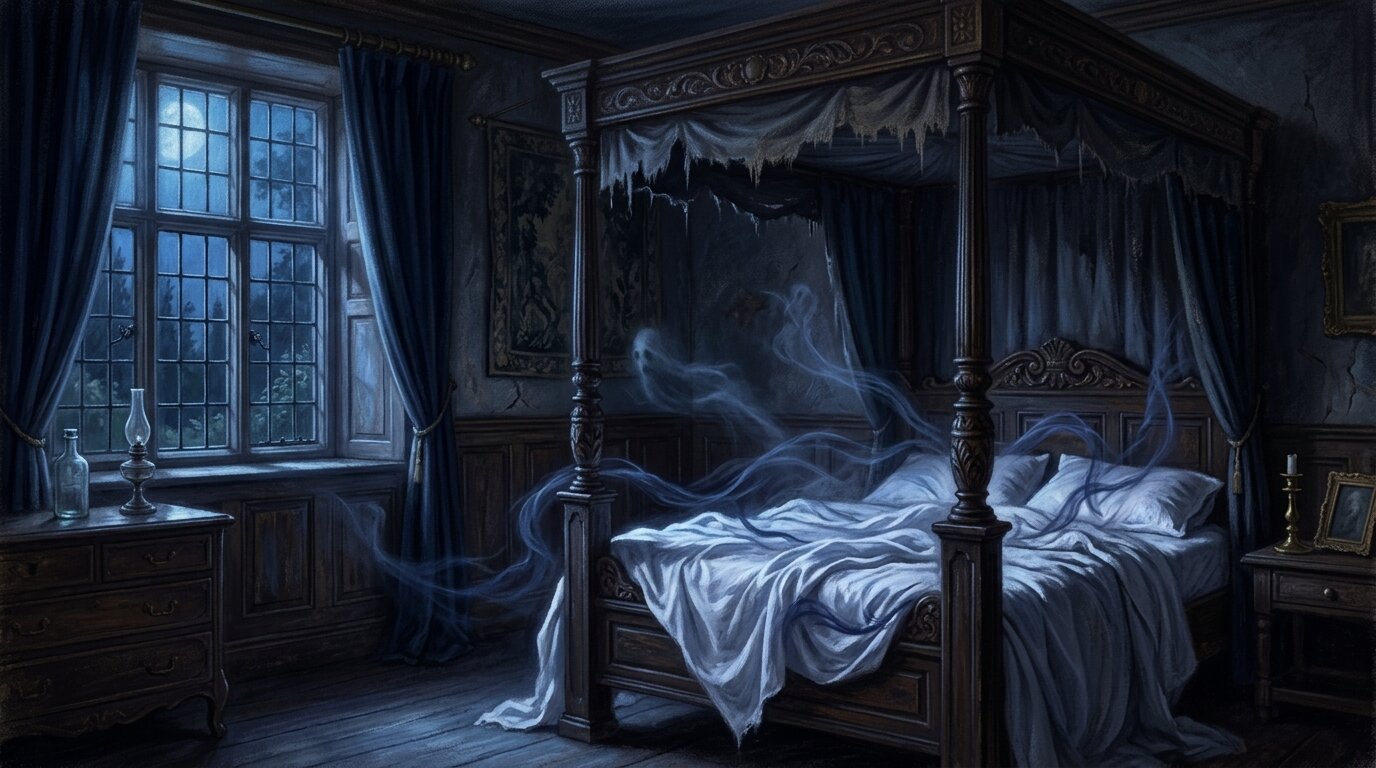
For centuries, people across the world experienced this same terrifying dream and came to a different conclusion. Before we had the language of neurobiology, the dream of a heavy weight on the chest wasn’t seen as an internal psychological event. It was understood as a visitation. In European folklore, it was the Night-Mare or the "night-hag," a malevolent spirit that would sit on a sleeper’s chest, stealing their breath and causing terror.
These stories weren't just simple superstition. They were a way of giving shape to a universal human experience that was otherwise inexplicable. Modern readers might dismiss these myths, but they perfectly captured the feeling of being pinned down, helpless, and unable to breathe long before science could label the phenomenon. As the Sleep Foundation clarifies, sleep paralysis creates a genuine sensation of an oppressive weight on the chest when the mind is awake but the body is still in the muscle-off state of REM sleep. The folklore wasn't wrong about the feeling, just the source.
Water, Smoke, and Constricted Throats: Decoding Dream Scenarios
The specific way your breath is stolen in the dream matters. Each variation can point to a different texture of waking-life stress. Being trapped underwater, for instance, often connects to feelings of being overwhelmed by emotion, as if you’re drowning in sadness or responsibility. Trying to breathe in a room full of thick smoke might reflect a situation that feels toxic, confusing, or inescapable, where every effort to get clarity just leaves you more disoriented.
A dream where your throat is closing on its own, with no external cause, can be one of the most frightening versions. This often points to a feeling of being unable to speak your truth or a fear of using your voice. The anxiety is not just that you can’t breathe, but that you can’t speak. It’s important to remember that the intensity of the fear in the dream doesn't always match the severity of the waking issue. A terrifying choking dream might be about a temporary conflict, while a calmer, more surreal dream of breathing water could point to a chronic, long-term emotional state you’ve become dangerously used to. As research from the American Academy of Sleep Medicine's Sleep Education resource explains, even minor physical drops in oxygen can trigger abrupt, panicked awakenings that the brain might interpret as a sudden, violent dream event.
Reclaiming Your Space: Inhaling Fresh Air in Daily Life
Ultimately, this dream often serves as a powerful, visceral alarm bell. It’s a message from your nervous system that you need more breathing room. This might be literal, as in a need for more unstructured time and fewer obligations. Or it could be emotional, a need for more space in a relationship where you feel confined or more freedom in a job where you feel micromanaged. The dream is a physiological request to create more room to exhale in your waking commitments, relationships, or even in the high expectations you place on yourself.
Taking the dream’s hint seriously means consciously looking for ways to create that space. This is often easier said than done. Setting a new boundary or saying "no" to a commitment can initially create more anxiety, not less. You might feel a temporary spike in guilt or conflict, a feeling of being even more constricted before you finally find relief. According to the American Academy of Sleep Medicine, working on sleep hygiene and reducing waking stress are key steps in managing disruptive sleep events. By consciously working to give yourself more air during the day, you create the conditions for more peaceful rest at night. If this dream feels similar to the sensation of being stuck, you might find our guide to dreaming of moving in slow motion a useful next step.

Questions to Help You Exhale and Explore the Dream
Sometimes the best way to understand a dream is to sit with the questions it leaves behind. You don’t need immediate answers. Just let these questions linger and see what comes up.
- In what area of your life right now do you feel like you have to tread carefully or hold your breath?
- Are you currently accommodating someone else's expectations at the expense of your own comfort and voice?
- When was the last time you gave yourself unstructured time with absolutely no obligations or pressures?
- Did the inability to breathe feel like an external force pushing down on you, or an internal tightness inside your own body?
- How does your physical environment or sleep routine feel when you go to bed, are you carrying unresolved tension into sleep?
Finding Room to Breathe Again
A dream of breathlessness is a powerful invitation from your subconscious to notice where your life feels squeezed. It asks you to pay attention to the invisible pressures you might be enduring and to find the places where you can finally, fully exhale. Take a slow, deliberate deep breath right now, and feel the simple relief of air filling your lungs.
Your dreams are a unique language.
Every dream holds a unique story. If you'd like to explore yours further, consider sharing your dream with us at our submission page. You may also find meaning in our explorations of why you dream about feeling extremely heavy or what it means to dream of a collapsing building.

Written by Claire Sterling
Contributing Writer · Sleep Science & Cognitive Research
Claire Sterling explores how emotional stress and nocturnal cognition shape dreams, synthesizing peer-reviewed sleep research into warm, everyday reflections.
At DreamAtlas, interpretations are symbolic reflections grounded in universal human themes and peer-reviewed research, not clinical or medical advice.
Want to understand our approach? Read about our editorial standards →
Categories
Popular Symbols
Themes
Recent Posts
What It Means When You Dream About Wolves Howling in the Distance
October 08, 2026Dreaming of Butterflies Landing on You
October 06, 2026Why You Dream About Bears in Your Home
October 01, 2026Dreaming of Dolphins – Intelligence, Connection, and Emotional Depth
September 29, 2026What It Means When You Dream About Swarms of Bees
September 24, 2026About DreamAtlas
Your guide to exploring the symbolic meaning of your dreams. We offer thoughtful, reflective interpretations grounded in universal human themes.
Learn More
Comments