There’s a unique silence that follows a dream of utter chaos. One moment, the world is roaring, a symphony of wind and splintering wood. The next, you’re awake in your quiet room, the only lingering sound the echo of your own heart. Tornado dreams are rarely about the weather outside your window. They are visceral, terrifying, and often signal a storm of a different kind, one brewing deep inside.
These dreams feel intensely personal, and their imagery can be a powerful tool for self-reflection. The ideas here are meant to be a starting point for your own curiosity, not a diagnosis or a substitute for professional psychological advice.
Quick takeaways:
- Tornado dreams typically represent emotional overwhelm or impending life shifts where you feel you have lost the steering wheel.
- Watching a tornado from afar suggests conscious awareness of a growing conflict, whereas being trapped inside one reflects acute emotional chaos.
- The violent imagery is your sleeping mind's attempt to contextualize and digest intense waking stress, not a literal prediction of destruction.
- Reclaiming agency after a storm dream starts by identifying which waking boundaries or responsibilities currently feel out of control.
The Architecture of a Storm: What the Funnel Cloud Symbolizes
A tornado in a dream often acts as a high-contrast visual metaphor. It can take a vague, ambient anxiety that you can’t quite name during the day and distill it into a single, undeniable force of nature. Suddenly, that simmering tension at work or the unspoken conflict in a relationship isn’t just a feeling anymore, it’s a churning funnel cloud tearing through your childhood neighborhood. Your mind gives a shape to the shapeless, making the invisible stress impossible to ignore.
While the dream feels purely destructive, its clearing force can also represent the necessary dismantling of old habits or beliefs that no longer serve you. This is the central tension of the tornado dream: it feels like annihilation, but it might be a violent form of spring cleaning. In his work on trauma and dreaming, Ernest Hartmann at Tufts University School of Medicine found that dreams often create vivid "contextualizing images" like whirlwinds to give a picture to an overwhelming emotional state, helping to weave it into memory.
When Emotion Outpaces Control: The Internal Pressure Gauge
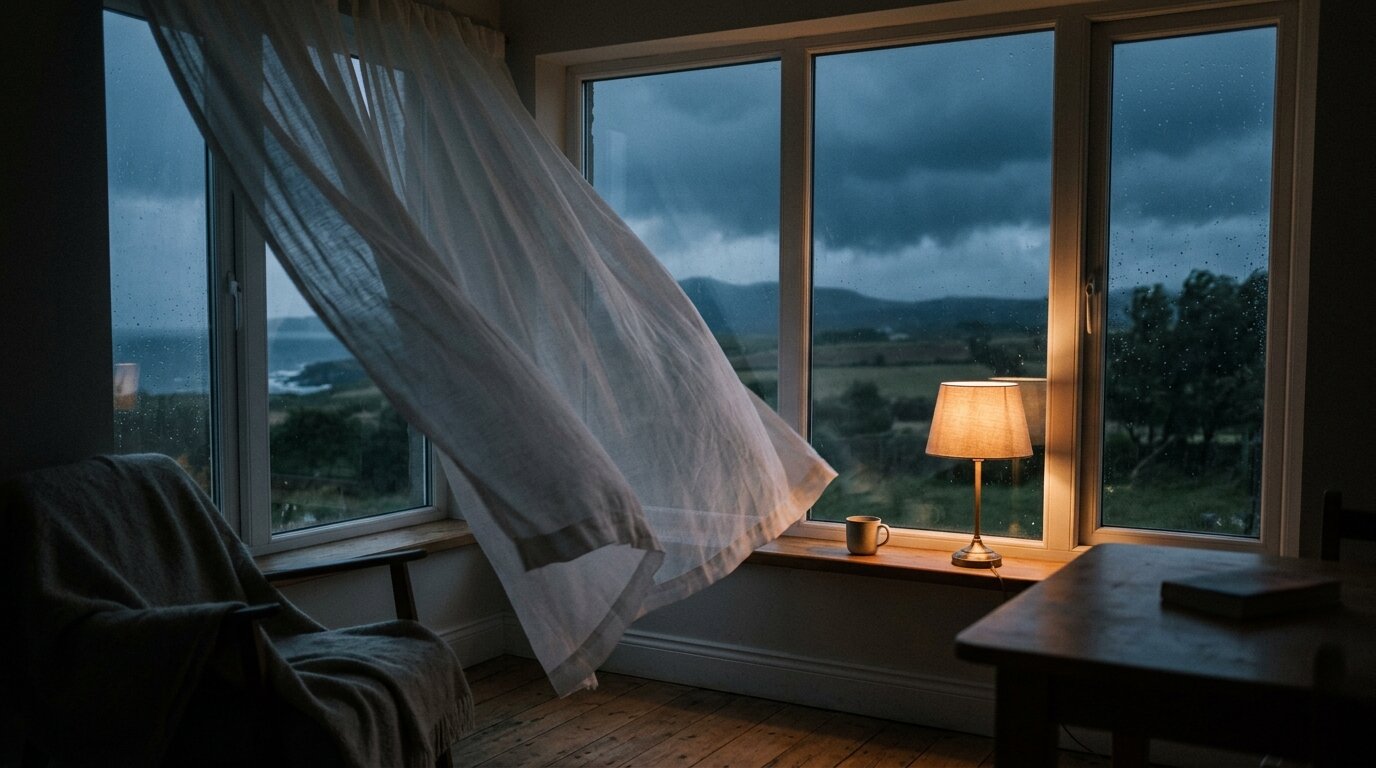
Tornado dreams often show up when our daytime coping strategies are working overtime to suppress a feeling of overwhelm. You might be holding it together on the surface, managing a dozen spinning plates, but the pressure is building. The dream becomes a release valve, a space where the unexpressed emotional chaos is finally allowed to manifest. It’s the visual equivalent of that feeling of paralysis in your chest when the wind howls against the windows, mirroring the quiet dread of an impending reorganization at work or a difficult family conversation.
The feeling of terror in the dream is very real, but it’s helpful to see it as an adaptive psychological signal. The dream feels like a terrifying loss of control, yet the fear itself is your mind’s attempt to get your attention and reset your emotional baseline. A 2019 paper by Annika Gieselmann and her colleagues explains that when waking stress overloads our brain’s fear-extinction circuits during sleep, dream imagery can shift from simply processing emotion to generating intense, nightmarish scenarios.
Forces of Rebirth and Reckoning Across Myth and Culture
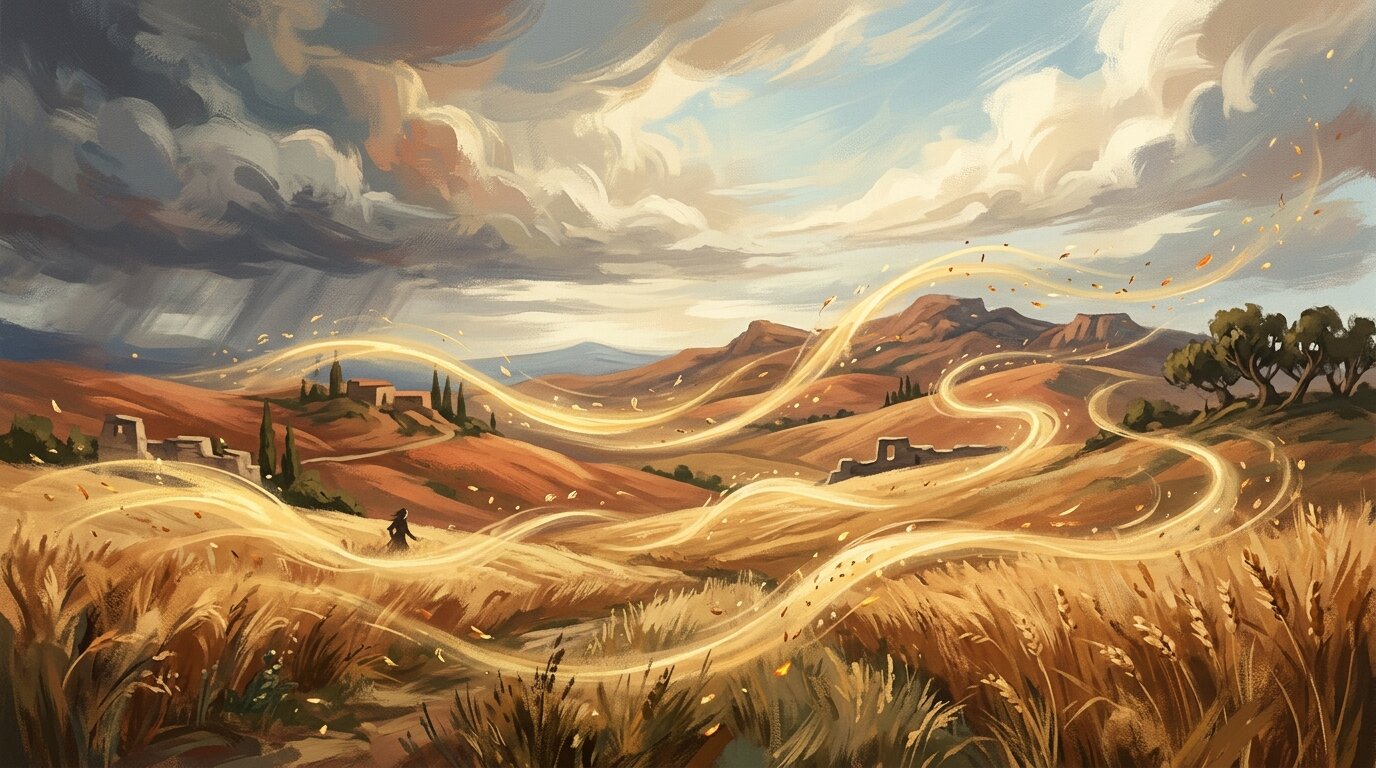
While our modern instinct is to see a great storm as a catastrophe, many ancient cultures viewed whirlwinds differently. Across myth and folklore, they were rarely seen as random chaos. Instead, they were often revered as divine catalysts, forces of reckoning that swept away stagnant eras to force renewal. These stories depicted severe winds as purifiers that tested human resilience and reshaped the land for future growth, clearing the slate for something new.
Here we find a fascinating tension. Today, we tend to view storms as destructive events to be insured against and rebuilt from. This is a practical and necessary viewpoint for our waking lives. But in the symbolic world of dreams, the older, mythic perspective might be more useful. Your dream tornado could be less about a disaster to be avoided and more about a powerful, necessary reckoning that promises change, even if that change is turbulent.
From Distant Horizons to Direct Impact: Reading the Storm's Path
The details of your dream are clues. Were you watching the tornado from a safe distance, seeing it dance across the horizon? Or were you caught directly in its path, trying to shield a loved one as you were pulled into the vortex? The proximity and behavior of the storm can reveal whether your mind is anticipating a future threat or actively enduring a present crisis. A distant tornado might reflect your awareness of a growing conflict you haven't had to face yet, while being inside one often symbolizes a feeling of being completely consumed by emotional chaos right now.
This is where interpretation gets complicated. What does it mean if you escape the storm? On one hand, it could signal a deep well of resilience and a healthy ability to find safety in a crisis. On the other hand, if you dream you are always running from the storm but never finding sturdy shelter, it might point to a pattern of avoidance in your waking life. Research by Antonio Zadra at the Université de Montréal has shown how recurring threat dreams often mirror realistic and persistent stressors that remain unresolved. The dream might be showing you not just the storm, but how you habitually respond to it.
Mapping the Wind to Your Waking World
Ultimately, your dream tornado is pointing to something happening in your life right now. It directly reflects where emotional strain has exceeded your personal boundaries or your capacity to cope. The dream gives you a map. Perhaps the tornado appeared in the dream right after you agreed to take on a third major project at work while also managing a personal health scare. The connection is rarely subtle once you start looking for it. The feeling of being swept off your feet or losing your balance in the dream is a direct translation of your waking emotional state.
This is consistent with what sleep researchers call the continuity hypothesis. A 2003 study by Michael Schredl and Friedrich Hofmann found that our dream content is heavily modulated by the emotional intensity of our waking lives. Recognizing these waking stressors is the first step, and it can bring a wave of relief. But it also demands that we take uncomfortable but necessary action to set firmer boundaries or accept what we simply cannot control.
Questions to Help Ground the Storm
When you wake from a dream like this, the feeling can stick with you. Instead of pushing it away, sitting with it for a moment can offer clarity. You might gently ask yourself:
- What area of your waking life currently feels like it is moving too fast for you to control?
- Were you watching the tornado from a distance in your dream, or were you caught directly in its path?
- What emotional pressure or unspoken conflict have you been trying to contain or ignore recently?
- If the storm swept away a specific structure or setting in your dream, like a collapsing building, what might that place symbolize in your daily life?
- What is one small boundary you could set today to give yourself a sense of safety and shelter?
Stepping Out Into the Quiet After the Storm
Just as a real tornado passes, leaving behind an eerily clean and quiet atmosphere, a tornado dream is not a permanent state. It is a powerful, temporary event that clears the air. The dream isn't a threat of what's to come, but a dramatic invitation to look at the pressures of your present. It asks you to find shelter, to ground yourself, and to rebuild your own boundaries on cleared land. It asks you to honor the storm, and then to step out into the quiet that follows.
The wind has passed, but the work of rebuilding has just begun.
Every dream is a story waiting to be heard. If this one sparked something in you, we’d love for you to share it with us. You might also find personal insight in our explorations of dreams about forest fires or the feeling of being lost.

Written by Claire Sterling
Contributing Writer · Sleep Science & Cognitive Research
Claire Sterling explores how emotional stress and nocturnal cognition shape dreams, synthesizing peer-reviewed sleep research into warm, everyday reflections.
At DreamAtlas, interpretations are symbolic reflections grounded in universal human themes and peer-reviewed research, not clinical or medical advice.
Want to understand our approach? Read about our editorial standards →
Categories
Popular Symbols
Themes
Recent Posts
What It Means When You Dream About Wolves Howling in the Distance
October 08, 2026Dreaming of Butterflies Landing on You
October 06, 2026Why You Dream About Bears in Your Home
October 01, 2026Dreaming of Dolphins – Intelligence, Connection, and Emotional Depth
September 29, 2026What It Means When You Dream About Swarms of Bees
September 24, 2026About DreamAtlas
Your guide to exploring the symbolic meaning of your dreams. We offer thoughtful, reflective interpretations grounded in universal human themes.
Learn More
Comments