Have you ever stood in an old attic or a dusty basement, holding a box you haven't opened in years? There's a particular feeling in that moment, a strange mix of nostalgia, curiosity, and a faint, quiet apprehension. This dream, the one about the locked box, taps into that exact feeling, but for a part of your own mind. It's a quiet invitation to stand before something sealed and simply wonder.
This isn't about solving a puzzle. It's about sitting with a feeling you might be avoiding in your waking life. These interpretations are meant to spark reflection, not serve as medical or psychological advice.
Quick takeaways:
- A locked box in a dream often represents a part of yourself you put away for practical reasons, not because it was negative.
- The dream can be a manifestation of "imposter syndrome"—the feeling that you're missing a key piece of information everyone else has.
- Pay attention to the box's material: wood often connects to personal history and emotion, while metal can point to your career or sense of security.
- An empty box isn't a failure; it might be a sign that the treasure you seek is not where you've been looking.
Shelved Talents and Stored Hurt: The Symbolism of What We Lock Away
When you dream of a locked box, it's rarely about something you've lost. More often, it's about something you intentionally packed away. Think of a part of yourself that wasn't practical or safe to keep out in the open at a certain time in your life. It could be a creative talent for painting you shelved to focus on a demanding career, or a vulnerability you learned to hide to get through a tough time.
The box isn't a tomb for that part of you; it's a storage unit. Your mind is reminding you that this quality is still there, kept safe, waiting for you to have the space for it again. Research from neuroscience indicates that during sleep, the brain actively consolidates emotional memories and processes stored experiences—a process that helps your mind keep important aspects of yourself accessible even when you've set them aside. The tension in the dream comes from a simple, powerful question: Is the thing inside a forgotten strength you're ready to reclaim, or is it a past hurt you locked away for a very good reason? The dream doesn't tell you which, forcing you to honestly ask yourself if you're ready to find out.
The Zeigarnik Effect and Imposter Syndrome: The Psychology of Unfinished Business
This dream can be a powerful externalization of what Psychology Today describes as "imposter syndrome." It's that specific, sinking feeling of sitting in a meeting where everyone seems to understand a concept you don't, and you're too afraid to ask for clarification. The locked box becomes a symbol for that secret knowledge, that "handshake" you feel you're missing to truly belong.
Our brains are wired to fixate on incomplete information. It's a psychological quirk that Psychology Today research refers to as the Zeigarnik effect, where we have a better memory for unfinished tasks than for finished ones. Psychologically, the locked box in your dream can function as your mind's ultimate unfinished task. The frustration you feel trying to open it often mirrors a waking-life confusion: Does this feeling reflect a real barrier—you need more training, more experience—or is it a projection of your own insecurity? The dream simply holds up the box and lets you feel the weight of that question.
Pandora’s Jar Versus the Pirate's Chest: Ancient Mythic Containers
When we think of mysterious boxes, our culture immediately points to Pandora. Her story is a warning: some things are locked away for a reason, and opening them unleashes trouble. But that's only one story. A more helpful myth might be that of the pirate's treasure chest. It's also locked, but it isn't a container of plagues. It's a chest of "pieces of eight"—symbols of forgotten value, personal richness, or a legacy from a past version of yourself.
Finding a treasure chest requires a map (self-knowledge) and effort (a journey). Its value is a mystery until it's opened. Our cultural stories are split. Some boxes are warnings to leave things alone, while others are invitations to a quest. The feeling of your dream is the best compass you have. Did you feel dread standing before the box, or a thrilling sense of anticipation? That feeling-tone is the clue to which story your mind is telling.
Wooden Trunks, Steel Safes, and Wrong Keys: Reading the Materials
The details in a dream are never random. The material of the box, for instance, is a huge clue.
- A wooden chest: An old, salt-stained wooden sea chest might connect to your family history, your roots, or deep, inherited emotions. A simple pine box could point to something from your childhood, perhaps related to a dream about your childhood home.
- A metal safe: A cold, steel safe that you can't crack often symbolizes feelings of being locked out of a career path, financial security, or a more modern, analytical part of yourself.
- A jewelry box: This is deeply personal, often pointing to ideas of self-worth, treasured memories, or the most delicate and valued aspects of your identity.
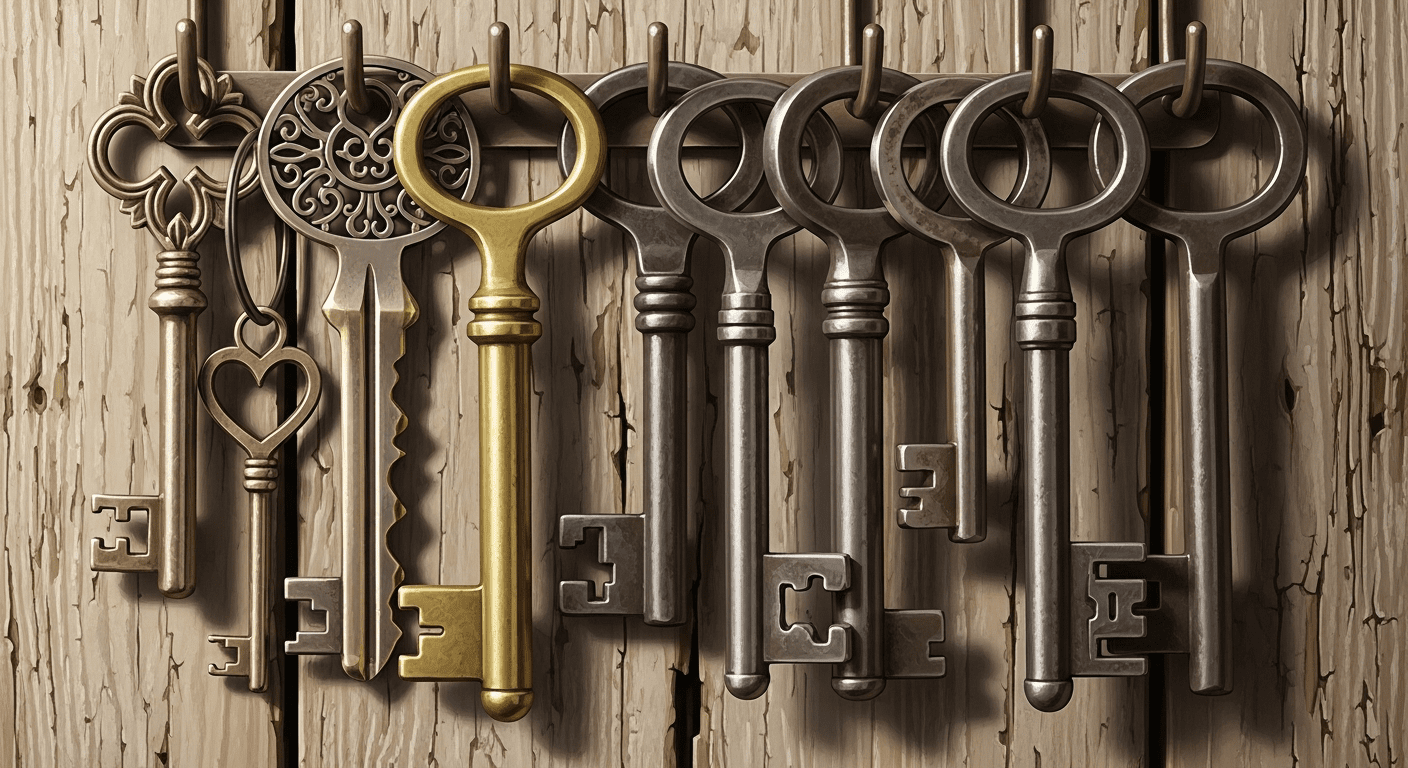
- You have the key, but it doesn't fit: This is a classic frustration dream. It may suggest you feel you have the tools for success or happiness, but for some reason, they aren't working right now. It can also point to a feeling that you've changed, and the old way of "unlocking" things no longer applies.
- The box is empty: This can feel devastatingly disappointing in the dream. But it can also be incredibly liberating. Does the emptiness mean your search was for nothing? Or does it mean the treasure you were seeking was never in the box to begin with? It might be an invitation to stop looking in old places and turn your attention elsewhere.
The Beneficial Secret: Owning the Strengths You've Disowned
Sometimes a locked box isn't about a forgotten trauma or a hidden talent. It might be nudging you to acknowledge a "beneficial secret"—a positive truth about yourself that you're afraid to own because it would require you to change. What Psychology Today research on identity describes is that recognizing and integrating these hidden positive qualities is central to psychological growth and self-understanding.
For example, you might have a genuine, powerful talent for leadership. You see the flaws in your workplace and know exactly how to fix them. But admitting that to yourself is dangerous. It would mean you'd have to stop complaining about your boss and actually apply for their job, facing the risk of failure, new responsibilities, and the judgment of others. The locked box contains your leadership potential. Keeping it locked is safer. It allows you to stay in the comfortable, familiar role of critic rather than becoming the one responsible.
The dream gently asks you to consider a difficult trade-off: Is the comfort of not knowing what's inside the box more valuable to you right now than the potential reward of opening it? According to research in Journal of Personality Assessment, integrating disowned positive qualities into one's self-concept is central to psychological maturation and overcoming impostor syndrome, making the locked box a symbol of growth waiting to unfold.

Inquiries at the Keyhole: Questions to Sit With
If this dream is lingering, it can help to sit with a few questions. You don't have to answer them, just ask them.
- Where was the box located in your dream? An attic? A basement? Buried in a field? What does that location feel like to you?
- Who, if anyone, held the key? Was it you, a stranger, or someone you know? What might that suggest about where you feel power lies in this situation?
- What was your primary feeling in the dream: frustration, fear, hope, or simple curiosity?
- What is one good reason to not open the box right now? (Validating your hesitation can be just as important as pushing past it).
- If you could put anything you wanted inside that box, what would it be?
A Bookmark in Your Own Story
Ultimately, the locked box is a symbol of your own unrealized story. It contains a part of your narrative that you haven't read yet, a chapter you put a bookmark in long ago. Like a book on your shelf that you've always meant to get to, the story is already yours. You just have to decide when you're ready to turn the page.
You don't have to smash the box open. You don't even have to find the key tonight. Sometimes, the most important step is simply to acknowledge that the box exists, to walk into the attic of your mind and sit with it for a while.
The box isn't a test. It's just a bookmark, holding a place in your own story.
If this dream is still with you, share it with us. Or keep exploring the dreams we've written about.

Written by Claire Sterling
Contributing Writer · Sleep Science & Cognitive Research
Claire Sterling explores how emotional stress and nocturnal cognition shape dreams, synthesizing peer-reviewed sleep research into warm, everyday reflections.
At DreamAtlas, interpretations are symbolic reflections grounded in universal human themes and peer-reviewed research, not clinical or medical advice.
Want to understand our approach? Read about our editorial standards →
Categories
Tags
Recent Posts
Why You Dream About Turtles Moving Slowly Beside You
September 17, 2026Dreaming of Horses Running Wild
September 15, 2026What It Means When You Dream About Giant Insects
September 10, 2026Dreaming of Smart Devices Turning Against You
September 08, 2026What It Means When You Dream About a Broken Elevator Panel
September 03, 2026About DreamAtlas
Your guide to exploring the symbolic meaning of your dreams. We offer thoughtful, reflective interpretations grounded in universal human themes.
Learn More
Comments