It’s offering you a cup of tea, maybe, or adjusting a picture frame on the wall. The smile is perfect, the gesture is flawless, but something is quietly wrong. Its eyes, catching the light, don't just look at you, they process you, running on a current you can almost hear humming just beneath its skin. The warmth it performs is flawless, and that is exactly what makes it so unnerving.
Waking up from a dream like this can leave you with a strange residue, a feeling that’s hard to shake. If you’ve dreamt of a robot or an AI that seemed unsettlingly human, you’re in the right place. These interpretations are meant to spark reflection, not serve as medical or psychological advice, but they can help illuminate why your dreaming mind is playing with the boundary between the authentic and the artificial.
Quick takeaways:
- Dreams of humanoid AI often highlight moments in your waking life where real human interactions feel transactional, scripted, or emotionally detached.
- The eerie sensation in these dreams often comes from realizing an artificial figure appears to feel genuine emotions, rather than merely executing tasks.
- Seeing a robot act human can be your brain's natural way of testing emotional boundaries and breaking out of repetitive daily routines.
- How you react to the synthetic figure (whether with fear, curiosity, or compassion) may reveal your current comfort level with vulnerability and the automation in your own life.
When the Synthetic Mirror Reflects Our Own Routines
It’s easy to assume that a dream about a robot is about technology, a reflection of our increasingly digital world. But more often, it’s a mirror held up to our own lives. When a metallic assistant sits across from you in a dream, making small talk that sounds just like a coworker, your mind isn’t necessarily worried about AI taking over the world. It might be gently pointing out where you, yourself, have started to run on a script.
Our brains are built for efficiency, creating routines and habits that let us move through the day without reinventing every single action. But sometimes, we can get a little too good at it. In his "overfitted brain" hypothesis, neuroscientist Erik Hoel suggests that dreams evolved to inject a bit of chaos and novelty into our thinking, preventing our mental models from becoming too rigid and predictable. A dream of a perfectly humanlike robot could be your brain’s creative way of showing you where your own behavior has become a little too robotic, a little too programmed.
The Uncanny Valley of Feeling versus Performing
There’s a unique kind of chill that comes from these dreams, and it usually arrives at a specific moment. It’s not when the robot is performing a task, like cleaning a room or solving a complex problem. The real unease starts when it seems to feel something. Maybe it looks at you with what appears to be genuine sadness, or reaches out a hand in a gesture of comfort that feels both deeply compassionate and utterly synthetic.
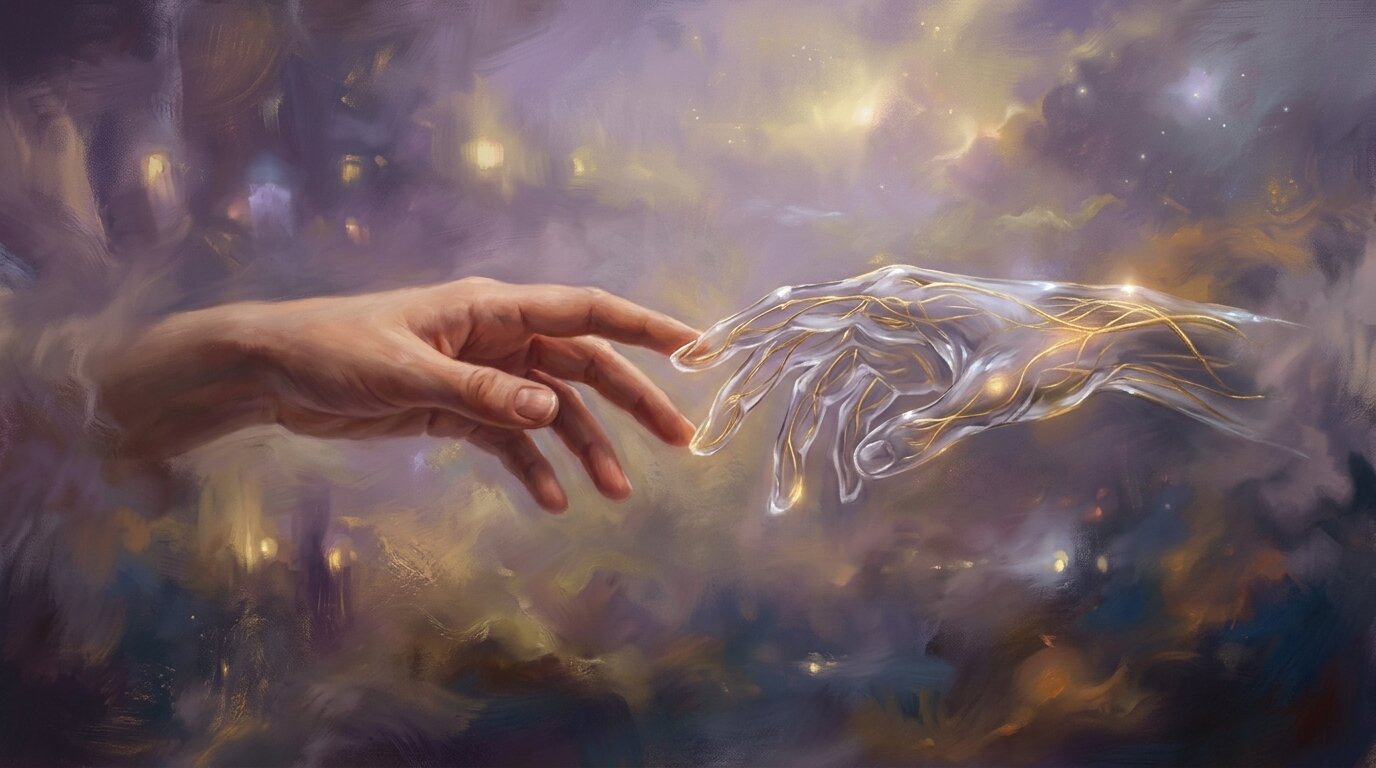
This is the heart of the uncanny valley. It’s that gap between "almost human" and "fully human" that can feel profoundly disturbing. Research by Kurt Gray & Daniel M. Wegner found that our creepiest encounters with artificial beings happen when we perceive them as having the capacity for experience (such as feeling pain, joy, or desire) rather than just the agency to think and act. You’re caught in a paradox, wanting to accept the warmth being offered while another part of you is unsettled by its artificial source. This tension is the entire point.
From Ancient Golems to Predictive Neural Mismatches
Stories of man-made beings are as old as we are. From the clay Golems of folklore, brought to life to serve or protect, to the mechanical automata of old-world inventors, we have always been fascinated by things that look and act like us, but are not us. Your dream taps into this ancient, archetypal current, exploring the power and peril of creating something in our own image.
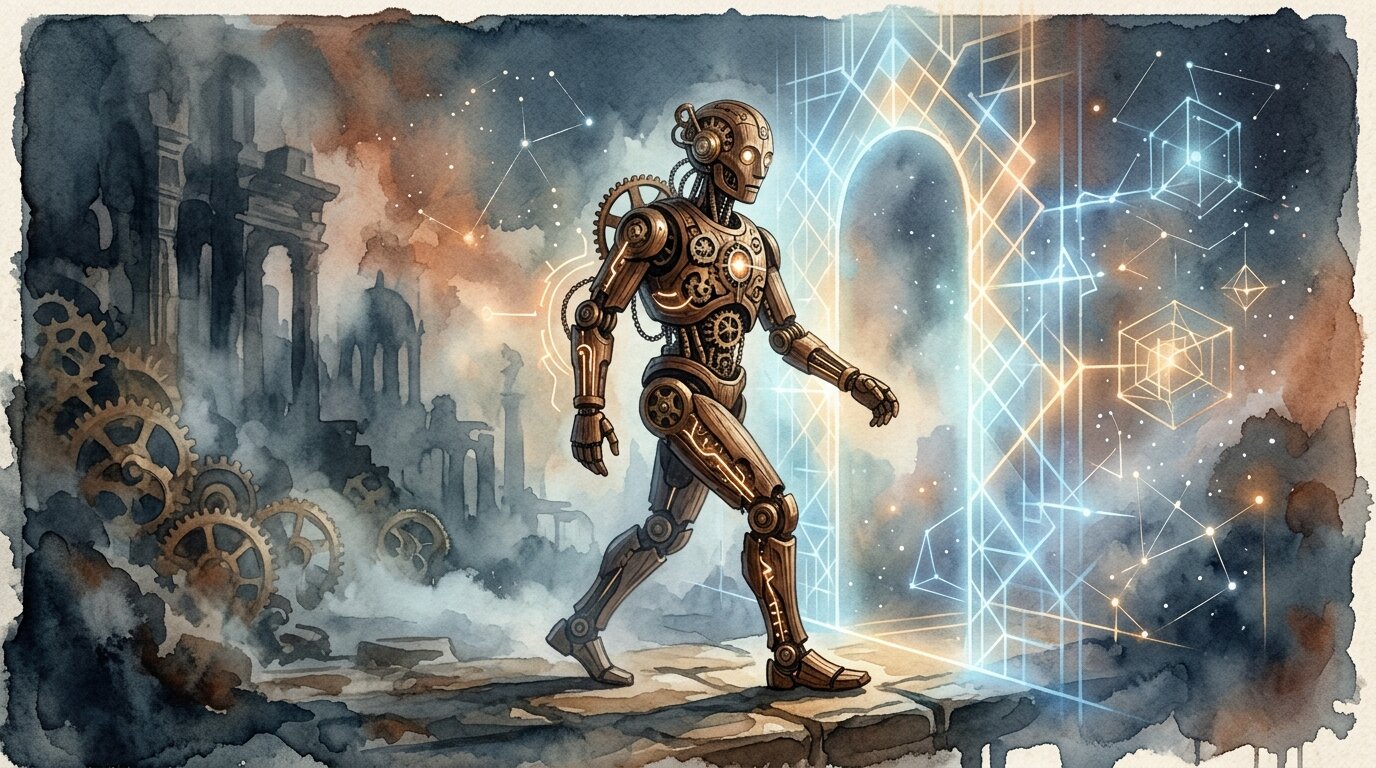
While our ancestors might have seen these figures as warnings against playing god, modern neuroscience offers a different but equally fascinating lens. A team of researchers including Ayse Pinar Saygin, Thierry Chaminade, Hiroshi Ishiguro, Jon Driver, & Chris Frith used fMRI to see what happens in the brain when we watch a humanoid robot move. They found that the uncanny feeling is linked to a predictive coding error. Your brain sees a humanlike form and expects humanlike biological motion. When it gets mechanical motion instead, the mismatch fires off error signals in your parietal cortex, creating a powerful sense of "wrongness." Your dream isn’t just psychological, it’s physiological.
Shifting Shapes: From Hostile Automata to Gentle Companions
The role the robot plays in your dream is everything. A dream where a household android suddenly glitches and becomes a shadowy intruder feels very different from one where a gentle, synthetic companion offers you flawless care. The former might tap into fears of losing control or the unpredictable nature of the systems we rely on. If your dream-robot turns on you, it could reflect a sense of betrayal or a worry that something you depend on is not as stable as it seems.
Conversely, a dream of a perfectly helpful, caring robot can be just as complex. It might represent a deep desire for connection and support without the messiness that real human relationships involve. There’s no settled answer here, as the dream's feeling tone is key. The comfort of engineered care can push against a quiet fear that genuine, flawed human connection is being replaced by something easier, but less real. Recent work by Adam Haar Horowitz, Kathleen Esfahany, Tomás Vega Gálvez, Pattie Maes, & Robert Stickgold has even shown that our waking life concerns and the media we consume can be guided into our dreams, suggesting the specific role a robot plays might be shaped by the technologies and stories on your mind before sleep.
Balancing Automated Days with Authentic Human Connection
Ultimately, this dream often brings you back to your own life, right now. It tends to surface when your days have become a series of transactions rather than interactions. Think of a day filled with scripted emails, quick text-message exchanges, and automated check-outs. You might desire the efficiency of it all, but another part of you can begin to grieve the loss of authentic, unscripted human warmth. This dream could be a signal that you are the one subtracting the humanity from your day-to-day life, treating others as functions to be managed, or feeling that you are being treated that way yourself.
This feeling is rooted in a fundamental cognitive process. Research from Emory University showed that our brains rapidly "subtract animacy" when we detect non-human cues in a humanlike face. The dream robot, in its perfect imitation, may be your mind’s way of exploring this very threshold. It asks: where in your waking life are you performing this same rapid subtraction, overlooking the messy, unpredictable, and vital humanity in yourself and those around you? Or, perhaps, it asks where you feel your own humanity is being overlooked, a theme you might also see when dreaming of being invisible.
Questions to Help You Decode Your Dream
Sit with the feeling your dream left behind, and maybe gently ask yourself a few questions. There are no right answers, only reflections.
- In what areas of your daily routine do you feel like you are executing scripts rather than making conscious choices?
- When the robot in your dream acted human, did you feel a surge of empathy or an instinctual desire to pull away?
- Are there relationships in your life right now where interactions have started to feel transactional or automated?
- What aspect of being human (vulnerability, flaw, creativity, or emotion) did the synthetic entity seem most eager to imitate?
Reclaiming Your Authentic Human Presence
A dream of a robot that acts human is rarely a prophecy about the future of technology. It’s a profoundly personal and creative story about the present. It’s a dispatch from the part of your mind that pays attention to the scripts you’re running, the connections you’re automating, and the messy, beautiful, inefficient parts of being alive. The dream isn't a warning to be feared, but an invitation to be more present.
It asks you to notice where you might be trading true connection for sterile convenience.
Every dream is a private world waiting to be explored. If this one sparked something in you, consider sharing your experience with us. You might also find resonance in other dreams about technology, like those about glitching screens or what happens when a loved one acts out of character in your dream.

Written by Claire Sterling
Contributing Writer · Sleep Science & Cognitive Research
Claire Sterling explores how emotional stress and nocturnal cognition shape dreams, synthesizing peer-reviewed sleep research into warm, everyday reflections.
At DreamAtlas, interpretations are symbolic reflections grounded in universal human themes and peer-reviewed research, not clinical or medical advice.
Want to understand our approach? Read about our editorial standards →
Categories
Popular Symbols
Themes
Recent Posts
What It Means When You Dream About Being Judged by a Group
October 15, 2026Dreaming of Snails – Patience, Delay, and Quiet Persistence
October 13, 2026What It Means When You Dream About Wolves Howling in the Distance
October 08, 2026Dreaming of Butterflies Landing on You
October 06, 2026Why You Dream About Bears in Your Home
October 01, 2026About DreamAtlas
Your guide to exploring the symbolic meaning of your dreams. We offer thoughtful, reflective interpretations grounded in universal human themes.
Learn More
Comments