There is a strange and heavy silence that comes before a rupture. In the dream, you might feel it first, a deep stillness in the air that stills the birds and hushes the wind. Then, the ground shudders, and a mountain you thought was only stone and earth rips open the sky with fire. Waking from a dream of a volcanic eruption can leave you breathless, your heart pounding with the memory of a power that feels both terrifying and magnificent.
Your mind uses the language of symbols to sort through your waking life, and a volcano is one of its most potent images. These interpretations are meant to spark reflection and offer a starting point for your own introspection, not serve as any kind of psychological advice.
Quick takeaways:
- A volcano in a dream often symbolizes emotional pressure that has reached a tipping point after long periods of silent suppression.
- Watching an eruption from afar suggests a conscious awareness of impending change or conflict that you feel powerless to control.
- Flowing lava represents active transformation, which can be painful as it melts away old habits, yet is essential for creating fertile ground for new growth.
- Feeling trapped beneath ash or falling debris can reflect a sense of being overwhelmed by the consequences of a recent emotional outburst.
Pressure Cookers and Tectonic Shifts in the Mind
More often than not, a dream about a volcano has very little to do with an actual geological event. It is your subconscious mind finding a physical metaphor for an invisible, internal pressure that has been building for some time. Think of it as an emotional fault line. You might be sitting through a tense family dinner, smiling politely while unspoken resentments simmer just below the surface. That night, your mind might transform that contained pressure into the image of a distant mountain peak shattering into fire and smoke.
The dream feels catastrophic, a vision of pure destruction. Psychologically, however, it can function as a necessary safety valve. It’s a depiction of release, forcing into the open what can no longer be contained. As reviewed by researcher G. William Domhoff at UC Santa Cruz, this aligns with theories suggesting that powerful, high-intensity dream images often serve as central metaphors that give shape and context to our strongest waking emotions. The conflict here is that the dream’s violence feels like a threat, but it may actually be your mind’s attempt to preserve your emotional equilibrium by staging a necessary, if dramatic, release.
The Heat of Suppressed Rage and Sudden Awakening
The sheer terror of a volcanic dream is undeniable. You might dream of fleeing an encroaching wall of molten lava that threatens to consume your childhood home, waking up with a racing pulse and a tightness in your chest. That visceral fear is not just random dream chaos. It’s a core part of how the dreaming brain processes feelings that are too intense or complicated to confront directly during the day, especially feelings of powerlessness or suppressed anger.
Your mind is working to keep you emotionally regulated, and dreaming is one of its most powerful tools. A 2019 article in Frontiers in Psychology by Serena Scarpelli and her colleagues explains how dreaming during REM sleep helps regulate our feelings, transforming waking distress into the visual narratives of our dreams. So while the intensity of the dream can feel like a dire warning of impending doom, it can also be a sign that your mind is actively and productively working through stress you haven't yet addressed. The terror is part of the process, not just a symptom of it.
Creation Myth, Sacred Wrath, and Nature's Crucible
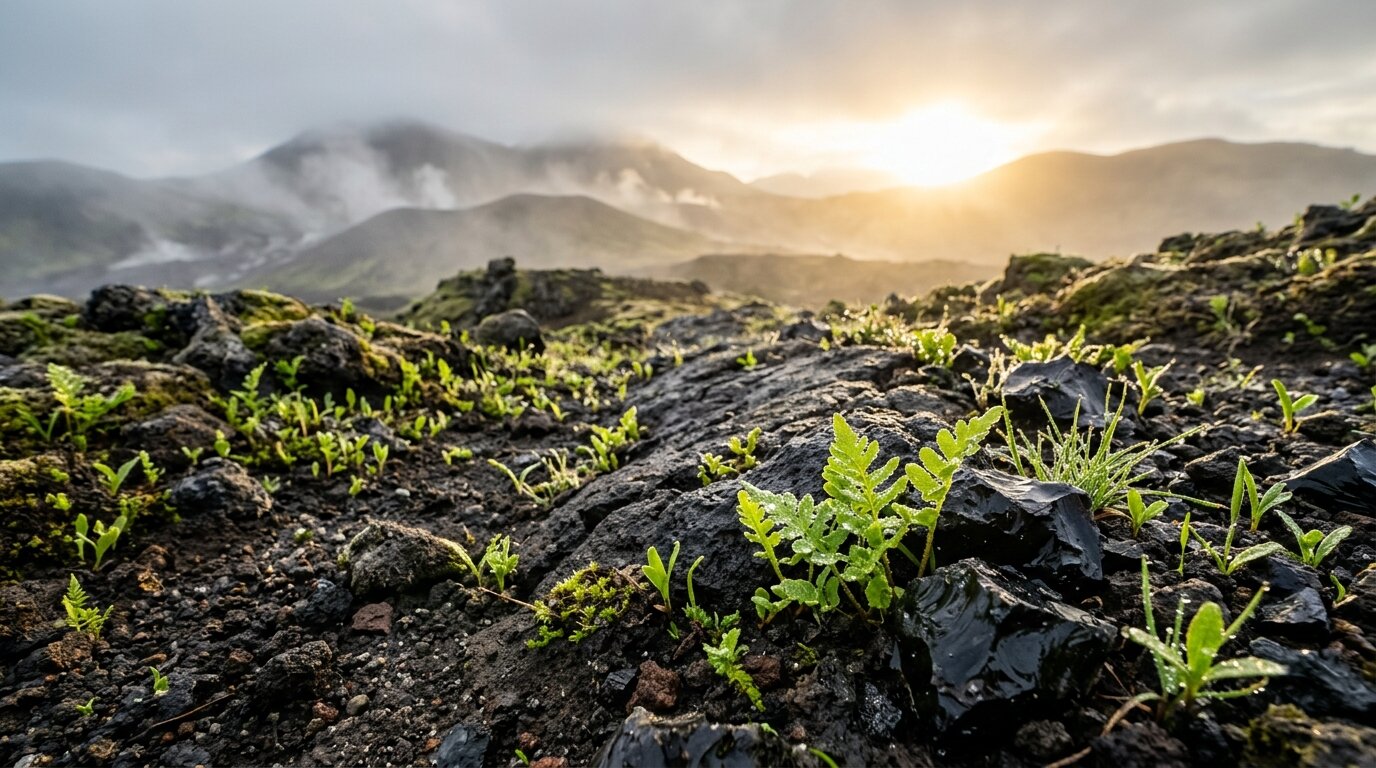
For much of human history, volcanoes were not seen merely as destructive forces. They were portals, the crucibles of creation, places where the raw, chaotic energy of the earth burst forth to forge new land. In Hawaiian traditions, the goddess Pele embodies this duality, her fiery wrath bringing destruction but also creating the very islands her people live upon. This contrasts with the Roman view of Vulcan, whose underground forge was a place of powerful, often furious, creation.
Today, we tend to view natural disasters as purely negative events, something to be feared and avoided. Yet, our dreams often tap into this older, more mythic understanding where destruction and creation are two sides of the same coin. A 2023 piece in Psychology Today by Kelly Bulkeley highlights how dreams of natural catastrophe can reflect not just our personal anxieties, but our connection to these larger, archetypal patterns of change and renewal. Your dream may be tapping into a deep, cross-cultural recognition that sometimes, things must be burned away to make room for new life.
Lava Flows, Ash Clouds, and Distant Explosions
The specific details of your volcanic dream matter. A slow, creeping lava flow carries a different emotional weight than a sudden, deafening explosion or a sky choked with ash. Each variation points toward a different aspect of the pressure you may be experiencing in your waking life. Witnessing a sudden detonation from miles away could reflect a feeling of detachment from a crisis, watching a dramatic event unfold that you know will affect you but which you cannot control.
If you dream of choking on grey ash, you might be feeling suffocated by the aftermath of a conflict. It speaks to the lingering consequences that make it hard to breathe freely. As Harvard researcher Deirdre Barrett explained in the Harvard Gazette, the mind often translates our waking anxieties into powerful, specific metaphors during times of stress. The tension lies in how we interpret the danger. A slow lava flow might seem less immediately threatening than a massive explosion, but it can symbolize a persistent, creeping boundary violation in your life, something that is relentlessly consuming your space and proving harder to escape than a single blast. Other disaster dreams, like dreaming of earthquakes or tornadoes, carry similar weight but with different emotional textures.
Surveying the Landscape After the Eruption
This dream often shows up at a precise moment, when the strategy of "keeping the peace" in your waking life has started to cost you more than speaking an uncomfortable truth. You may have been postponing a difficult conversation with a partner or avoiding a conflict with a colleague, believing that silence is the safest option. This dream is your subconscious disagreeing. It is staging the very eruption you’ve been trying to prevent, showing you that the pressure has become too much to contain.
The dream invites you to look at what remains. After the explosion, the ground is raw and steaming, but it’s also cleared. Expressing long-suppressed feelings will almost certainly disrupt the status quo, and that can be frightening. The alternative, however, is to risk a much more uncontrolled and Ddamaging emotional explosion down the line. The dream suggests that perhaps the most dangerous thing you can do right now is nothing at all.

Questions to Ask Your Waking Self
You don't need to have all the answers, but asking the right questions can illuminate the path forward. Sit with these for a moment and see what resonates.
- What boundary or feeling have you been keeping contained for the sake of avoiding conflict?
- Did you feel terrified or strangely relieved when the volcano erupted in your dream?
- Where in your daily life do you feel a build-up of pressure that feels beyond your control?
- What outdated aspect of your life might need to burn away so new growth can take root?
Honoring the Fire Within
A volcanic eruption in a dream feels like an ending. It is loud, fiery, and absolute. But it is also a beginning. It is the earth remaking itself, clearing away what is old and unstable to make way for something fertile and new. While these dreams can leave you feeling shaken, they are powerful invitations to look at the pressures in your own life. They ask you to honor your own truth, even when it feels explosive.
The dream is not a catastrophe. It is a clarification.
Every dream is a personal conversation with yourself. If you'd like to explore another, you can share it with us. You might also find insight in our guides to dreaming of forest fires or other powerful natural events.

Written by Claire Sterling
Contributing Writer · Sleep Science & Cognitive Research
Claire Sterling explores how emotional stress and nocturnal cognition shape dreams, synthesizing peer-reviewed sleep research into warm, everyday reflections.
At DreamAtlas, interpretations are symbolic reflections grounded in universal human themes and peer-reviewed research, not clinical or medical advice.
Want to understand our approach? Read about our editorial standards →
Categories
Popular Symbols
Themes
Recent Posts
What It Means When You Dream About Being Judged by a Group
October 15, 2026Dreaming of Snails – Patience, Delay, and Quiet Persistence
October 13, 2026What It Means When You Dream About Wolves Howling in the Distance
October 08, 2026Dreaming of Butterflies Landing on You
October 06, 2026Why You Dream About Bears in Your Home
October 01, 2026About DreamAtlas
Your guide to exploring the symbolic meaning of your dreams. We offer thoughtful, reflective interpretations grounded in universal human themes.
Learn More
Comments