There's a strange vertigo to it. For a moment, just a moment after your eyes open, you are still them. You remember their childhood home, you can feel the specific way their jaw sets when they're angry, and you know the name of their first love. Then your own name comes rushing back, a sudden flood that washes away the other life, leaving you with the quiet, eerie sense of having just returned from a place you can't quite prove you've been.
This profound disorientation is more than just a weird story to tell over coffee; it suggests that your mind is deeply exploring the boundaries of who you are. These interpretations are here to spark your own reflection, not to serve as any kind of psychological or medical advice.
Quick takeaways:
- Waking up as someone else usually reflects an emerging part of your own psyche, such as unexpressed assertiveness, vulnerability, or creative hunger, testing out a new voice.
- Inhabiting an unfamiliar identity serves as your mind's safe rehearsal space to experience alternative choices and emotional states without real-world consequences.
- These dreams frequently peak during major life transitions when your old self-definition and daily roles no longer fit the person you are actively growing into.
Stepping Into Another Skin: The Psyche's Rehearsal Space
To become someone else in a dream is rarely about wanting a different life. Think of it more as your mind’s private rehearsal studio, a place where you can try on different ways of being without any risk. If you’re a quiet, conflict-averse person in your daily life, you might dream of being a decisive ship captain, barking orders through a storm without a flicker of self-doubt. You get to feel that authority, that certainty, in a space that is entirely your own.
The feeling can be exhilarating. Inside the dream, that boldness feels completely natural. Upon waking, however, you might feel the sharp contrast with your everyday personality. There’s a tension there: the dream shows you a strength you possess, but your waking mind worries that expressing it could disrupt your relationships or your sense of self. The philosopher Thomas Metzinger has written about how dreaming allows for this kind of experience, detaching our perspective from our fixed, waking identity and letting us explore what it feels like to just be, without the weight of our personal history.
The Emotional Architecture of Our Many Selves
Your waking personality is just one version of you. It's the one you’ve trained to handle meetings, make small talk, and pay bills. But your emotional range is far wider, and dreams are where the rest of that range gets to speak. You might find yourself dreaming as an elderly stranger comforting a child, feeling a wave of maternal grief so deep and ancient it takes your breath away. The feelings are entirely real, but they don't belong to your biography.
This can be a powerfully cathartic experience. The dream grants you a moment of emotional freedom, a release valve for feelings that may not have a place in your day-to-day life. Yet it can leave a strange residue, a faint sadness for memories you never made and people you never knew. A 2025 article in Psychology Today by Jason Shimiaie explains that modern neuroscience sees identity not as one single thing, but as a collection of many dynamic self-states. Your dream is simply letting one of those other selves take the stage for a while.
Shapeshifters, Doppelgängers, and Ancient Masks
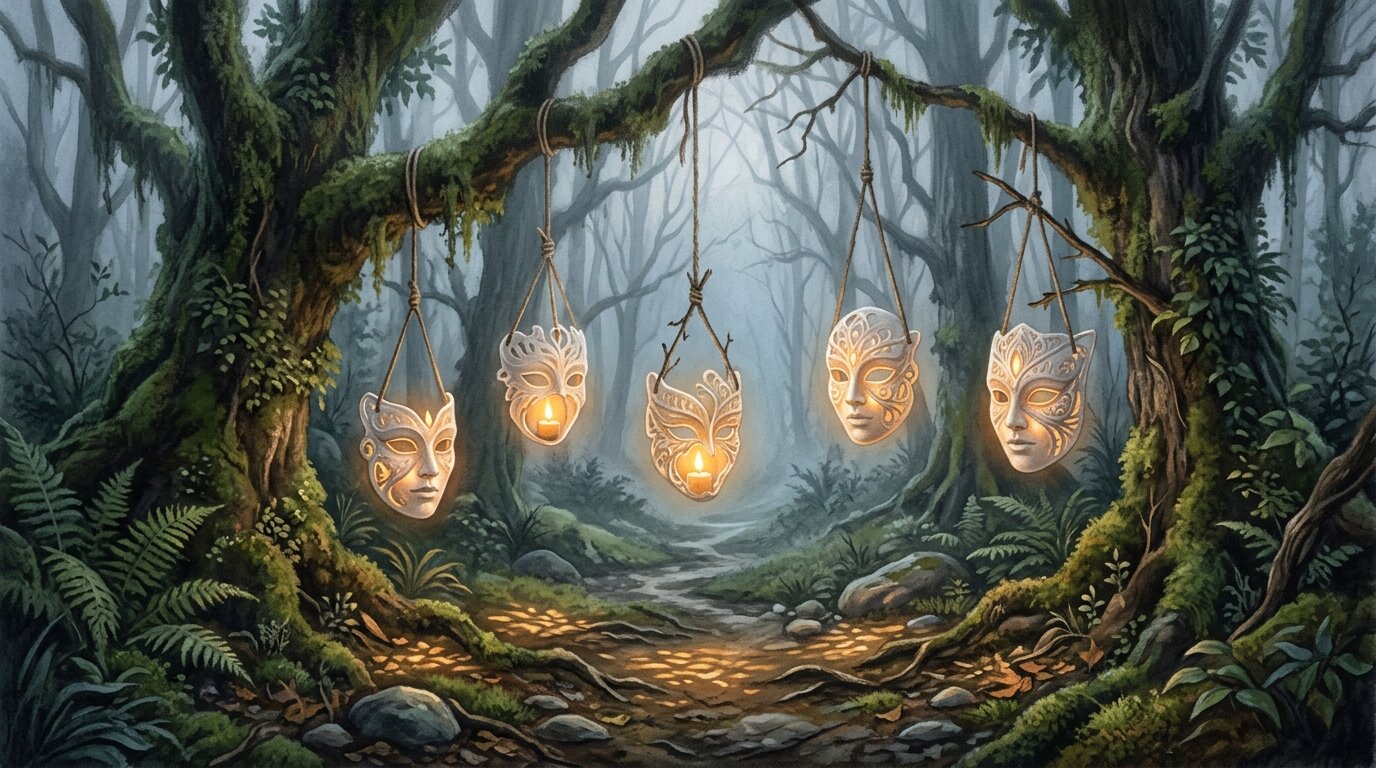
The idea of inhabiting another identity isn’t just a modern psychological curiosity. It's an ancient, cross-cultural theme. In many mythologies and folk traditions, the ability to "shapeshift" or take on another's perspective in a dream or trance was seen as a source of wisdom, not confusion. From shamanic rituals to the theatrical rites of ancient Greece, putting on a mask was a way to step outside the ego and connect with something larger.
It was considered a vital spiritual practice, a way to expand empathy and gain insight. Modern culture, however, can be a bit more rigid, often treating shifts in identity with suspicion. There's no settled answer for why we’ve become less comfortable with this fluidity, but it highlights a core tension. What was once seen as a path to wisdom is now often felt as a source of private disorientation. This lines up with research from Kelly Bulkeley, who notes that taking on other perspectives in dreams acts as a kind of social simulation, deepening our capacity for empathy.
From Strangers to Celebrities: Common Alter-Egos
The person you become can vary wildly. Sometimes you’re a powerful celebrity addressing a crowd, feeling the weight of their fame and influence. Other times you might be a complete stranger, someone of a different gender or from a different century, experiencing a life utterly unlike your own. Each of these avatars provides a different blueprint, a different emotional posture for your mind to explore.
It’s tempting to focus on the literal identity of the person you became. If you dream you are a specific actor, you might rush to analyze their film roles or public persona. This can be a trap. The dream is less about that specific person and more about the feeling they represent to you, whether that's confidence, persecution, creativity, or freedom. Research published in Frontiers in Human Neuroscience describes how our sense of self can dynamically uncouple from our physical body in mental simulations. The person you become is a symbol, a vessel for an experience your psyche is trying to process.
Thresholds, Transitions, and Outgrowing Your Script
These dreams often show up with greater intensity during major life transitions. When you’re standing on the edge of a career change, a divorce, or retirement, the person you used to be no longer fits the life you are moving into. Your identity is, in a very real sense, up for grabs. The dream of becoming someone else is your mind’s way of acknowledging that the old script has run its course.
You might dream you are an apprentice in a foreign city, learning a new craft from the very beginning. The feeling isn't one of failure, but of grounded simplicity and quiet potential. That dream is a powerful nudge toward reinvention. Of course, the practical realities of your waking life, with all its commitments and habits, often resist that kind of change. A large-scale analysis of dream reports by Alessandro Fogli and his colleagues confirmed that our dream characters and self-representations really do shift when we’re navigating significant life changes.

Questions to Sit With
- What was the dominant emotion or physical sensation you felt while inhabiting that other person?
- What freedom, authority, or vulnerability did that dream character possess that you currently deny yourself in waking life?
- In what area of your current routine do you feel most constrained by the expectations attached to your usual identity?
- If that dream persona could offer one honest sentence of advice to your waking self today, what would they say?
- Are you currently navigating a life transition where an old version of yourself needs to be respectfully retired?
Bringing the Stranger Home
When you wake from a dream like this, it’s easy to feel that you lost yourself for a little while. But the opposite is true. You didn’t lose yourself, you expanded. The dream gave you access to a part of your own resilience, creativity, or courage that was waiting for an invitation to speak. The goal isn’t to become that other person, but to welcome home the qualities they showed you.
The stranger you were in the night is a part of you that you’re only just beginning to meet.
Every dream is a conversation with yourself. If you'd like to explore what your own dreams are telling you, you can share them with us. You might also find resonance in our articles on what it means when you dream about changing faces or the feeling of being exposed or vulnerable.
By DreamAtlas Editorial
Researched, drafted with AI assistance, and edited by the DreamAtlas team
Every article is checked against our editorial standards: sources are verified, interpretations stay symbolic rather than clinical, and pieces are reviewed and updated over time.
At DreamAtlas, interpretations are symbolic reflections grounded in universal human themes and peer-reviewed research, not clinical or medical advice.
Want to know how this article was made? Read how we create content →
Had a dream like this?
Write it down in your private dream journal. It stays in your browser, links each symbol to the dictionary, and shows which symbols keep coming back.
Categories
Popular Symbols
Themes
Recent Posts
Dreaming of Becoming Someone Else Entirely
November 24, 2026What It Means When You Dream About Changing Faces
November 19, 2026Dreaming of Being Blamed for Something You Didn’t Do
November 17, 2026What It Means When You Dream About Being Surrounded With No Exit
November 12, 2026Dreaming of Being Watched Through Windows
November 10, 2026About DreamAtlas
Your guide to exploring the symbolic meaning of your dreams. We offer thoughtful, reflective interpretations grounded in universal human themes.
Learn More
Comments